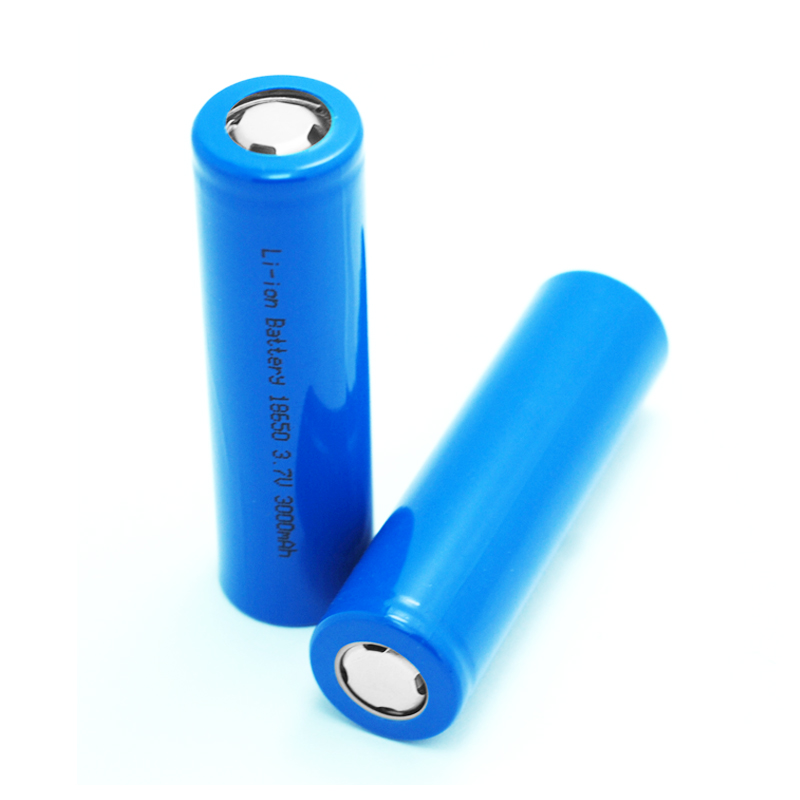
How Long Do 18650 Batteries Last?
🔋 Abstract
The lifespan of an 18650 lithium-ion battery is not defined by a single number. Runtime, cycle life, and calendar aging all interact—and the results vary widely depending on chemistry, depth of discharge, temperature, and charge strategy. Whether you are using a rechargeable Li-ion battery 3.7V 2200mAh 18650, a high-energy Li-ion 18650 3.7V battery, or a LiFePO4 18650, understanding what “lasting” really means is critical for realistic design and sourcing decisions.
⏱️ What “Battery Life” Means for 18650 Cells
In engineering terms, battery life includes three separate metrics:
-
Cycle life: number of full charge–discharge cycles
-
Calendar life: years before irreversible aging dominates
-
Runtime per charge: usable energy under load
Most users confuse these. Engineers do not.
🔄 Typical Cycle Life of an 18650 Lithium-Ion Battery
A standard 18650 lithium-ion battery (NCM or NCA chemistry):
-
300–500 cycles to ~80% capacity under typical consumer use
-
500–800 cycles under optimized charge limits and thermal control
A rechargeable Li-ion battery 3.7V 2200mAh 18650, often designed for moderate loads, usually prioritizes cost and balance rather than extreme longevity.
Direct conclusion:
👉 Cycle life is dominated by how the battery is used, not the label on it.
🔬 Chemistry Matters: Li-Ion vs LiFePO4 18650
⚡ Li-Ion 18650 (3.7 V)
-
Higher energy density
-
Smaller pack size
-
Shorter cycle life
Typical use cases: consumer electronics, lighting, portable devices.
🟢 LiFePO4 18650
-
Lower nominal voltage (≈3.2 V)
-
Much longer cycle life
-
Higher thermal stability
A LiFePO4 18650 can deliver 2000+ cycles, but with reduced energy per cell.
Engineering trade-off:
👉 Choose energy density or longevity—rarely both.
🌡️ Factors That Shorten 18650 Battery Life
🔥 Temperature Stress
-
Sustained operation above 45 °C accelerates electrolyte degradation
-
Cold charging below 0 °C causes lithium plating
⚡ Charge Voltage Strategy
Charging to 4.2 V maximizes capacity but shortens life.
Limiting charge to 4.1 V can extend cycle life by ~30–40%.
🔌 Discharge Depth
Shallow cycles dramatically improve longevity.
0–100% cycling is the fastest way to age a cell.
📊 How Long Do 18650 Batteries Last in Real Use?
-
Flashlights: 2–5 years
-
Power banks: 1.5–3 years
-
DIY battery packs: depends on design discipline
-
Industrial systems (controlled): 5–8 years
Calendar aging continues even if the battery is unused.
🧠 Engineer’s Selection Advice
From a system design perspective:
-
Use Li-ion 18650 3.7V battery for compact, energy-focused designs
-
Choose LiFePO4 18650 for high cycle count and safety-critical systems
-
Avoid charging to 100% unless runtime is critical
-
Design packs for partial SOC operation
-
Validate lifespan under real load profiles—not datasheet assumptions
Battery life is engineered, not guessed.
⚠️ Common Misconceptions About 18650 Lifespan
-
“Higher mAh means longer life” ❌
-
“All 18650 batteries age the same” ❌
-
“Unused batteries don’t degrade” ❌
-
“Fast charging doesn’t matter” ❌
Every assumption here shortens service life.
❓ FAQ: 18650 Battery Longevity
Q: How long does a rechargeable Li-ion battery 3.7V 2200mAh 18650 last?
A: Typically 300–500 full cycles, or 2–4 years depending on usage.
Q: Do LiFePO4 18650 batteries last longer?
A: Yes. They offer significantly higher cycle life at the cost of lower energy density.
Q: Can I extend the life of an 18650 lithium-ion battery?
A: Yes—by limiting charge voltage, avoiding heat, and reducing deep discharges.
Q: Is capacity loss sudden or gradual?
A: Gradual. Most cells degrade predictably until end-of-life.
📦 CTA: Need Long-Lasting 18650 Cells for Your Application?
If you’re selecting 18650 lithium-ion batteries for products or battery packs and need guidance on chemistry choice, cycle life optimization, or real-world lifespan expectations, our technical team can support evaluation, testing, and sourcing.
Related Articles
How long do 18650 batteries last?
Is spot welding or soldering better for 18650 batteries?