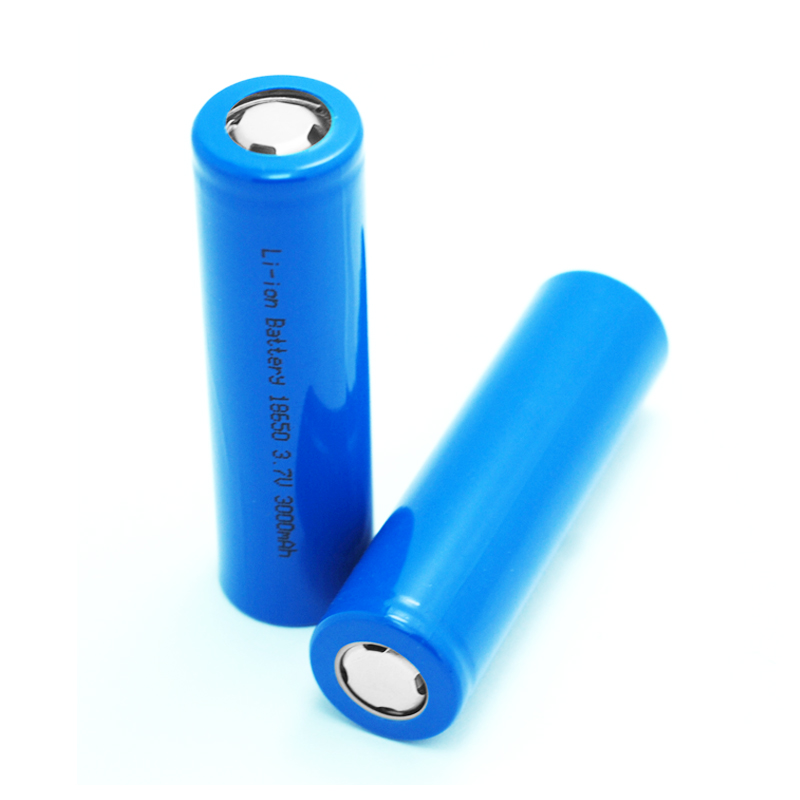
Are All 18650 Batteries Rechargeable?
🔋 Abstract
The short answer is yes—almost all legitimate 18650 batteries are rechargeable, but the details matter more than most buyers realize. This page explains why 18650 rechargeable batteries dominate the market, how battery size 18650 relates to chemistry, and where confusion around 18650 LiPo and 18650 lithium polymer comes from. We break down real-world use cases, engineering constraints, safety considerations, selection logic, and common misconceptions—without marketing fluff or vague generalities.
🔍 What Does “18650” Actually Mean?
The term battery size 18650 is purely dimensional:
-
18 mm diameter
-
65 mm length
-
0 = cylindrical cell
It says nothing about chemistry, rechargeability, or quality.
However, in commercial reality, 18650 = rechargeable lithium-based cell nearly 100% of the time.
🔧 Direct conclusion: If someone sells a “non-rechargeable 18650,” it’s either mislabeled, obsolete, or unsafe.
⚡ Are All 18650 Batteries Rechargeable?
✅ In practice: yes
⚠️ In theory: there are rare exceptions
Almost every 18650 on the market today is a rechargeable lithium-ion cell, designed for hundreds of charge cycles. The reason is simple:
non-rechargeable chemistries cannot compete in energy density, cost per cycle, or form factor.
There is no mainstream primary (single-use) 18650 standard used in modern electronics.
🔋 Why 18650 Rechargeable Batteries Dominate
🔹 Energy Density
Rechargeable lithium cells deliver 200–270 Wh/kg, far exceeding alkaline or lithium primary options.
🔹 Cycle Economics
One 18650 rechargeable battery can replace 300–1000 disposable cells over its lifetime.
🔹 System Integration
Battery management systems (BMS), chargers, and device firmware are all designed around rechargeable behavior.
🧪 Chemistry Breakdown: Clearing the Confusion
⚙️ Lithium-Ion (Li-ion) — the real standard
Most 18650 rechargeable batteries use liquid electrolyte lithium-ion chemistry:
-
NMC
-
NCA
-
LCO
-
INR / IMR blends
These are what power:
-
Power tools
-
EV battery packs
-
Flashlights
-
Medical devices
⚠️ What About “18650 LiPo” or “18650 Lithium Polymer”?
Here’s the truth engineers agree on:
❌ True lithium polymer cells are not cylindrical
❌ There is no standardized cylindrical 18650 lithium polymer cell
When sellers label a product as:
-
18650 LiPo
-
18650 lithium polymer
they usually mean:
-
lithium-ion with polymer separator
-
or a marketing shortcut
-
or, worst case, incorrect labeling
🔧 Engineering reality:
If it’s cylindrical and 18650-sized, it is Li-ion, not LiPo.
🔥 Are 18650 Rechargeable Batteries Safe?
They are safe when used as designed.
Safety depends on:
-
Correct charging voltage (4.2 V typical)
-
Proper discharge limits
-
Cell authenticity
-
Thermal management
Protected cells include:
-
overcharge cutoff
-
overdischarge cutoff
-
short-circuit protection
Unprotected cells rely on:
-
device-level BMS
-
user knowledge
🧠 Engineer’s Selection Advice
1️⃣ Ignore Marketing Labels
Focus on:
-
chemistry type
-
continuous discharge rating
-
cycle life data
Not buzzwords like “LiPo 18650”.
2️⃣ Match the Load
-
Flashlights: moderate discharge, protected OK
-
Vape mods: high drain, unprotected + regulated device
-
Battery packs: unprotected + external BMS
3️⃣ Verify Authenticity
Counterfeit 18650 rechargeable batteries often:
-
exaggerate capacity
-
lack internal safety mechanisms
If capacity claims exceed 3600 mAh, assume fraud.
❌ Common Misconceptions
-
❌ “Some 18650 batteries are disposable”
→ Practically false in modern supply chains -
❌ “18650 lithium polymer is safer”
→ Cylindrical cells are Li-ion regardless of label -
❌ “Rechargeable means unlimited cycles”
→ Degradation starts immediately -
❌ “Battery size 18650 guarantees compatibility”
→ Length varies with protection circuits
❓ FAQ
❓ Are all 18650 batteries rechargeable by default?
Yes. If it’s a legitimate 18650 cell sold today, it is rechargeable.
❓ Can I charge any 18650 rechargeable battery with a USB charger?
Only if the charger includes proper CC/CV regulation. Raw USB voltage is unsafe.
❓ Is 18650 LiPo better than lithium-ion?
There is no true cylindrical 18650 LiPo. All real 18650s are lithium-ion.
❓ Can I replace disposable batteries with an 18650?
Only if the device supports lithium-ion voltage and charging logic.
📢 CTA – Need Verified 18650 Rechargeable Batteries?
If you’re sourcing authentic 18650 rechargeable batteries for OEM products, battery packs, or high-drain devices, talk to specialists—not resellers.
👉 Contact our engineering team for cell selection, safety matching, and compliance support.
Related Articles
18650 Li-Ion vs LiFePO4: Which Battery Fits Your Application?
What Is the Best 18650 Batteries for Vape High Drain?
Why Choose Sanyo NCR18650GA Battery for Reliable High-Performance Devices?
What Battery Can I Use Instead of 18650?
Where Can I Buy a 3.7V 18650 Battery?