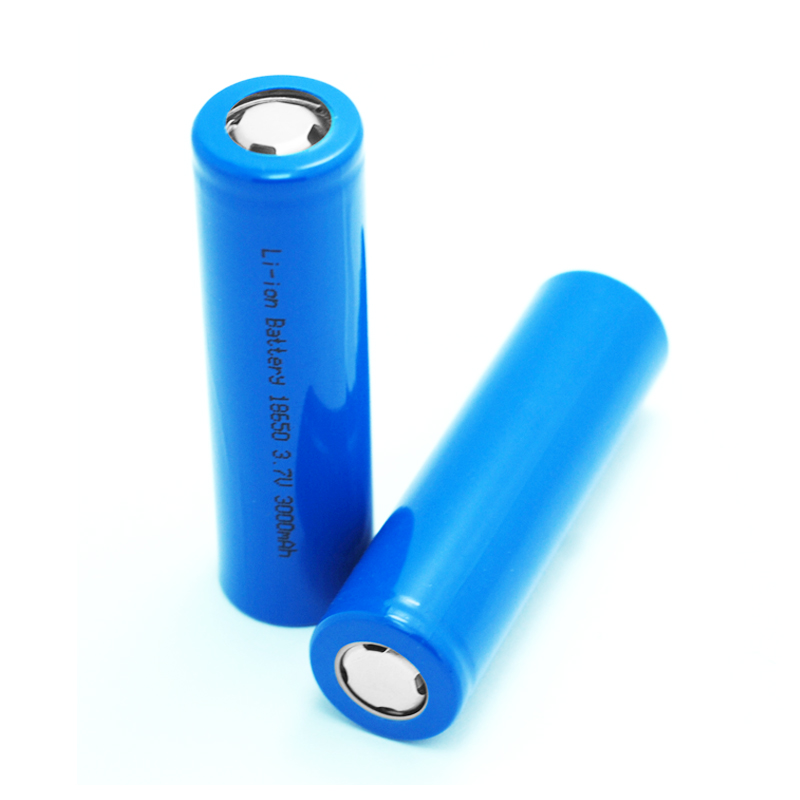
Why Are 18650 Batteries So Popular
🔋 Abstract
The 18650 rechargeable lithium-ion battery has become the default power cell across consumer electronics, industrial equipment, and energy storage systems. From laptops and flashlights to power tools and EV battery packs, the lithium-ion 18650 battery dominates global demand. This page explains why 18650 batteries are so popular, not from a marketing angle, but from an engineering, supply-chain, and performance standpoint—covering energy density, standardization, safety evolution, and why professionals still choose to buy 18650 battery solutions instead of newer formats.
⚙️ What Is an 18650 Battery (Quick Context)
An 18650 battery is a cylindrical lithium-ion rechargeable cell measuring:
-
18 mm diameter
-
65 mm length
Nominal voltage is typically 3.6–3.7V, with capacities ranging from ~1800 mAh to ~3500 mAh depending on chemistry and discharge design.
🔧 Direct conclusion: The 18650 format is not “old tech”—it’s a mature, optimized platform.
🔍 Why 18650 Batteries Became the Industry Standard
🧱 1. Perfect Balance of Size and Energy Density
The 18650 form factor hits a sweet spot:
-
Large enough to store meaningful energy
-
Small enough for modular system design
Compared to AA-sized lithium cells, an 18650 rechargeable lithium ion battery delivers:
-
Higher Wh per cell
-
Better thermal mass
-
Lower internal resistance
This balance made 18650s ideal long before pouch cells became common.
🔥 2. Excellent Thermal Behavior Under Load
Cylindrical steel cans dissipate heat more evenly than soft pouches.
Engineering advantages:
-
Radial heat spreading
-
Predictable thermal runaway paths
-
Easier cell-level isolation
🔧 Direct conclusion: Thermal stability is one of the hidden reasons why 18650 batteries are so popular in high-current designs.
🏭 3. Massive Manufacturing Scale and Cost Control
Once laptops standardized on 18650 cells, economies of scale took over.
Results:
-
Billions of cells produced annually
-
Highly automated quality control
-
Tight process tolerances
This is why professionals still prefer to buy 18650 battery cells instead of obscure formats—supply consistency matters.
⚡ 4. Versatility Across Discharge Profiles
A lithium-ion 18650 battery can be engineered for:
-
High energy density (long runtime)
-
High discharge (power tools, vapes)
-
Balanced performance (ESS, lighting)
Chemistries include:
-
ICR (higher capacity)
-
INR / NMC (balanced)
-
IMR (high drain)
🔧 Same size. Different behavior. That flexibility drives adoption.
🔋 5. Rechargeability and Long Cycle Life
The 18650 rechargeable lithium ion battery typically supports:
-
300–800 full cycles (standard cells)
-
1000 cycles in optimized conditions
Combined with mature charging protocols (CC/CV), this makes 18650 cells:
-
Predictable
-
Serviceable
-
Cost-effective over lifespan
🧠 6. System-Level Design Advantages
For engineers, 18650 batteries offer:
-
Easy series/parallel configuration
-
Redundant cell architecture
-
Fault tolerance in large packs
This is why early Tesla battery packs used thousands of 18650 cells instead of a few large-format cells.
🔧 Direct conclusion: Modularity equals reliability.
🔐 7. Safety Evolution Over Time
Early lithium-ion had risks. The 18650 ecosystem evolved:
-
Better separators
-
Shutdown additives
-
CID and PTC devices
Modern lithium-ion 18650 batteries are far safer than early-generation cells—when used correctly.
🛒 Why Professionals Still Buy 18650 Batteries
Reasons engineers and buyers still buy 18650 battery solutions today:
-
Predictable specs
-
Extensive test data
-
Broad charger compatibility
-
Global sourcing options
Newer formats exist, but few match the total ecosystem maturity of 18650.
🧭 Engineer’s Selection Advice
🔧 Choose 18650 When:
-
You need modular packs
-
Thermal stability matters
-
Supply continuity is critical
-
Field replacement is expected
⚠️ Reconsider When:
-
Ultra-thin form factor is required
-
Weight per Wh is the top priority
🔧 Direct conclusion: 18650 is rarely the wrong choice, just not always the optimal one.
❌ Common Misconceptions
-
❌ “18650 batteries are outdated”
-
❌ “Higher mAh always means better”
-
❌ “All 18650 cells perform the same”
-
❌ “Any charger works for any 18650”
Each misunderstanding leads to poor performance or safety issues.
❓ FAQ
❓ Why is the 18650 battery so popular compared to other sizes?
Because it balances size, capacity, thermal safety, and cost better than most formats.
❓ Are 18650 rechargeable lithium ion batteries still relevant today?
Yes. They remain widely used in industrial, consumer, and energy applications.
❓ Is it safe to buy 18650 battery cells online?
Only from verified suppliers with traceable datasheets.
❓ What replaced 18650 batteries?
Formats like 21700 exist, but 18650 remains dominant in many sectors.
📢 CTA – Need Reliable 18650 Battery Solutions?
Whether you’re designing a pack or sourcing cells at scale, choosing the right 18650 rechargeable lithium ion battery matters.
👉 Contact our technical team for application-matched recommendations and verified 18650 sourcing.
Related Articles
18650 Li-Ion vs LiFePO4: Which Battery Fits Your Application?
What Is the Best 18650 Batteries for Vape High Drain?
Why Choose Sanyo NCR18650GA Battery for Reliable High-Performance Devices?
What Battery Can I Use Instead of 18650?
Where Can I Buy a 3.7V 18650 Battery?