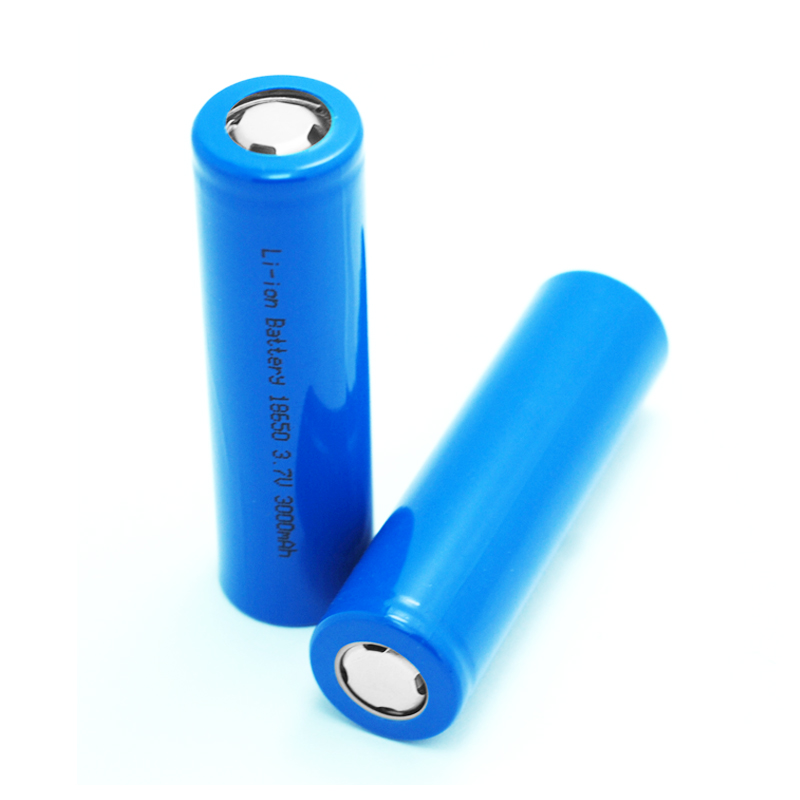
What Is the Difference Between 18650 and 26650 Batteries?
🔋 Abstract
When choosing cylindrical lithium-ion cells, 18650 vs 26650 is a comparison engineers, flashlight designers, and battery pack builders frequently face. Although both are 3.6–3.7 V lithium-ion cells, the difference between 18650 and 26650 batteries goes far beyond size. Energy density, discharge capability, thermal behavior, mechanical constraints, and long-term supply stability all matter.
This page breaks down the 26650 battery vs 18650 debate from a practical, engineering-driven perspective—covering real performance trade-offs, pack-level implications, and common misconceptions that often lead to poor design decisions.
📏 18650 vs 26650 Battery Size
The most obvious 18650 vs 26650 battery size difference is physical format.
📐 Dimensions:
-
18650 → 18 mm diameter × 65 mm length
-
26650 → 26 mm diameter × 65 mm length
🔧 Direct conclusion: both are the same length, but the 26650 has ~2× the cross-sectional area.
This affects:
-
Pack density
-
Thermal dissipation
-
Device compatibility
⚙️ Nominal Voltage & Chemistry
Both cells typically share:
-
Nominal voltage: 3.6–3.7 V
-
Full charge: 4.2 V
-
Cutoff range: 2.5–3.0 V (cell-dependent)
Chemistries overlap:
-
INR (NMC)
-
NCA
-
Older ICR variants
🔋 Direct conclusion: voltage does not differentiate 18650 vs 26650.
🔋 Capacity & Energy (Wh) Comparison
| Cell Type | Typical Capacity | Energy (Wh) |
|---|---|---|
| 18650 | 2500–3500 mAh | 9–13 Wh |
| 26650 | 4000–5500 mAh | 14–20 Wh |
While a 26650 battery usually stores more energy, the gap is smaller than expected relative to its size increase.
🔧 Direct conclusion: 26650 offers more Wh, but lower energy density per volume.
⚡ Discharge Current Capability
This is where many users assume 26650 automatically wins.
| Cell | Typical Continuous Discharge |
|---|---|
| High-drain 18650 | 20–30 A |
| Typical 26650 | 10–20 A |
Modern 18650 power cells often outperform 26650 cells in sustained current.
🔧 Direct conclusion: 18650 dominates high-drain applications due to industry focus and R&D.
🌡️ Thermal Behavior & Safety
The larger diameter of 26650 allows:
✔ More internal mass
✔ Slower temperature rise
✔ Better tolerance to mild overload
However:
-
18650 benefits from massive industry optimization
-
Better venting and separator tech
-
More consistent QC across brands
🔧 Direct conclusion: thermal advantage of 26650 exists, but is often overstated.
🧩 Device Compatibility
Most consumer and industrial products are designed around 18650:
-
Power tools
-
Laptops (legacy)
-
E-bikes
-
Flashlights
-
Energy storage modules
26650 devices are limited:
-
Large flashlights
-
Niche power banks
-
Specialty industrial tools
🔧 Direct conclusion: 18650 wins in ecosystem support.
🧠 Engineer Selection Advice
Choose 18650 if:
✔ Space efficiency matters
✔ High discharge current is required
✔ Long-term supply stability is critical
✔ Modular pack design is needed
Choose 26650 if:
✔ Low current, long runtime is priority
✔ Device size is not constrained
✔ Thermal buffering is beneficial
📌 Engineers rarely select 26650 for new designs unless there is a specific mechanical reason.
📦 Pack-Level Design Considerations
Example:
-
3×18650 in parallel → ~30 Wh
-
2×26650 in parallel → ~36 Wh
However:
-
18650 pack is easier to balance
-
Replacement cells are easier to source
-
Cell matching is more reliable
🔧 Direct conclusion: scalability favors 18650.
⚠️ Common Misconceptions
❌ “26650 is always better because it’s bigger”
→ Not in energy density or current
❌ “26650 replaces multiple 18650 cells”
→ Rarely true in real packs
❌ “18650 is outdated”
→ Still industry standard
❌ “Both are interchangeable”
→ Mechanical and electrical differences matter
❓ FAQ
❓ What is the difference between 18650 and 26650 batteries?
Size, capacity, discharge behavior, and ecosystem support.
❓ Can I replace an 18650 with a 26650?
Only if the device physically supports it and current limits match.
❓ Which lasts longer, 18650 or 26650?
26650 may offer longer runtime per cell, but 18650 packs scale better.
❓ Which is better for flashlights?
Depends on design; many modern high-output flashlights favor 18650.
🛒 CTA – Choosing Between 18650 and 26650 Cells?
Selecting the wrong format increases:
❌ Cost
❌ Heat
❌ Pack complexity
👉 Contact us today
We supply graded 18650 and 26650 lithium-ion cells, bulk availability, and engineering-level guidance to match cell format to your real application.
Related Articles
How Much Lithium is in a 18650 Battery?
What’s the Difference Between a 14500 and 18650 Battery?
Can I Use 18650 Instead of CR123?