At What Voltage Is a 18650 Battery Dead?
🔋 Abstract
Understanding at what voltage a 18650 battery is dead is essential for engineers, battery pack designers, and end users who rely on lithium-ion cells for performance and safety. “Dead” does not always mean unusable; it can indicate a safe cutoff point, a BMS protection trigger, or irreversible cell damage. This page explains real-world dead voltage thresholds, how they differ by application, and how to diagnose a truly failed cell—using industry terminology rather than generic advice.
⚡ 18650 Battery: What Is It?
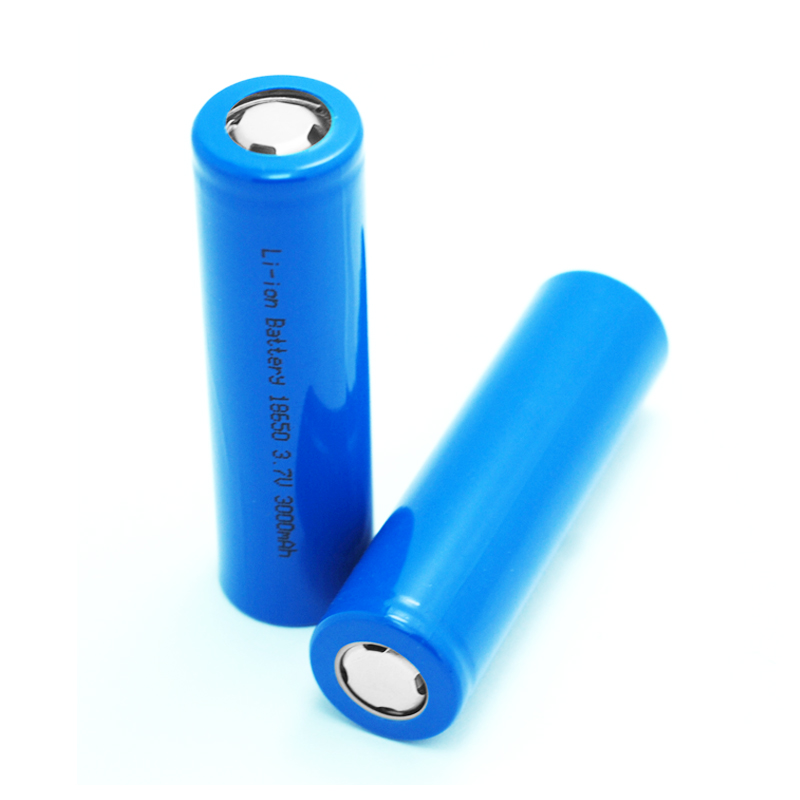
The 18650 battery is a standardized cylindrical lithium-ion cell widely used across consumer electronics and industrial systems.
🔋 Core specifications
-
Nominal voltage: 3.6–3.7 V
-
Full charge: 4.20 V
-
Typical cutoff (recommended): 2.5–3.0 V
-
Chemistry examples: ICR, INR, IMR
-
Applications: laptops, e-bikes, power tools, energy storage
🔧 Direct conclusion: voltage alone does not define battery health—depth of discharge history matters.
📉 What Voltage Is a 18650 Battery Considered “Dead”?
✅ Practical Definitions of “Dead”
| Voltage Range | Industry Meaning |
|---|---|
| 3.0–3.2 V | Low but healthy, near normal cutoff |
| 2.5–2.9 V | Fully discharged, still recoverable |
| 2.0–2.4 V | Over-discharged, degradation likely |
| < 2.0 V | 18650 battery completely dead (high risk) |
📌 18650 dead voltage (engineering view):
Below 2.0 V, the cell is generally considered electrochemically compromised.
⚠️ Why 2.5 V Is the Industry Cutoff
Most datasheets define 2.5 V as the minimum discharge voltage because:
-
Copper dissolution begins below ~2.0 V
-
SEI layer destabilizes
-
Internal resistance rises permanently
-
Capacity loss accelerates
🔧 Engineers design BMS cutoff at 2.7–3.0 V, not at the chemical limit.
🔍 Is a 18650 Battery Completely Dead at 0V?
Yes—and dangerously so.
If a meter reads 0–1.0 V:
-
Internal short or severe copper plating likely
-
Recharging can cause thermal runaway
-
Cell should be scrapped, not revived
⚠️ Direct conclusion: A 0V 18650 is not “deeply discharged”—it is failed.
🧪 How to Identify a Truly Dead 18650 Cell
🔧 Professional evaluation steps:
-
Measure open-circuit voltage after resting 30 minutes
-
Check internal resistance (IR) if possible
-
Attempt low-current recovery (≤0.05C) only above 2.0 V
-
Observe voltage rebound behavior
📌 If voltage collapses immediately under load → cell is dead.
🔋 BMS vs Cell Death: Common Confusion
Many users think their 18650 is dead, when actually:
-
The BMS has tripped due to over-discharge
-
Cell voltage may still be ~2.8 V
-
Resetting or recharging via proper charger restores function
❌ Mistake: assuming “no output” equals cell failure.
🧠 Engineering Selection Advice (Voltage-Safety Focus)
From an engineer’s perspective:
-
Choose cells with clear datasheet cutoff voltage
-
Prefer INR chemistry for tolerance to deep discharge
-
Design packs with cell-level undervoltage protection
-
Avoid single-cell designs without BMS in consumer products
🔧 For battery packs, cell imbalance causes some cells to hit dead voltage earlier than others—this is the #1 silent failure mode.
❌ Common Misconceptions
❌ “A 18650 is dead below 3.0V” → No, that’s normal discharge
❌ “You can revive any dead lithium battery” → False and unsafe
❌ “Voltage alone shows battery health” → IR and load behavior matter more
❌ “All 18650s have the same cutoff” → Datasheets differ by chemistry
❓ FAQ
❓ At what voltage is a 18650 battery dead permanently?
Below 2.0 V, permanent degradation is very likely.
❓ Can a 18650 at 2.5 V be reused?
Yes. This is a normal full-discharge state.
❓ What happens if I recharge a 1.5 V 18650?
High risk of internal short and overheating—not recommended.
❓ Does storage at low voltage kill 18650 cells?
Yes. Long-term storage below 2.5 V accelerates failure.
🛒 CTA – Source Reliable 18650 Cells
CHAWM is a professional wholesale supplier of 18650 lithium-ion batteries, offering verified cells with consistent cutoff behavior and full datasheet traceability.
🔋 Whether you need single cells or bulk orders for packs,
👉 Contact CHAWM today for engineering-grade 18650 solutions.