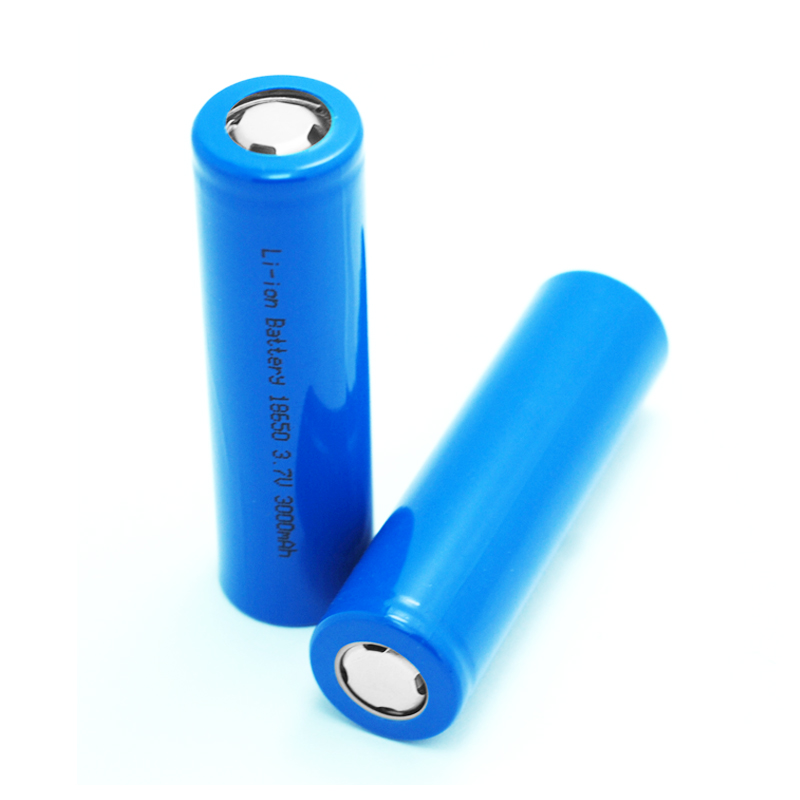
How Do You Revive a Dead 18650 Battery?
🔋 Abstract
When users search how do you revive a dead 18650 battery, they are often dealing with cells that appear unusable but may only be over-discharged, not permanently failed. In lithium-ion engineering, “dead” can mean several very different things: BMS lockout, deep discharge below recommended cutoff, or true internal damage. This page explains how to identify whether an 18650 battery is dead, what the 18650 battery dead voltage actually means, and under which conditions it is technically possible—and safe—to revive a dead 18650 battery. Direct conclusions are given where risks outweigh any benefit.
⚡ What Does “Dead” Mean for an 18650 Battery?
Before talking about revival, the definition matters.
🔧 Industry definitions
-
Soft dead: voltage below normal cutoff but chemistry intact
-
Protection dead: BMS or PCM has tripped
-
Hard dead: internal damage, copper dissolution, or micro-shorts
📌 Direct conclusion: only soft-dead cells are candidates for revival.
📉 18650 Battery Dead Voltage Explained
🔋 Typical voltage thresholds
| Voltage (OCV) | Status |
|---|---|
| 3.0–3.2 V | Low but healthy |
| 2.5–2.9 V | Fully discharged |
| 2.0–2.4 V | Over-discharged |
| < 2.0 V | High risk / near failure |
| 0–1.0 V | Permanently damaged |
⚠️ In engineering practice, 18650 battery dead voltage is considered below 2.0 V, not because the cell instantly fails, but because chemical instability accelerates.
🔍 How to Know If a 18650 Battery Is Dead
🧪 Step-by-step diagnostic process
🔋 1. Measure open-circuit voltage
-
Let cell rest 20–30 minutes
-
Use a calibrated multimeter
🔋 2. Check physical condition
-
Swelling, corrosion, electrolyte odor → discard immediately
🔋 3. Load test (advanced users)
-
Voltage collapse under light load = internal damage
📌 If voltage rebounds after charging but collapses quickly, the cell is functionally dead.
🔧 When Is It Possible to Revive a Dead 18650 Battery?
Revival is only feasible when:
✅ Voltage is above 2.0 V
✅ No swelling or overheating
✅ Cell was over-discharged briefly, not stored empty for months
❌ Revival is not recommended below 2.0 V for commercial or pack use.
🔋 How to Revive a Dead 18650 Battery (Engineering Method)
⚙️ Controlled Pre-Charge Technique
This is the only accepted method in professional environments.
🔧 Procedure overview
-
Use a charger with pre-charge / recovery mode
-
Current limited to 0.05C–0.1C
-
Slowly raise voltage to ≥3.0 V
-
Then switch to standard CC-CV charging
📌 Example:
A 2500 mAh cell → recovery current ≤125 mA
⚠️ Never attempt revival using power supplies without current limiting.
🚫 Unsafe Revival Methods to Avoid
❌ Parallel charging with a full cell
❌ “Jump starting” with a power supply
❌ Heating or freezing cells
❌ Using damaged USB chargers
Direct conclusion: Most DIY revival tricks increase fire risk without restoring capacity.
🧠 Engineer’s Perspective: Is Revival Worth It?
From a battery design standpoint:
-
Capacity loss after deep discharge: 10–40%
-
Internal resistance increase: permanent
-
Cycle life reduction: significant
🔧 For pack design, revived cells are not acceptable due to imbalance risks.
📌 Engineers revive cells only for testing or non-critical use, never for production packs.
⚠️ Common Mistakes Users Make
❌ Assuming “no output” means dead chemistry
❌ Ignoring storage history
❌ Reviving cells for high-current applications
❌ Mixing revived and healthy cells in packs
🔋 Direct conclusion: revived cells should never be series-connected.
❓ FAQ
❓ Can you revive a 18650 battery at 0V?
No. A 0V cell is considered irreversibly damaged.
❓ How long can an over-discharged 18650 sit before damage occurs?
Damage risk rises sharply after weeks below 2.5 V.
❓ Is BMS lockout the same as a dead battery?
No. A BMS-protected cell may still be healthy internally.
❓ Can revived 18650 batteries be trusted?
Not for power tools, EVs, or battery packs.
🛒 CTA – Use Reliable Cells Instead of Risky Revival
CHAWM is a professional wholesale supplier of certified 18650 lithium-ion batteries, offering cells with verified voltage consistency, fresh production dates, and full datasheets.
🔋 If reliability matters more than risky revival,
👉 Contact CHAWM today for bulk 18650 solutions.
Related Articles
Why Do 18650 Batteries Explode?
How Often to Change BMW X3 2019 Battery?
What is the Best 18650 Battery for High Drain Devices?