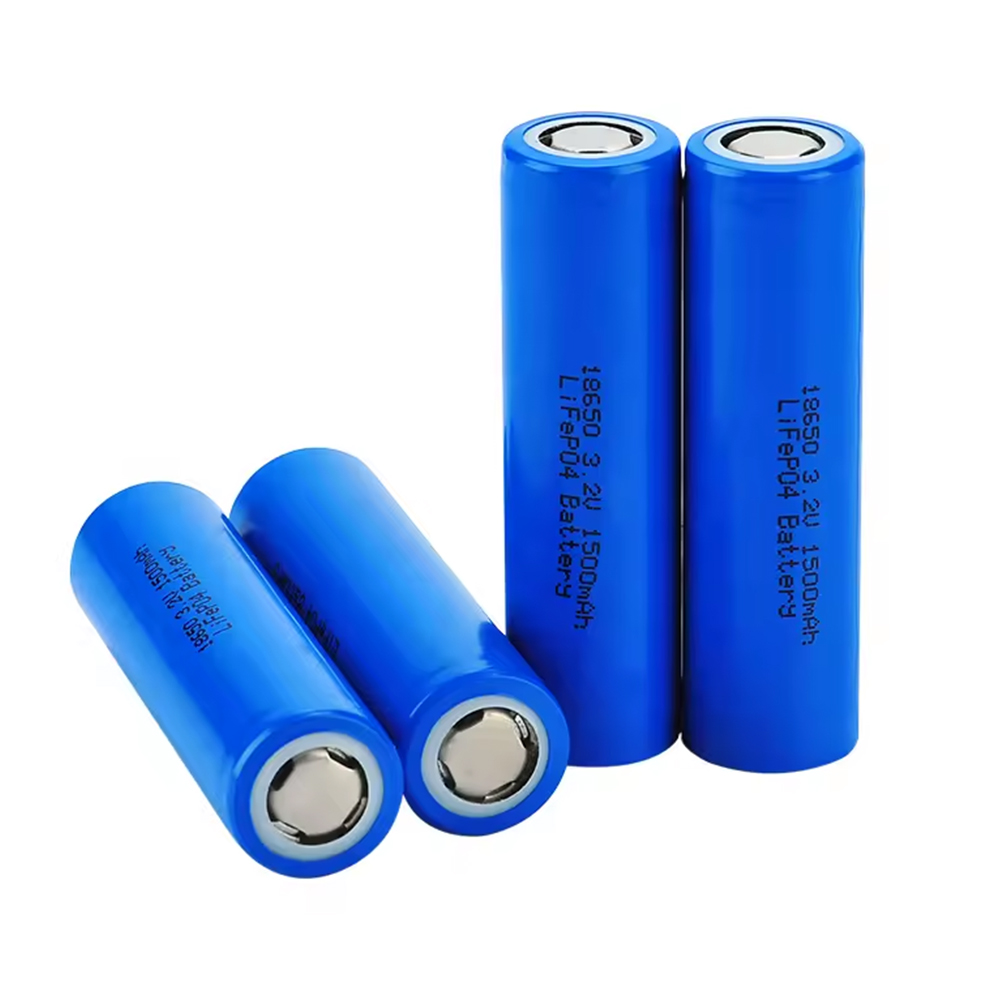
How to Run 2 18650 Batteries in Series
Abstract
🔋 Connecting 2 x 18650 batteries in series is a common approach to double the voltage of 18650 3.7V Li-ion cells while maintaining the same capacity. This configuration is widely used in DIY packs, flashlights, and portable electronics. However, proper series connection requires attention to cell matching, polarity, protection, and load management. This guide explains safe series wiring, technical considerations for 1 18650 vs 2 in series, engineering best practices, common misconceptions, and how to integrate a battery 2 x 18650 pack safely.
🔍 Understanding Series Connection for 18650 Cells
When connecting 2 x 18650 batteries in series:
📌 Positive terminal of the first cell → Negative terminal of the second cell
⚡ Total voltage = 3.7V + 3.7V = 7.4V nominal
🔋 Capacity remains equal to a single cell
Direct conclusion: Series connection increases voltage, not capacity. Current is limited by the weakest cell.
⚠️ Icon note: 🔗 Always mark polarity; reversing cells can cause immediate failure.
⚡ Step-by-Step: Wiring 2 x 18650 in Series
-
Select matched cells
✅ Similar capacity, age, and internal resistance -
Check individual voltage
🔌 Differences >0.05V require balancing before series connection -
Connect positive of Cell 1 to negative of Cell 2
-
Measure total pack voltage
📊 Should read ~7.2–7.4V for nominal 3.7V cells -
Add protection
🔒 Integrate BMS or protection PCB for overcharge, over-discharge, and current monitoring
Engineers emphasize: a pack is only as strong as the weakest cell. Mismatched cells lead to premature failure.
🔋 Differences Between 1 18650 and 2 in Series
| Feature | 1 18650 | 2 x 18650 Series |
|---|---|---|
| Voltage | 3.7V | 7.4V |
| Capacity | e.g., 3000mAh | 3000mAh |
| Power output | Limited to one cell | Doubled voltage, same current limit |
| Protection | Optional | Mandatory BMS recommended |
Icon note: ⚡ Series packs require voltage supervision even at low current loads.
🌡️ Thermal and Safety Considerations
-
Heat accumulation: Two cells generate more heat under load
-
Current rating: Maximum safe current is determined by the weakest cell
-
Protection: Always include overcurrent and temperature monitoring
Failure to follow safety protocols can cause:
🔥 Thermal runaway
⚡ Rapid voltage drop
📉 Capacity imbalance
🧠 Engineering Selection Advice
When building or sourcing a battery 2 x 18650 pack:
📌 Match cells from the same batch
📌 Use BMS rated for series voltage (7.4V nominal)
📌 Consider expected discharge rate (continuous and peak)
📌 Factor in operating temperature and ventilation
Direct conclusion: Proper cell selection and protection is more important than soldering technique.
⚠️ Common Misconceptions
🚫 “Any 18650 cell can be connected in series”
→ Only matched cells should be connected. Mismatched cells shorten pack life.
🚫 “Voltage doubles, capacity doubles”
→ False. Only voltage doubles; capacity stays the same.
🚫 “Series connection requires no BMS”
→ False. Even small 2S packs benefit from overcharge/discharge protection.
🚫 “Older cells perform the same as new”
→ Age difference increases internal resistance mismatch, causing imbalance.
❓ FAQ — 2 x 18650 Batteries in Series
Q: Can I run 2 18650 batteries in series without a BMS?
A: Technically yes, but you risk over-discharge, overcharge, and imbalance.
Q: What is the total voltage of 2 x 18650 in series?
A: 7.2–7.4V nominal (3.7V per cell).
Q: How do I balance series-connected cells?
A: Use a BMS or external balancing charger before connecting in series.
Q: Can I mix old and new cells in series?
A: No. Mismatched cells increase failure risk.
📣 Call to Action
Planning to build a 2 x 18650 battery pack?
🔋 We offer matched 18650 3.7V Li-ion cells, pre-assembled 2S packs, and BMS solutions to ensure safe operation.
👉 Contact us for engineering consultation or custom series pack design.