18650 Flat Top or Button Top: Which Should You Choose?
Abstract
This page answers one of the most common and most misunderstood lithium-ion battery questions: 18650 flat top vs button top. Using real-world application logic rather than marketing language, we explain structural differences, electrical behavior, device compatibility, and engineering trade-offs. The goal is simple—help you choose the correct 18650 flat top or button top battery the first time, without trial and error, returns, or safety risks.
🔋 What Is an 18650 Flat Top Battery?
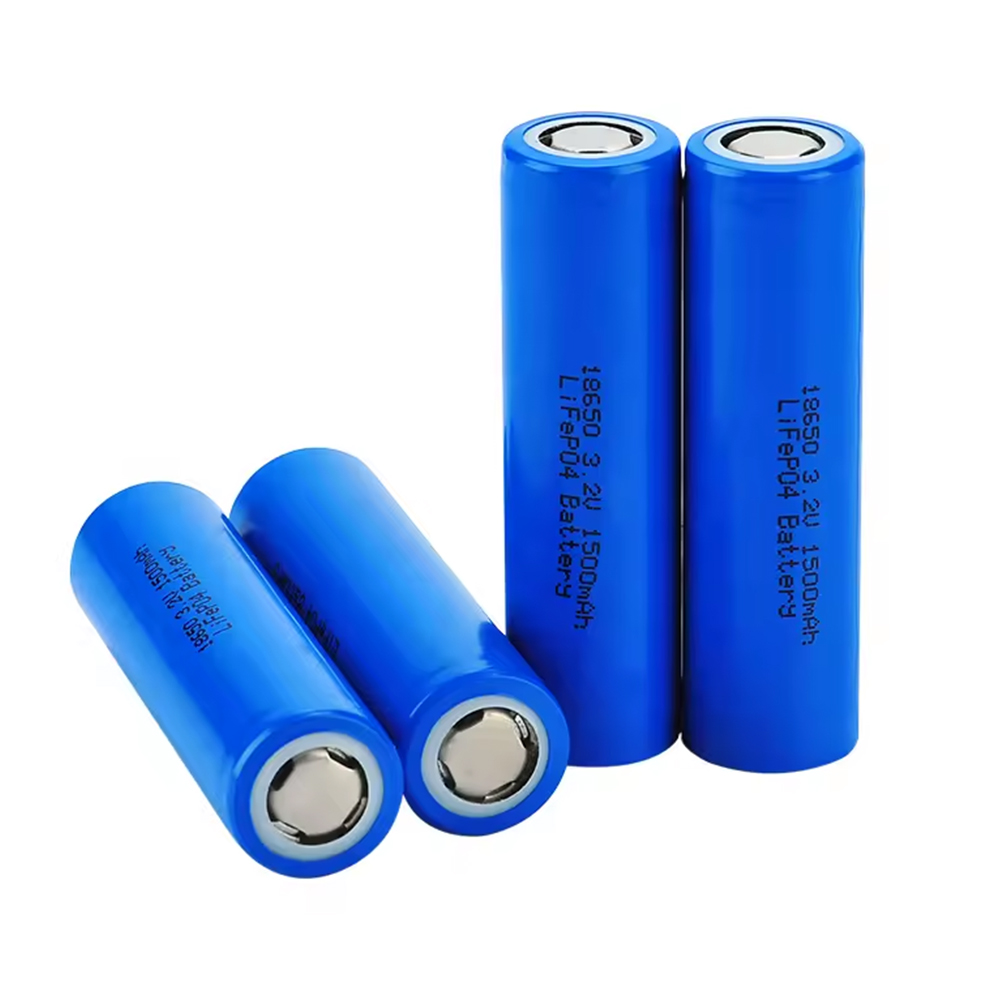
An 18650 flat top battery has a completely flat positive terminal with no protruding nub. Electrically, it’s the raw cell as it leaves the OEM production line—Samsung, LG, Panasonic/Sanyo all manufacture cells in flat-top form first.
From an engineering perspective, flat tops are preferred in:
-
Spot-welded battery packs
-
Custom BMS-controlled systems
-
High-density battery arrays
Direct conclusion: If your battery is welded or clamped, flat top is usually mandatory.
🔘 What Is an 18650 Button Top Battery?
A button top 18650 adds a small metal cap to the positive terminal, increasing total length by ~2–3 mm. This modification improves contact reliability in spring-loaded devices.
Button tops are common in:
-
Flashlights
-
Consumer electronics
-
Devices designed around AA-style form factors
Important industry note: Button tops are not a different chemistry—only a mechanical adaptation.
⚖️ 18650 Flat Top vs Button Top: Core Differences
| Feature | Flat Top | Button Top |
|---|---|---|
| Terminal height | Flat | Raised |
| Typical length | ~65.0 mm | ~67–68 mm |
| Pack assembly | Excellent | Poor |
| Spring contacts | Risky | Ideal |
| OEM availability | High | Modified cell |
In most cases, the device design—not the battery—dictates the choice.
🔌 18650 Battery Flat Top vs Button Top: Electrical Impact
Electrically, both versions share:
-
Same nominal voltage (3.6–3.7V)
-
Same capacity rating
-
Same discharge curve
However:
-
Button tops introduce slightly higher internal resistance
-
Flat tops provide more predictable series balancing
For high-current or precision systems, flat tops are favored.
🧩 18650 Flat or Button Top: Device Compatibility Rules
Use flat top if:
-
The battery is welded
-
The datasheet specifies exact length tolerance
-
The device has fixed terminals
Use button top if:
-
The device has springs on both ends
-
Manufacturer documentation explicitly says “button top required”
Never “shim” a flat top with magnets in production environments.
🛠️ Engineer’s Selection Advice (Real-World)
From a battery pack engineer’s view:
-
Start with the mechanical drawing, not capacity
-
Check max allowed cell length (±0.5 mm matters)
-
Confirm contact type: pressure vs welded
-
Choose flat tops for scalability and consistency
Direct answer: Button tops solve contact problems, not electrical ones.
⚠️ Common Misconceptions
❌ “Button top is higher quality”
→ False. It’s a secondary assembly step.
❌ “Flat tops won’t work in flashlights”
→ Only true if the spring travel is insufficient.
❌ “They’re interchangeable”
→ Mechanically, often no. Electrically, yes.
❓ FAQ: 18650 Flat Top vs Button Top
Q1: Can I replace a button top with a flat top?
Only if the device tolerates shorter cells and has strong spring tension.
Q2: Are flat tops safer?
Neither is inherently safer. Safety depends on protection circuitry and application.
Q3: Do protected 18650s affect this choice?
Yes. Protection boards already add length—often eliminating the need for button tops.
🛒 CTA: Need Help Choosing the Right 18650?
Selecting the wrong terminal style leads to poor contact, overheating, or outright device failure.
👉 Contact our battery engineers for application-matched 18650 flat top and button top solutions—OEM cells only, no recycled stock.