🔋 What does discharge rate mean for 18650 batteries?
🧠 Summary
The discharge rate (C-rate) of an 18650 lithium ion rechargeable battery defines how quickly energy can be safely released from the cell. A higher C-rate allows greater current output, while a lower C-rate favors longer runtime and higher energy efficiency. Understanding C-rate is critical when selecting 18650 cells for applications such as power tools, energy storage systems, and high-drain electronics.
⚡ What Is Discharge Rate (C-Rate)?
The C-rate expresses the speed at which a battery is discharged relative to its capacity.
🔍 Basic explanation:
-
1C = full discharge in 1 hour
-
2C = full discharge in 30 minutes
-
0.5C = full discharge in 2 hours
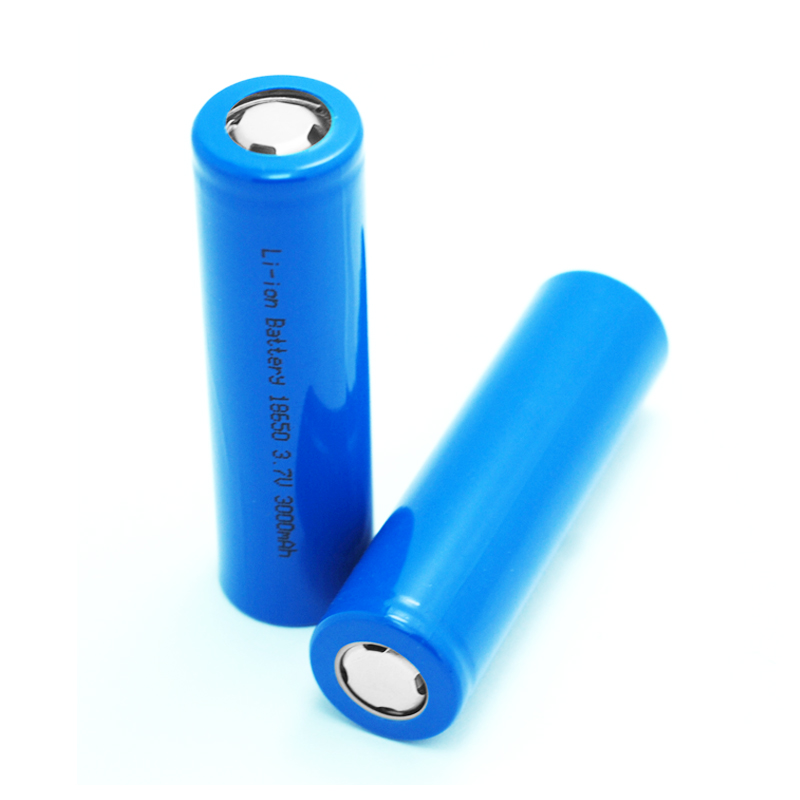
For example, a 3000mAh battery 18650 battery at 1C delivers 3A continuously.
🔌 How C-Rate Applies to 18650 Lithium-Ion Rechargeable Batteries
Each 18650 lithium ion rechargeable battery is engineered for a specific balance of energy and power.
📊 Typical C-rate categories:
-
Low C-rate (0.5C–1C): Energy-focused cells, longer runtime
-
Medium C-rate (2C–5C): Balanced performance
-
High C-rate (10C+): Power-focused, high current output
High-drain 18650 cells sacrifice some capacity to deliver stronger current safely.
⚖️ C-Rate vs Capacity: The Trade-Off
Capacity and discharge rate are closely linked.
⚠️ Key trade-offs:
-
Higher C-rate → lower mAh capacity
-
Lower C-rate → higher energy density
-
High discharge generates more heat
Choosing the wrong C-rate can lead to overheating, voltage sag, or shortened cycle life.
🌡️ C-Rate, Heat, and Battery Safety
Discharge rate directly affects temperature.
🛡️ Safety considerations:
-
High C-rate increases internal heat
-
Requires quality cell design and thermal control
-
Must be paired with a reliable BMS
A 3.7 18650 lithium ion rechargeable battery operating within its rated C-rate remains stable and efficient.
🧪 Why Different Applications Need Different C-Rates
Not all devices demand the same power profile.
📌 Application examples:
-
Power tools & drones: High C-rate 18650 cells
-
Energy storage systems: Low C-rate, high-capacity cells
-
Consumer electronics: Medium C-rate balance
-
Flashlights & e-mobility: Depends on burst vs continuous load
Matching C-rate to usage improves both safety and performance.
🧠 Author Insight: My Experience Choosing 18650 Cells
From my experience working with 18650 lithium ion rechargeable batteries in both battery packs and standalone devices, C-rate is often misunderstood. Many users focus only on mAh, but I’ve seen higher-capacity cells fail prematurely simply because their discharge rating didn’t match the load.
In real-world builds, I always start by calculating continuous current demand, then choose 18650 cells with at least 20–30% C-rate headroom. This approach consistently improves thermal stability, cycle life, and overall reliability.
🚀 How to Choose the Right C-Rate for Your Battery 18650 Battery
✔️ Identify continuous and peak current demand
✔️ Match C-rate to real usage, not just specs
✔️ Consider thermal management
✔️ Use reputable cell manufacturers
✔️ Always integrate a proper BMS
Selecting the right discharge rate protects both the battery and the device.
❓ Frequently Asked Questions (FAQ)
🔹 What does C-rate mean on an 18650 battery?
It indicates how fast the battery can safely discharge relative to its capacity.
🔹 Is higher C-rate always better?
No. Higher C-rate means more power but often lower capacity and shorter runtime.
🔹 What is a typical C-rate for 18650 cells?
Most standard cells range from 1C to 3C, while high-drain models exceed 10C.
🔹 Can exceeding C-rate damage a battery?
Yes. Over-discharging beyond rated C-rate can cause overheating, degradation, or failure.
🔹 Does C-rate affect battery lifespan?
Yes. Operating within rated C-rate significantly improves cycle life.
📢 Call to Action (CTA)
🔋 Need help choosing the right 18650 battery for your application?
Our experts can help you select the ideal 18650 lithium ion rechargeable battery based on C-rate, capacity, and safety requirements.
👉 Contact us today for professional battery solutions.
Related Articles
Can an 18650 battery catch fire or explode?
Should I fully discharge an 18650 battery before charging?
What is the difference between high-drain and high-capacity 18650 batteries?