🔋 How Do You Properly Charge an 18650 Battery?
🧠 Summary
Properly charging an 18650 battery is less about speed and more about voltage control, current limitation, and temperature awareness. A lithium-ion battery 18650 is designed around a strict CC/CV charging profile up to 4.20 V ±0.05 V. Deviate from that, and cycle life collapses—or worse, safety margins disappear. Charging is where most irreversible damage happens.
⚙️ The Correct Charging Method for an 18650 Battery
Every battery-18650 follows the same electrochemical rule set.
🔌 Standard CC/CV sequence:
-
Pre-charge (if deeply discharged, <2.5 V)
-
Constant Current (CC) phase
-
Constant Voltage (CV) hold at 4.20 V
-
Termination at ~0.05C–0.1C
👉 Conclusion: If your charger doesn’t explicitly support CC/CV, it is not suitable for a 3.7 volt battery 18650.
⚡ Recommended Charging Current (C-Rate Reality)
Charging current directly affects aging.
📊 Typical guidance:
-
0.5C → optimal balance of speed and lifespan
-
1C → acceptable for quality cells with thermal control
-
>1C → accelerates SEI growth, shortens cycle life
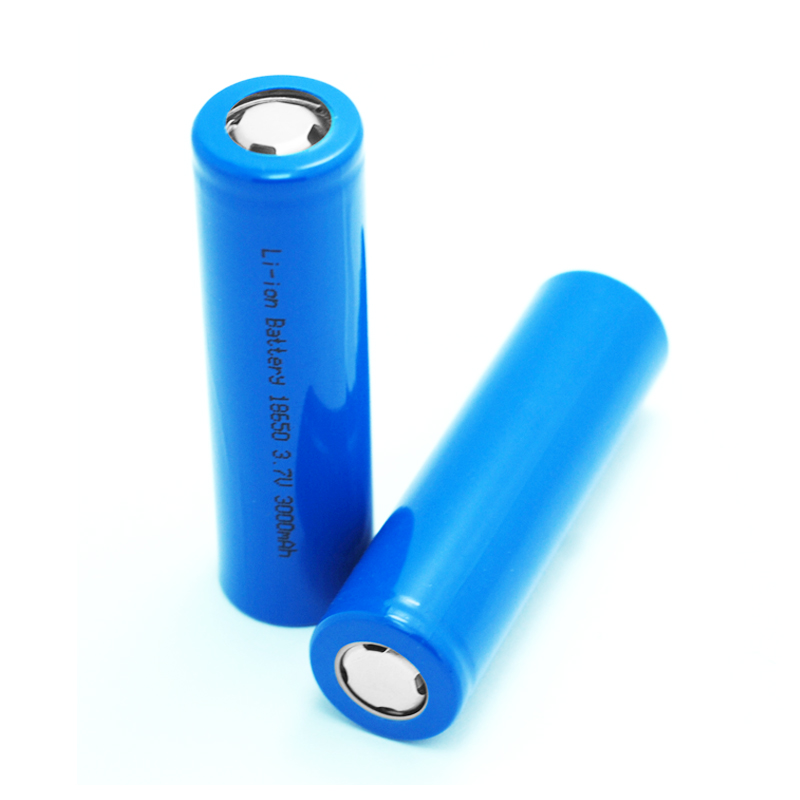
For a 3000 mAh 18650 battery, 0.5C equals 1.5 A. That’s the sweet spot in most real systems.
🌡️ Charging Temperature: Non-Negotiable Limits
Temperature matters more during charging than discharging.
❄️ Below 0 °C:
-
Lithium plating risk
-
Permanent capacity loss
🔥 Above 45 °C:
-
Electrolyte decomposition
-
Gas generation
-
Swelling and vent risk
A lithium ion battery 18650 should only be charged between 0 °C and 45 °C, ideally around 20–30 °C.
🔋 Charging Voltage Accuracy: Where Cheap Chargers Fail
The difference between 4.20 V and 4.30 V looks small. It isn’t.
⚠️ Overvoltage consequences:
-
Exponential aging
-
Increased internal resistance
-
Reduced safety margin
👉 Direct conclusion: Voltage accuracy matters more than charge speed.
🔁 Partial Charging vs Full Charging
Full charges are not mandatory—and often not ideal.
🔄 Practical reality:
-
Charging to 4.10 V can double cycle life
-
Shallow cycles reduce mechanical stress
-
Full 0–100% cycles accelerate degradation
Many professional systems deliberately stop below 100% SOC.
🛠️ Engineer’s Charging & Selection Advice
From a system design standpoint:
🔧 Best practices:
-
Match charger current to cell spec, not marketing claims
-
Use temperature feedback at the cell, not the PCB
-
Avoid “fast charge” unless thermals are controlled
-
Validate charger cutoff voltage with real measurements
👉 If the charger spec is vague, assume it’s unsafe.
❌ Common Misconceptions About Charging 18650 Batteries
🚫 “Any 4.2 V charger will work”
🚫 “Faster charging is always better”
🚫 “Overnight charging is harmless”
🚫 “Voltage matters more than current”
Most premature failures trace back to charging abuse, not discharge.
❓ Frequently Asked Questions (FAQ)
🔹 Can I charge an 18650 battery with a USB charger?
Only if the charger includes a proper CC/CV lithium-ion charging circuit.
🔹 What voltage should an 18650 battery be charged to?
4.20 V ±0.05 V for standard cells.
🔹 Is it safe to charge 18650 batteries overnight?
Not recommended without a certified charger and thermal protection.
🔹 Should I remove the battery immediately after charging?
Yes, especially at high ambient temperatures.
🔹 Does slow charging really extend battery life?
Yes. Lower charge current reduces stress and slows aging.
📢 Call to Action (CTA)
🔋 Designing or sourcing a safe 18650 charging solution?
We help engineers and buyers match chargers, cells, and protection circuits for reliable long-term performance.
Related Articles
What is the difference between high-drain and high-capacity 18650 batteries?
How does temperature affect 18650 battery performance?