🔋 How Long Does It Take to Fully Charge an 18650 Battery?
🧠 Summary
The time required to fully charge 18650 rechargeable lithium batteries depends primarily on charging current, cell capacity, charger design, and thermal conditions. In real-world applications, most lithium 18650 batteries take 2.5 to 4.5 hours to reach full charge using standard CC/CV charging. Faster charging is possible, but it comes with measurable trade-offs in cycle life and thermal stress.
⚙️ The Charging Curve That Actually Determines Time
Charging time is not linear.
🔌 A standard 18650 battery follows:
-
Constant Current (CC) phase: ~60–70% of total charge time
-
Constant Voltage (CV) phase: the remaining 30–40%
👉 Direct conclusion: The CV phase is why charging slows dramatically near 100%, regardless of charger power.
⏱️ Typical Charge Time Ranges for Batteries 18650
Assuming a healthy cell at 25 °C:
📊 Realistic benchmarks:
-
0.5C charge rate: ~3.5–4.5 hours
-
1C charge rate: ~2–3 hours
-
Fast charge (>1C): <2 hours, with accelerated aging
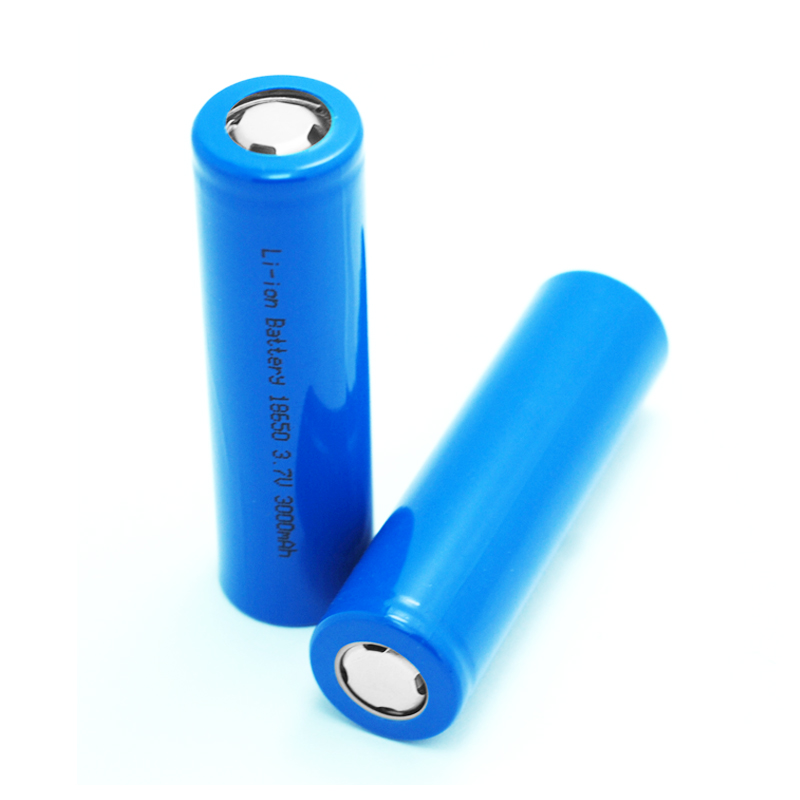
For a 3000 mAh 18650 rechargeable lithium battery, 0.5C equals ~1.5 A. That’s the industry default for longevity.
⚡ How Charger Current Changes the Equation
Charger output sets the ceiling, but the battery decides the pace.
🔧 Key factors:
-
Higher current shortens the CC phase
-
CV phase duration barely changes
-
Thermal rise may force current throttling
-
BMS limits often override charger ratings
A high-power charger does not guarantee faster charging if the 18650 battery and protection circuit restrict current.
🌡️ Temperature: The Hidden Time Variable
Temperature silently adds or subtracts charging time.
❄️ Cold conditions:
-
Higher internal resistance
-
Reduced allowable charge current
-
Longer CC phase
🔥 Hot conditions:
-
Charger or BMS may reduce current
-
CV phase extends to manage heat
👉 Charging a lithium 18650 battery outside 20–30 °C almost always takes longer.
🔋 Capacity Matters—but Less Than You Think
Higher capacity cells take longer, but not proportionally.
📌 Why:
-
CC phase scales with capacity
-
CV phase is voltage-limited, not capacity-limited
A 3500 mAh cell does not take 17% longer than a 3000 mAh cell—it’s usually closer to 8–10%.
🛠️ Engineer’s View: How to Predict Charging Time Accurately
From a design perspective:
🔧 Practical approach:
-
Use 0.5C as your baseline assumption
-
Add 30–40% overhead for CV phase
-
Include temperature derating in cold or sealed systems
-
Validate with real cells, not datasheet curves
👉 If you need guaranteed fast turnaround, oversize the pack rather than over-charging the cell.
❌ Common Misconceptions About 18650 Charging Time
🚫 “A higher-watt charger always charges faster”
🚫 “Charging stops once it hits 4.2 V”
🚫 “Fast charging only affects heat, not lifespan”
🚫 “All 18650 rechargeable lithium batteries charge at the same speed”
Most time estimates fail because they ignore the CV phase entirely.
❓ Frequently Asked Questions (FAQ)
🔹 How long does a typical 18650 battery take to charge?
Usually 2.5–4.5 hours, depending on charge current and temperature.
🔹 Can I charge an 18650 battery in 1 hour?
Only with high-rate cells, excellent thermal control, and reduced cycle life.
🔹 Why does charging slow down near the end?
The charger switches to constant voltage mode to prevent overcharging.
🔹 Does fast charging damage 18650 batteries?
Yes. It accelerates aging even if temperatures stay within limits.
🔹 Is it better to stop charging at 80–90%?
Yes. Partial charging significantly improves long-term battery health.
📢 Call to Action (CTA)
🔋 Designing a system where charge time matters?
We help engineers and buyers select 18650 rechargeable lithium batteries, chargers, and protection strategies that balance speed, safety, and lifespan.
👉 Contact us to optimize your charging setup.
Related Articles
How do you properly charge an 18650 battery?