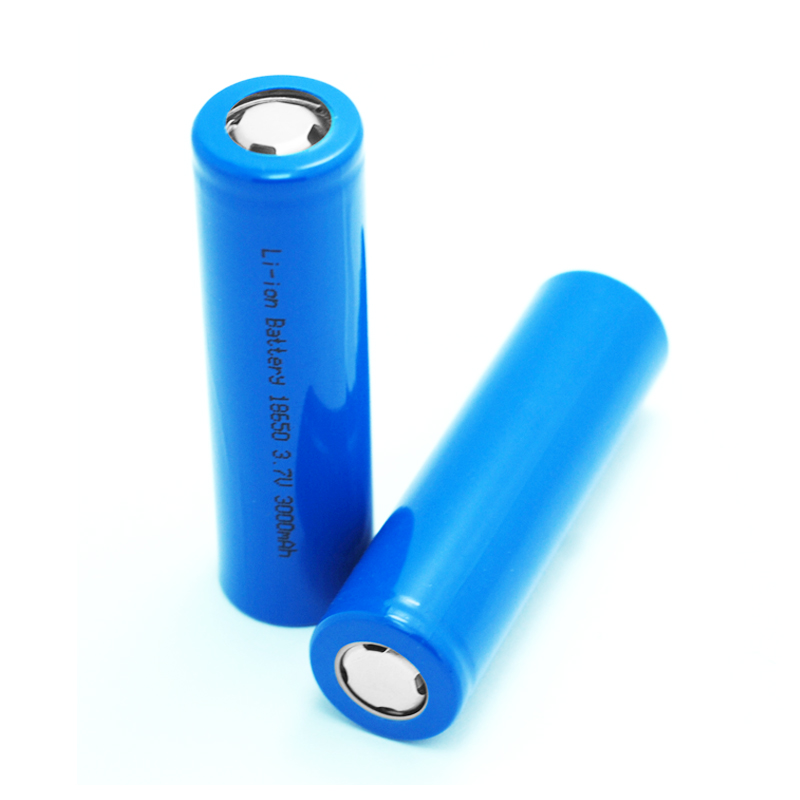
🔋 Can I Overcharge an 18650 Battery?
🧠 Summary
Yes — a rechargeable 18650 battery can be overcharged, and the consequences are not theoretical. Overcharging a lithium ion 18650 battery beyond its designed upper voltage limit (typically 4.20 V ±0.05 V) accelerates degradation, raises internal pressure, and materially increases the risk of venting or thermal runaway. In practice, overcharge events are almost always caused by charger design, voltage drift, or failed protection, not user intent.
⚙️ What “Overcharge” Means for an 18650 Lithium Cell
Overcharge is not “charging too long.”
It is charging above the allowed voltage window.
🔌 For a standard 18650 lithium cell:
-
Nominal voltage: ~3.6–3.7 V
-
Full charge voltage: 4.20 V
-
Overcharge region: >4.25 V
👉 Direct conclusion: Time does not kill cells. Excess voltage does.
⚡ What Actually Happens Inside the Cell During Overcharge
Once a lithium ion 18650 battery exceeds 4.2 V, failure mechanisms stack quickly.
🔬 Internal effects:
-
Lithium plating on the anode
-
Electrolyte oxidation
-
Gas generation and pressure rise
-
Separator shrinkage
-
Rapid internal resistance growth
At ~4.35–4.40 V, degradation becomes exponential. Beyond that, safety margins collapse.
🔥 Overcharge vs Heat: A Dangerous Feedback Loop
Overcharge and temperature reinforce each other.
🌡️ Chain reaction:
-
Overvoltage → higher current → heat
-
Heat → faster side reactions
-
Faster reactions → more gas and pressure
In sealed 18650 formats, this leads to venting, not gentle failure.
🧯 Why Overcharge Is a Charger Problem, Not a Battery Problem
Quality 18650 battery chargers are designed to prevent this scenario.
🛡️ Proper chargers include:
-
Accurate CC/CV control
-
Tight voltage tolerance
-
Charge termination at low tail current
-
Thermal and fault detection
Failures usually come from:
-
Cheap chargers with poor voltage regulation
-
“Universal” chargers without cell-specific profiles
-
USB-powered boards with no secondary protection
👉 Engineering reality: Cells fail because chargers lie.
🔋 Protected vs Unprotected Rechargeable 18650 Batteries
Protection circuits matter—but they are not magic.
🔍 Differences:
-
Protected cells: Add a PCB that cuts off overvoltage
-
Unprotected cells: Rely entirely on charger/BMS behavior
Protection circuits can fail, drift, or be bypassed in packs. They are a layer, not a guarantee.
🛠️ Engineer’s Selection & System Design Advice
From a system engineering standpoint:
🔧 Best practices:
-
Use chargers specified for lithium ion 18650 battery chemistry
-
Verify charge voltage under real load, not no-load
-
Design for 4.15–4.18 V max if cycle life matters
-
Add secondary overvoltage protection at pack level
-
Never rely on “USB 4.2 V” assumptions
👉 If your charger datasheet doesn’t specify voltage accuracy, assume it’s unsafe.
❌ Common Misconceptions About Overcharging 18650 Batteries
🚫 “If it’s slow, it’s safe”
🚫 “Protection circuits prevent all failures”
🚫 “A little over 4.2 V won’t matter”
🚫 “Overcharge only causes long-term damage”
In reality, single overcharge events can permanently compromise a cell.
❓ Frequently Asked Questions (FAQ)
🔹 Can I overcharge a rechargeable 18650 battery overnight?
Yes, if the 18650 battery charger lacks accurate termination or fails.
🔹 What voltage is dangerous for an 18650 lithium cell?
Anything consistently above 4.25 V is unsafe.
🔹 Will a battery explode if overcharged?
Not always, but venting, fire, or thermal runaway are documented risks.
🔹 Do protected 18650 batteries eliminate overcharge risk?
They reduce risk but do not eliminate it.
🔹 How can I tell if a battery has been overcharged?
Symptoms include swelling, abnormal heat, rising internal resistance, and rapid capacity loss.
📢 Call to Action (CTA)
🔋 Concerned about charger safety or battery reliability?
We help engineers and buyers select proper 18650 lithium cells and chargers with verified voltage accuracy and protection architecture.
👉 Contact us to review your charging setup and eliminate overcharge risk.
Related Articles
How do you properly charge an 18650 battery?
What is the internal resistance of an 18650 battery?
Is 3500mAh the highest capacity for an 18650 battery?
What is the difference between high-drain and high-capacity 18650 batteries?