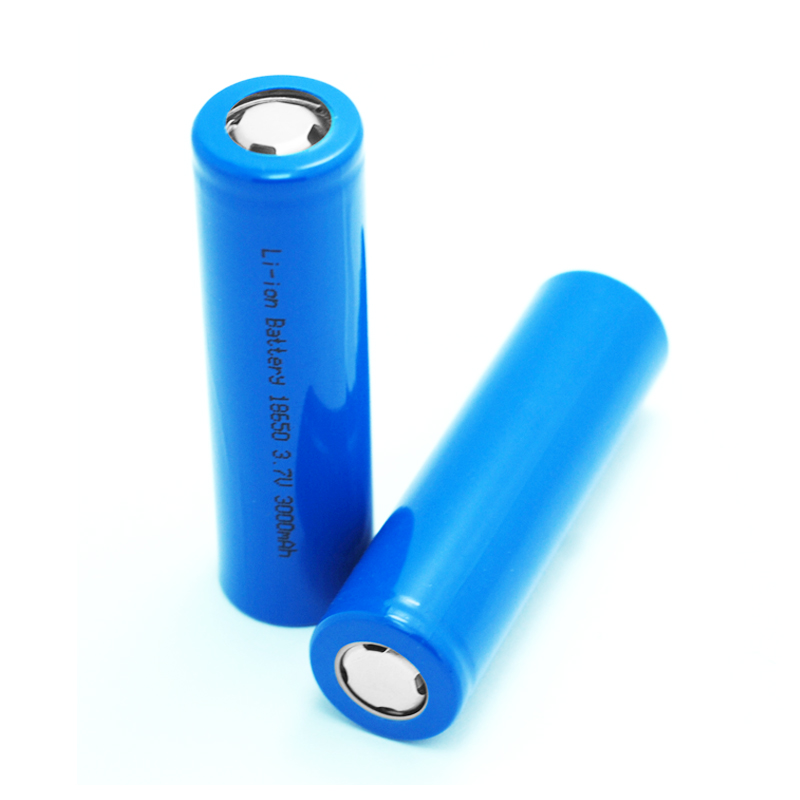
🔋 Should I Fully Discharge an 18650 Battery Before Charging?
🧠 Summary
No. You should not fully discharge an 18650 Li-ion battery before charging. Deep discharge accelerates degradation, increases internal resistance, and can permanently damage a rechargeable Li-ion 18650 battery. Modern lithium-ion chemistry is designed for partial discharge cycles, not full depletion. For a good 18650 battery, staying within a controlled voltage window matters far more than chasing “full cycles.”
⚙️ Why This Question Exists (and Why It’s Outdated)
The advice to fully discharge before charging comes from Ni-Cd and Ni-MH batteries.
Lithium-ion does not behave that way.
🔍 Key difference:
-
Ni-based cells suffer from memory effect
-
18650 Li-ion batteries do not
👉 Direct conclusion: Applying Ni-Cd logic to lithium cells shortens their life.
🔌 Understanding 18650 Voltage Behavior
Voltage, not percentage, defines stress.
📊 Typical 18650 voltage ranges:
-
Nominal: ~3.6–3.7 V
-
Recommended discharge cutoff: 2.8–3.0 V
-
Absolute minimum (not for routine use): ~2.5 V
Once voltage drops too low, copper dissolution and SEI breakdown begin.
⚠️ What Happens When You Fully Discharge an 18650 Battery
A “fully discharged” lithium cell is not empty — it is chemically stressed.
🧪 Inside the cell:
-
SEI layer destabilizes
-
Anode potential rises dangerously
-
Copper current collector can dissolve
-
Internal resistance increases permanently
Recovering voltage does not reverse this damage.
🔄 Partial Charging Is the Design Intent
Modern rechargeable Li-ion 18650 batteries are optimized for shallow and mid-range cycling.
🔋 Best operating window:
-
Charge between ~3.3 V and 4.1–4.2 V
-
Avoid repeated drops below 3.0 V
-
Avoid sitting at 4.2 V for long periods
👉 Engineering reality: A battery cycled from 30% to 80% will outlive one cycled from 0% to 100%.
🛠️ Engineer’s Perspective: How We Treat 18650 Cells in Real Systems
In pack and system design, full discharge is actively avoided.
🔧 Practical design rules:
-
BMS cutoff above 2.8 V
-
Soft voltage buffers instead of hard shutdowns
-
SOC-based charging, not “drain then fill”
-
Thermal and voltage derating under load
If a design forces full discharge, the problem is not the battery.
🔍 What Defines a “Good 18650 Battery” in This Context
A good 18650 battery is not just high capacity.
✅ Engineering indicators:
-
Stable voltage curve
-
Low internal resistance
-
Accurate capacity rating
-
Consistent cutoff behavior
-
Clear datasheet limits
No reputable manufacturer recommends routine full discharge.
❌ Common Misconceptions Engineers Still Encounter
🚫 “Full discharge resets the battery”
🚫 “You need to drain it for calibration”
🚫 “Lithium batteries like deep cycles”
🚫 “Voltage below 2.5 V is fine if recharged quickly”
Each of these shortens service life — some dramatically.
❓ Frequently Asked Questions (FAQ)
🔹 Should I ever fully discharge an 18650 Li-ion battery?
Only for controlled testing or calibration, and even then, not below the manufacturer’s cutoff.
🔹 Does partial charging harm a rechargeable Li-ion 18650 battery?
No. Partial charging improves cycle life.
🔹 What is the voltage of an 18650 battery?
A typical 18650 battery has a nominal voltage of 3.6–3.7 V, charges to 4.2 V, and should not be discharged below 2.8–3.0 V.
🔹 Is deep discharge worse than overcharging?
Both are harmful, but deep discharge damage is often irreversible.
🔹 How can I extend the life of a good 18650 battery?
Avoid full discharge, avoid high heat, and avoid sitting at full charge.
📢 Call to Action (CTA)
🔋 Designing with 18650 cells or sourcing reliable lithium batteries?
We help engineers and buyers choose good 18650 batteries, define safe voltage windows, and optimize charging strategies for longevity.
👉 Contact us for cell selection and application guidance.
Related Articles
Is 3500mAh the highest capacity for an 18650 battery?
What is the internal resistance of an 18650 battery?