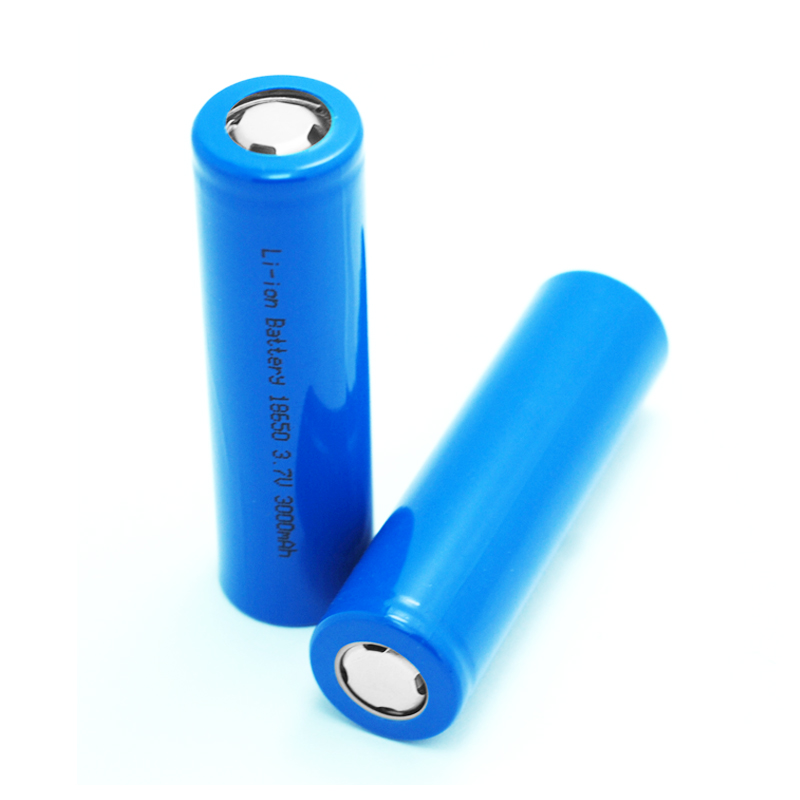
🔌 Can I Use an AA Charger to Charge an 18650 Battery?
🧠 Summary
No — an AA charger should not be used to charge an 18650 battery.
An AA charger is electrically, mechanically, and algorithmically incompatible with a Li-ion battery 18650. The voltage profile, charging method, and 18650 battery dimensions differ so much that using an AA charger risks overcharge, thermal runaway, or silent cell damage. Proper 18650 battery chargers are not optional accessories; they are safety components.
⚡ Why This Question Comes Up So Often
On the surface, both look like cylindrical cells. That’s where the similarity ends.
🔍 The confusion usually comes from:
-
Visual similarity to AA cells
-
Users transitioning from NiMH to lithium
-
Low-cost chargers advertising “multi-size support”
-
DIY projects with limited space
👉 Direct conclusion: If the charger was designed for AA chemistry, it is unsafe for 18650 cells.
🔋 Electrical Mismatch: The Real Deal-Breaker
Charging lithium is about control, not just current.
🔌 AA charger (NiMH / NiCd):
-
Nominal voltage: ~1.2 V per cell
-
Charging method: ΔV detection or timed charge
-
No CC-CV regulation
-
No upper voltage precision
🔋 Li-ion battery 18650:
-
Nominal voltage: 3.6–3.7 V
-
Charge termination: 4.20 V ± 0.05 V
-
Requires CC-CV charging algorithm
-
Sensitive to overvoltage
An AA charger simply cannot regulate voltage at the precision lithium chemistry demands.
🔥 What Actually Happens If You Try It
This is not hypothetical — failure modes are well documented.
⚠️ Common outcomes:
-
Charger never terminates (overcharge)
-
Cell heats rapidly above 45 °C
-
Internal pressure rises
-
SEI layer breakdown
-
Permanent capacity loss — or worse
Many damaged cells still “work” afterward. That’s the dangerous part.
📏 Mechanical Reality: 18650 Battery Dimensions vs AA
Even before electricity, fit alone is a problem.
📐 Typical dimensions:
-
AA battery: ~14.5 mm × 50.5 mm
-
18650 battery: ~18 mm × 65 mm
That’s not a small difference — it’s a different class of cell.
🧪 Why Proper 18650 Chargers Exist
A real 18650 charger does more than push current.
🔧 What proper 18650 battery chargers handle:
-
Constant current ramp-up
-
Constant voltage saturation
-
Precise termination at 4.2 V
-
Temperature monitoring
-
Reverse polarity protection
-
Cell-by-cell control (multi-slot)
Anything less is a compromise.
🛠️ Engineer’s Selection Advice: Choosing the Right 18650 Charger
From a system design perspective, charger choice affects cycle life, safety margin, and field failure rate.
🔍 What engineers actually look for:
-
True CC-CV algorithm (datasheet confirmed)
-
Independent channel control
-
Accurate voltage termination (±1%)
-
Support for unprotected cells
-
Thermal derating under load
👉 If the charger doesn’t explicitly say “Li-ion 18650”, it’s not suitable.
❌ Common Misconceptions We Still See
🚫 “If it fits, it charges”
🚫 “Lower voltage chargers are safer”
🚫 “I’ll just watch it while charging”
🚫 “It worked once, so it’s fine”
🚫 “Protected cells don’t need proper chargers”
Each of these assumptions leads to early failure — or incidents.
❓ Frequently Asked Questions (FAQ)
🔹 Can I use an AA charger to charge an 18650 battery?
No. AA chargers lack the voltage control and charging profile required for Li-ion 18650 cells.
🔹 What charger should I use for a Li-ion battery 18650?
Use a dedicated 18650 charger or certified 18650 battery chargers with CC-CV regulation.
🔹 Are all 18650 chargers the same?
No. Accuracy, channel independence, and thermal protection vary widely.
🔹 Will an 18650 battery fit in an AA battery case?
No. 18650 battery dimensions are significantly larger than AA. Forcing a fit risks mechanical damage and short circuits.
🔹 Can adapters make AA chargers safe for 18650 batteries?
No adapter can change the charging algorithm. Electrical incompatibility remains.
📢 Call to Action (CTA)
🔋 Need help selecting safe 18650 chargers or matching cells to your application?
We work with engineers, OEMs, and buyers to recommend proper 18650 chargers, compatible cells, and safe charging architectures.
👉 Contact us for technical guidance or product recommendations.
Related Articles
Is 3500mAh the highest capacity for an 18650 battery?
How does temperature affect 18650 battery performance?
How do you properly charge an 18650 battery?
How long does it take to fully charge an 18650 battery?