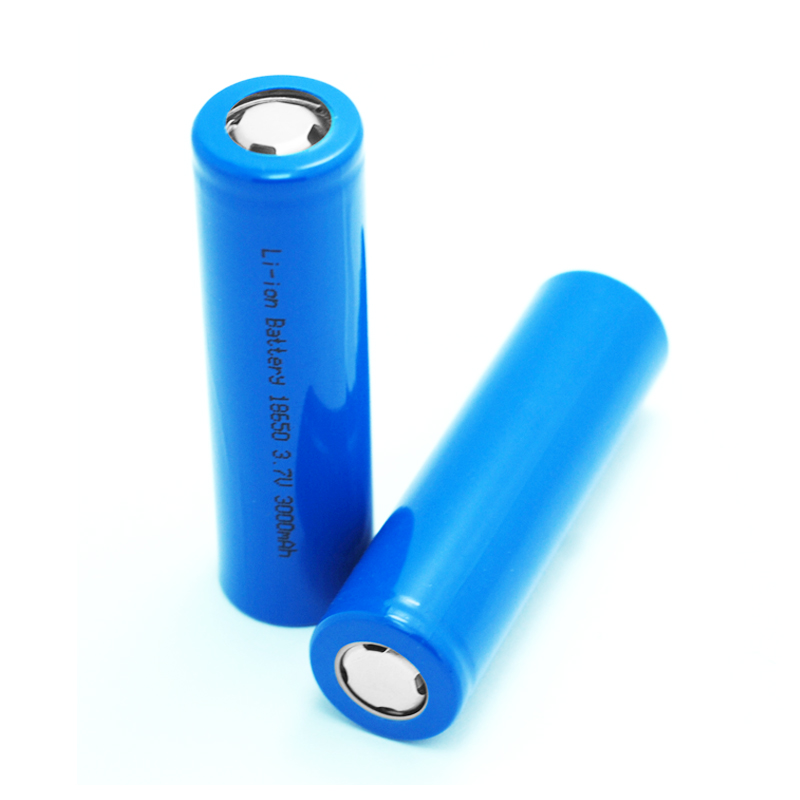
🔋 What Causes an 18650 Battery to Degrade?
🧠 Summary
18650 rechargeable batteries degrade because of electrochemical wear, not time alone.
Cycle depth, voltage stress, temperature exposure, charge rate, and storage conditions collectively determine how fast an INR 18650 battery loses capacity and power capability. Degradation is not a single failure event — it is a progressive increase in internal resistance and loss of active lithium inside 18650 lithium rechargeable battery systems.
⚙️ Degradation Starts at the Chemistry Level
Lithium-ion cells age whether you use them or not. Use just accelerates it.
🔬 Core mechanisms:
-
SEI (solid electrolyte interphase) growth
-
Loss of cyclable lithium
-
Structural fatigue of cathode material
-
Electrolyte oxidation at high voltage
-
Lithium plating under stress conditions
👉 Direct conclusion: Every degradation pathway ultimately reduces usable lithium or increases impedance.
🔥 Temperature: The Fastest Degradation Multiplier
Heat doesn’t just reduce lifespan — it reshapes failure curves.
🌡️ Effects on 18650 rechargeable lithium batteries:
-
30 °C: accelerated SEI thickening
-
45 °C: electrolyte decomposition
-
High temp + high SOC: exponential aging
-
Cold charging: lithium plating risk
A cell stored at 40 °C ages 2–3× faster than one stored at 20 °C.
🔌 Voltage Stress: Why “Full Charge” Is Expensive
High voltage is chemically aggressive.
⚡ For a typical INR 18650 battery:
-
Nominal voltage: 3.6–3.7 V
-
Upper limit: 4.2 V
-
Storage sweet spot: ~3.7–3.9 V
Holding cells at 4.2 V for long periods oxidizes electrolyte and thickens the SEI.
👉 Engineers often trade 10–15% capacity for 2× cycle life by limiting charge voltage.
🔄 Depth of Discharge and Cycle Shape Matter More Than Count
“500 cycles” is a marketing number. Real life is messier.
📉 Observed behavior:
-
Deep cycles (100% → 0%) accelerate degradation
-
Partial cycles (80% → 30%) extend life
-
Frequent shallow cycling is gentler than rare deep cycling
Cycle shape matters as much as cycle count.
⚠️ Charge Rate and Current Stress
Fast charging has a cost.
🔋 High C-rate charging:
-
Raises internal temperature
-
Promotes lithium plating
-
Increases impedance growth
-
Reduces usable cycle life
Many 18650 rechargeable batteries survive fast charge — fewer age gracefully with it.
🧪 Storage Conditions: Degradation Without Use
Cells degrade even on the shelf.
📦 Worst storage conditions:
-
Fully charged
-
High ambient temperature
-
Long dwell times
📦 Best practice:
-
30–50% SOC
-
<25 °C
-
Periodic voltage checks
🛠️ Engineer’s Selection Advice: Choosing Cells That Age Better
Not all 18650s degrade at the same rate.
🧠 Selection priorities:
-
Stable cathode chemistry (INR > ICR for power systems)
-
Manufacturer aging curves (not just capacity)
-
Low initial internal resistance
-
Conservative voltage limits in datasheet
-
Proven lot consistency
👉 18650 lithium rechargeable battery choice affects degradation as much as usage.
❌ Common Misconceptions About 18650 Degradation
🚫 “Unused batteries don’t age”
🚫 “Capacity loss is the only problem”
🚫 “Fast charging is fine if it’s supported”
🚫 “All 18650 rechargeable batteries age the same”
🚫 “Higher mAh always means better longevity”
Most real-world failures start with resistance growth, not capacity loss.
❓ Frequently Asked Questions (FAQ)
🔹 What causes an 18650 battery to degrade fastest?
High temperature combined with high voltage is the most aggressive aging condition.
🔹 Do INR 18650 batteries last longer than other types?
Generally yes, especially under higher load conditions, but voltage and heat still dominate aging.
🔹 Can degradation be reversed in 18650 rechargeable batteries?
No. Degradation mechanisms are cumulative and irreversible.
🔹 How long do 18650 rechargeable lithium batteries typically last?
Depending on usage: 300–1000+ cycles before capacity drops to ~80%.
🔹 Is it better to store an 18650 lithium rechargeable battery full or empty?
Neither. Mid-state-of-charge is best.
📢 Call to Action (CTA)
🔋 Looking to extend the lifespan of your 18650 battery systems?
We help engineers and buyers select INR 18650 batteries, define safe voltage windows, and design charging strategies that slow degradation.
👉 Contact us for technical guidance and cell recommendations.
Related Articles
Can I overcharge an 18650 battery?
Do 18650 batteries need a protection circuit?
Is it safe to use 18650 batteries in series or parallel?
Why are 18650 batteries still popular compared to 21700 batteries?