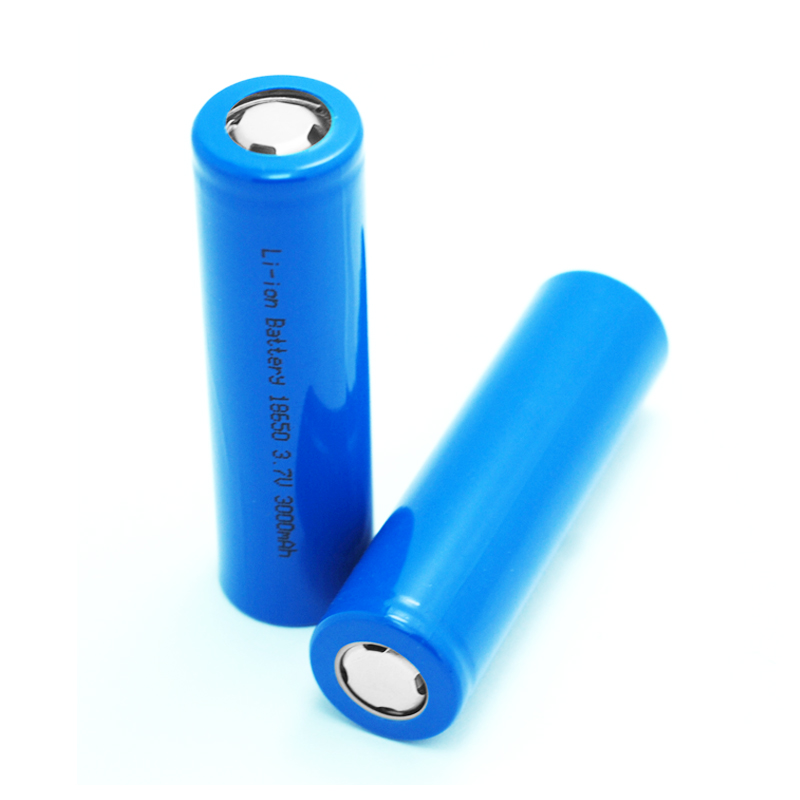
🔋 What Are 18650 Batteries Used For?
🧠 Summary
The 3.7V rechargeable battery 18650 is not a consumer gimmick cell — it is a standardized cylindrical lithium-ion format engineered for energy density, current capability, and lifecycle predictability. From power tools to medical devices and EV modules, rechargeable lithium ion 18650 batteries are selected when designers need a balance of capacity, discharge rate, and supply-chain stability. In short: they are used where reliability matters more than novelty.
🔌 Consumer Electronics: Compact Power With Predictable Output
18650 cells dominate mid-to-high power portable electronics.
📱 Typical devices:
-
Laptops and ultrabooks
-
Power banks
-
Professional flashlights
-
Portable speakers
-
Photography equipment
Why 18650?
-
Nominal 3.6–3.7 V matches system rails
-
Mature protection ecosystem
-
Stable performance across load profiles
👉 Direct conclusion: If a device needs hours of runtime without bulk, 18650 is the default choice.
🛠️ Power Tools: High Discharge in Harsh Conditions
Power tools care less about capacity and more about current delivery.
🔧 Common applications:
-
Cordless drills
-
Impact drivers
-
Saws and grinders
-
Garden equipment
Here, rechargeable lithium ion 18650 batteries are arranged in series-parallel packs:
-
High C-rate variants (INR/NMC)
-
Robust thermal behavior
-
Proven abuse tolerance
Most professional tools still rely on cylindrical cells over pouch formats.
🚗 Electric Vehicles & Mobility Systems
Yes, cylindrical cells scale.
🚲 Used in:
-
E-bikes and scooters
-
AGVs and robots
-
Early and modular EV battery packs
Why engineers still use 18650:
-
Uniform thermal geometry
-
Easier fault isolation
-
Consistent aging behavior
-
Easier sourcing in 18650 battery bulk
Tesla’s early platforms proved cylindrical cells work — when engineered correctly.
🏥 Medical & Industrial Equipment
Reliability beats novelty in regulated environments.
🏥 Applications include:
-
Portable diagnostic tools
-
Infusion pumps
-
Backup power modules
-
Measurement instruments
Here, 18650 button top battery designs are often preferred:
-
Better mechanical contact
-
Reduced risk of misalignment
-
Drop-in compatibility with holders
Button tops are about safety, not marketing.
🔦 Emergency, Tactical & Outdoor Gear
Few environments are more demanding.
🔦 Typical uses:
-
Tactical flashlights
-
Emergency backup lighting
-
Search and rescue equipment
-
Camping and outdoor systems
18650 cells handle:
-
High peak currents
-
Cold environments
-
Repeated charge cycles
-
Long shelf storage (when stored properly)
This is why flashlight professionals reject AA adapters for serious use.
📦 Energy Storage & Backup Systems
Small format, big system.
🔋 Used in:
-
DIY battery packs
-
Home energy storage prototypes
-
UPS modules
-
IoT backup power
When purchased as 18650 battery bulk, system designers gain:
-
Cost control
-
Cell matching
-
Custom pack architecture
Engineering control improves when cells are standardized.
🧠 Engineer’s Selection Advice: Choosing the Right 18650 for the Job
Not all 18650 cells are interchangeable.
🔍 Key parameters to evaluate:
-
Capacity vs discharge tradeoff
-
Continuous vs peak current rating
-
Internal resistance consistency
-
Button top vs flat top requirement
-
Supplier batch traceability
For packs, consistency matters more than headline mAh.
❌ Common Misconceptions About 18650 Applications
🚫 “They’re just bigger AA batteries”
🚫 “All 18650 cells perform the same”
🚫 “Higher mAh always means better”
🚫 “Button top is only cosmetic”
🚫 “Bulk cells don’t need matching”
Each of these leads to poor design decisions or safety issues.
❓ Frequently Asked Questions (FAQ)
🔹 What are 18650 batteries most commonly used for?
They are widely used in laptops, power tools, EV modules, medical devices, and high-performance lighting.
🔹 Why is the 3.7V rechargeable battery 18650 so popular?
Its voltage matches most electronics, while offering high energy density and proven reliability.
🔹 Are rechargeable lithium ion 18650 batteries suitable for DIY packs?
Yes, if proper cell matching, BMS integration, and thermal design are applied.
🔹 When should I use an 18650 button top battery?
When devices require spring contacts, higher mechanical tolerance, or standardized holders.
🔹 Is buying 18650 battery bulk a good idea?
For manufacturers and integrators, bulk purchasing ensures consistency, cost efficiency, and design control.
📢 Call to Action (CTA)
🔋 Looking for the right 18650 battery for your application?
We support engineers and buyers with cell selection, bulk sourcing, and application-specific recommendations for rechargeable lithium ion 18650 batteries.
👉 Contact us to match the right cell to your system.
Related Articles
Can 18650 batteries replace AA or AAA batteries?
How can you tell if an 18650 battery is bad?