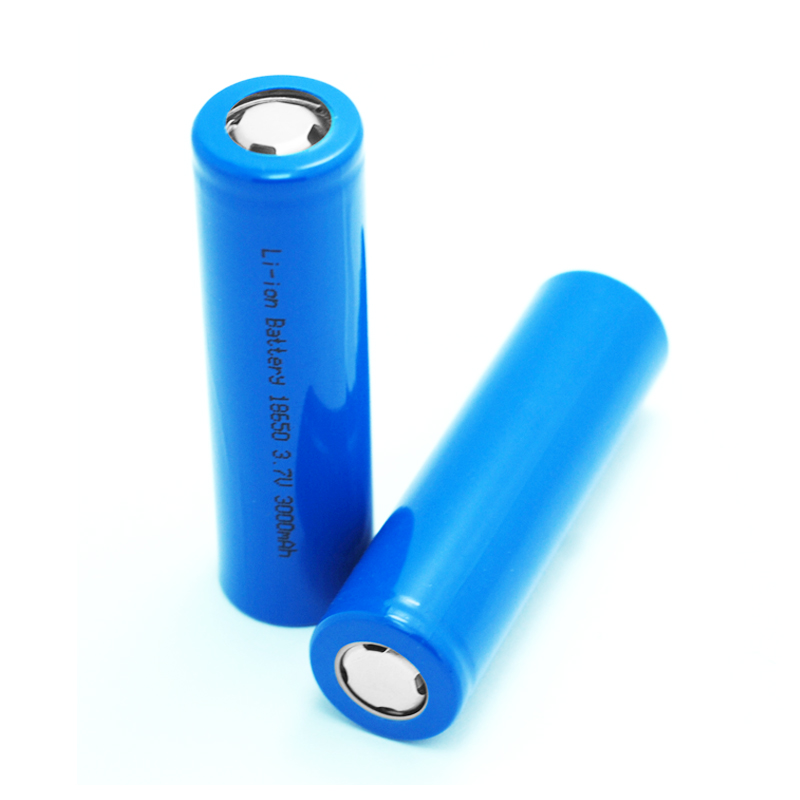
🔋 18650 vs 26650: What’s the Difference in Real Use?
🧠 Summary
On spec sheets, the 26650 cell looks like a simple upgrade—bigger size, higher capacity, higher current. In real-world systems, 18650 vs 26650 is a question of thermal control, mechanical compatibility, and pack architecture. The larger cell does not automatically perform better, and in many applications, 18650 battery vs 26650 battery comes down to system efficiency rather than raw numbers.
📏 Size & Mechanical Reality (Where Designs Break First)
Dimensions dictate everything downstream.
📐 18650
-
Ø18 × 65 mm
-
Lightweight, dense packing
-
Compatible with standardized holders and tooling
📐 26650
-
Ø26 × 65 mm
-
Significantly wider
-
Requires custom holders, wider busbars, thicker tabs
👉 Direct conclusion:
Switching from 18650 to 26650 is not a drop-in change. It is a mechanical redesign with cascading cost.
⚡ Electrical Performance Under Load
This is where the debate usually starts — and often ends incorrectly.
🔌 26650 advantages
-
Higher absolute current capability
-
Lower per-cell current density
-
Reduced voltage sag at high loads
🔌 18650 advantages
-
Better current sharing via parallel strings
-
Lower per-cell heat generation in multi-cell packs
-
More flexible pack voltage and capacity scaling
In 18650 vs 26650, fewer large cells vs many small cells is a system-level tradeoff, not a winner-takes-all.
🌡️ Thermal Behavior: Bigger Is Not Always Cooler
Thermal physics matters more than capacity.
🔥 26650
-
Larger thermal mass
-
Slower heat dissipation from core
-
Hot spots persist longer
🔥 18650
-
Faster surface heat shedding
-
Easier to zone and ventilate
-
Predictable failure patterns
In compact enclosures, 18650 battery vs 26650 battery often favors 18650 simply because heat can escape.
🔋 Capacity vs Energy Density
Raw capacity is misleading.
⚖️ Typical ranges:
-
18650: ~2500–3600 mAh
-
26650: ~4200–5500 mAh
But:
-
Energy per volume is often similar
-
Energy per weight may favor 18650
-
Aging curves vary widely by chemistry
Higher capacity does not guarantee longer runtime if voltage sag forces early cutoff.
🔧 Pack Design & Manufacturability
This is where engineers decide.
🛠️ 18650 packs
-
Mature automation
-
Easier laser welding
-
Proven BMS profiles
-
Lower scrap rate
🛠️ 26650 packs
-
Fewer cells per pack
-
Heavier nickel and busbars
-
Higher per-cell risk
-
Less standardized tooling
Direct conclusion:
For volume production, 18650 remains easier and cheaper to scale.
🧠 Engineer’s Selection Advice (No Marketing)
Choose 18650 when:
-
Space efficiency matters
-
Thermal management is constrained
-
You need redundancy
-
You rely on established suppliers
Choose 26650 when:
-
Very high current per cell is unavoidable
-
Pack size is not constrained
-
Mechanical robustness is prioritized
-
Cell count must be minimized
There is no reason to use 26650 “just because it’s bigger”.
❌ Common Misconceptions
🚫 “26650 always replaces 18650”
🚫 “Bigger cells run cooler”
🚫 “Higher mAh means longer real runtime”
🚫 “Fewer cells equals safer packs”
🚫 “26650 is more future-proof”
Most of these assumptions fail under thermal testing.
❓ Frequently Asked Questions (FAQ)
🔹 Is 26650 better than 18650?
Only for specific high-current applications. Not universally.
🔹 Can I replace an 18650 with a 26650?
No. The 18650 vs 26650 difference in diameter prevents direct replacement.
🔹 Which lasts longer?
Depends on load and temperature. Under moderate load, 18650 often ages better.
🔹 Why aren’t 26650 cells more common?
Mechanical size, tooling cost, and supply chain maturity favor 18650.
🔹 Which is safer?
Neither by default. Safety depends on pack design and thermal control, not size.
📢 Call to Action (CTA)
🔋 Choosing between 18650 and 26650 for a real product?
We help engineers evaluate thermal behavior, pack layout, and lifecycle cost before committing to a cell format.
👉 Contact us for professional battery selection and pack design support.
Related Articles
How do I choose the right 18650 battery for my application?
Which 18650 battery brand is the most reliable?
Are Samsung 18650 Batteries a Reliable Choice for Long-Term Performance?
What specifications matter most when selecting an 18650 battery?