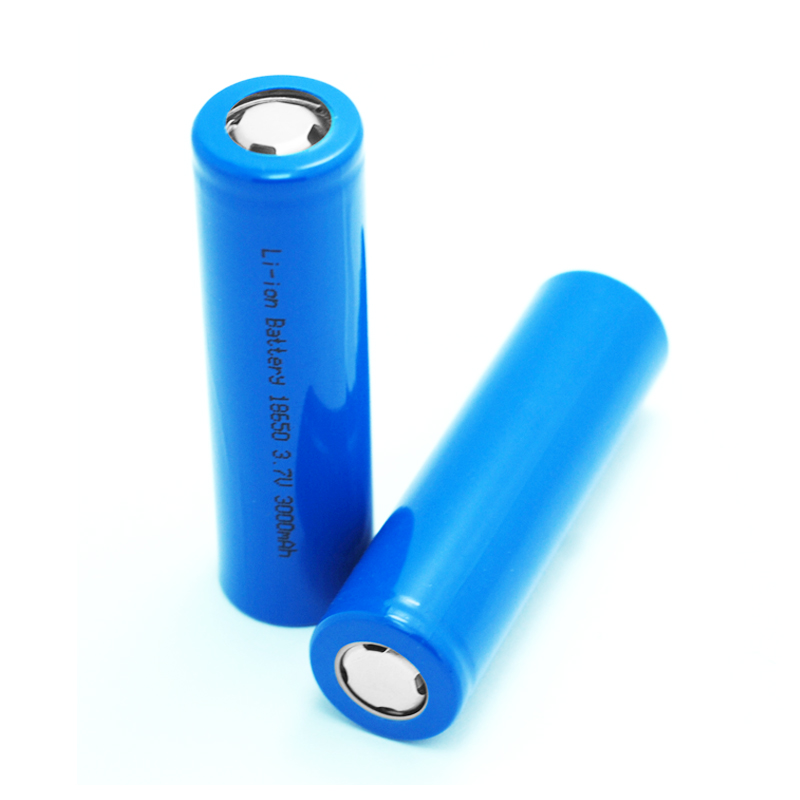
🔋 Can I Replace Multiple 18650 Cells With a Single Larger Cell?
🧠 Summary
Short answer: sometimes electrically, rarely mechanically, and not without redesign.
Multiple 18650 rechargeable li-ion cells are used in parallel or series to balance current, heat, redundancy, and packaging. Replacing them with a single larger cell is not a simplification—it is a system architecture change. In most real products, it introduces thermal risk, mechanical conflicts, and uneven aging.
📏 Physical Constraints Come First
Engineers start with geometry, not chemistry.
📐 18650 battery size
-
Diameter: ~18 mm
-
18650 battery length: ~65 mm
-
Cylindrical form optimized for dense arrays
A “single larger cell” (26650, 32700, pouch, or prismatic) almost always:
-
Exceeds available diameter
-
Changes center of mass
-
Requires new holders, insulation, and shock protection
👉 Direct conclusion:
If your enclosure was designed around 18650 battery size, replacement is not drop-in.
⚡ Electrical Reality: Parallel Cells Are Doing Real Work
Multiple 18650 cells in parallel are not redundant by accident.
🔌 What parallel 3.7 V 18650 rechargeable battery strings provide:
-
Current sharing
-
Lower per-cell stress
-
Reduced voltage sag
-
Graceful degradation when one cell weakens
A single large cell must now:
-
Carry the full current alone
-
Handle higher internal heating
-
Become a single point of failure
Electrically possible ≠ electrically equivalent.
🌡️ Thermal Behavior: One Big Core vs Many Small Ones
This is where many redesigns fail.
🔥 Multiple 18650s
-
More surface area
-
Faster heat rejection
-
Distributed hot spots
-
Easier thermal zoning
🔥 Single larger cell
-
Higher thermal mass
-
Slower internal heat escape
-
Core temperature rises faster under sustained load
Direct conclusion:
In compact housings, multiple 18650 rechargeable li-ion cells cool better than one large cell.
🔋 Capacity vs Usable Energy
On paper, one big cell can match total mAh.
In practice:
-
Voltage sag limits usable capacity
-
Thermal throttling reduces runtime
-
BMS cutoffs trigger earlier
A pack of 18650s often delivers more usable watt-hours than a single high-capacity cell under real load.
🔧 Pack Design & Safety Implications
Replacing cells is not just a wiring change.
🛠️ Required redesigns include:
-
New cell holders and spacers
-
Updated BMS current limits
-
Different fault-detection thresholds
-
Revised thermal protection logic
Safety certifications often become invalid after such changes.
🧠 Engineer’s Selection Advice (No Guesswork)
Consider a single larger cell only if all of the following are true:
✅ Available space exceeds original 18650 battery length and diameter
✅ Continuous current is within single-cell rating with margin
✅ Thermal path is explicitly engineered
✅ Redundancy is not required
✅ You accept higher single-point failure risk
If any box is unchecked, stick with multiple 18650 rechargeable li-ion cells.
❌ Common Misconceptions
🚫 “Fewer cells means simpler and safer”
🚫 “Higher mAh equals longer runtime”
🚫 “One cell is easier to manage thermally”
🚫 “Voltage stays the same, so it’s fine”
🚫 “BMS settings don’t need adjustment”
These assumptions ignore physics.
❓ Frequently Asked Questions (FAQ)
🔹 Can I replace two parallel 18650s with one bigger cell?
Only if the larger cell can safely handle double the current and the thermal design supports it.
🔹 Does one large cell last longer?
Not necessarily. Higher stress often shortens cycle life.
🔹 Is a single cell safer?
No. Multiple cells provide fault tolerance.
🔹 Will the voltage change?
Nominal voltage may remain similar, but voltage sag behavior changes significantly.
🔹 Do I need a new BMS?
Almost always, yes.
📢 Call to Action (CTA)
🔋 Considering a redesign away from 18650 cells?
We help engineers evaluate thermal limits, electrical stress, and lifecycle risk before consolidating cells.
👉 Contact us for professional battery architecture and pack design support.
Related Articles
18650 Vape Battery – High-Drain Rechargeable Power Cells for Vape Devices
18650 Battery Protected vs Unprotected: Which One Should You Use?
What specifications matter most when selecting an 18650 battery?