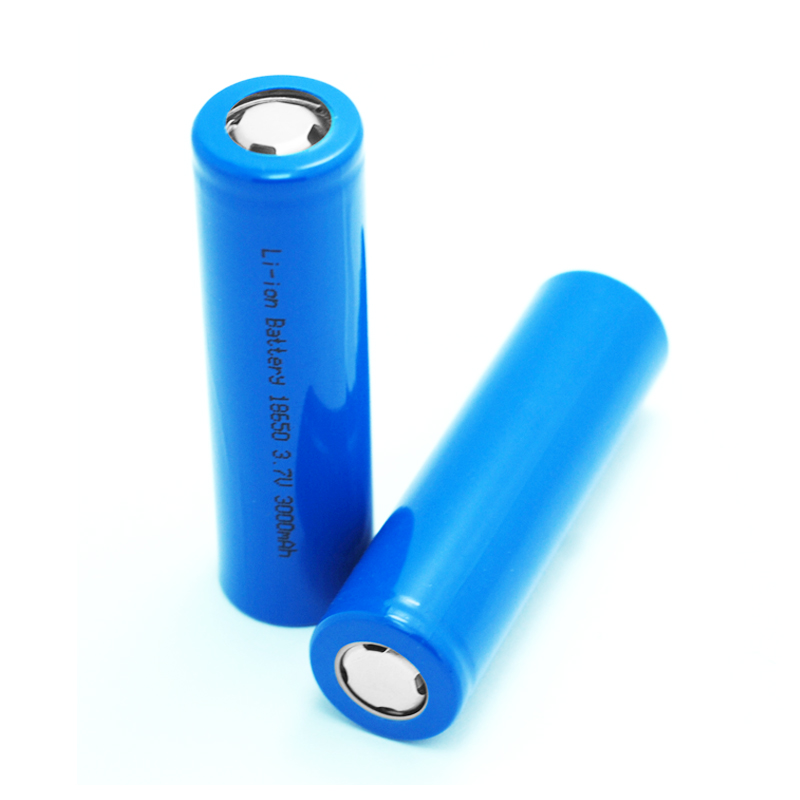
🔋 Are Flat-Top and Button-Top 18650 Batteries Interchangeable?
🧠 Summary
In most real devices, flat-top and button-top 18650 batteries are not interchangeable. Electrically they may share the same chemistry, but contact geometry, stack height tolerance, protection design, and current path reliability differ in ways that matter. Using the wrong top style is a common cause of intermittent power loss, overheating springs, and damaged protection circuits.
📏 The Physical Difference Is Small — The Impact Is Not
At first glance, the difference looks trivial.
📐 Typical measurements:
-
Battery 18650 flat top: ~65.0 mm length
-
18650 button top: ~66.5–67.0 mm length
That extra 1.5–2.0 mm matters.
👉 Direct conclusion:
Many devices are built with tight axial tolerances. A button top can over-compress springs or prevent enclosure closure, while flat tops may fail to make contact at all.
🔌 Contact Geometry & Electrical Reliability
This is the real differentiator.
🔋 18650 flat top batteries
-
Flat positive terminal
-
Designed for welded tabs or rigid contacts
-
Common in battery packs and OEM assemblies
🔋 Button top 18650 battery
-
Raised positive nub
-
Designed for consumer devices
-
Compensates for spring-based contacts
Flat tops rely on precision alignment. Button tops rely on mechanical compliance.
⚡ Current Path & Resistance Differences
Contact style affects resistance.
🔧 Flat top:
-
Lower contact resistance in welded systems
-
Better for high current in pack assemblies
🔧 Button top:
-
Slightly higher resistance
-
Additional weld point (button cap)
-
More tolerant of contact misalignment
In high-drain systems, contact quality matters as much as cell chemistry.
🧯 Protection Circuit Implications
Most 18650 button top cells are protected cells.
That means:
-
Added PCB at the negative end
-
Increased total length
-
Current and temperature cutoffs
-
Lower maximum discharge capability
Many 18650 flat top batteries are unprotected, assuming the pack BMS handles safety.
👉 Direct conclusion:
Swapping between protected and unprotected cells without redesign is a safety risk, not a convenience.
🔧 Application Reality: Where Each Type Belongs
🛠️ Flat-top 18650
-
Custom battery packs
-
Power tools
-
EV sub-modules
-
Industrial equipment
🔦 Button-top 18650
-
Flashlights
-
Consumer electronics
-
Devices with spring contacts
-
User-replaceable batteries
If the device didn’t ship with it, assume it’s incompatible.
🧠 Engineer’s Selection Advice (Straightforward)
Choose 18650 flat top batteries when:
-
Cells are spot-welded
-
Current draw is high
-
A BMS is present
-
Axial length is tightly controlled
Choose 18650 button top when:
-
Cells are user-replaceable
-
Spring contacts are used
-
Over-discharge protection is needed at cell level
-
Slight length variation is acceptable
Never choose based on availability alone.
❌ Common Misconceptions
🚫 “They’re electrically the same, so it doesn’t matter”
🚫 “A spacer or magnet solves flat-top issues”
🚫 “Button top is always safer”
🚫 “Flat top means higher power”
🚫 “Length differences are negligible”
Most battery failures start with mechanical mismatch.
❓ Frequently Asked Questions (FAQ)
🔹 Can I replace a button-top 18650 with a flat-top?
Only if the device explicitly supports flat-top cells. Many do not.
🔹 Can I add a magnet to a flat-top cell?
Strongly discouraged. Magnets introduce resistance, heat, and detachment risk.
🔹 Are button-top batteries always protected?
Most are, but not all. Always verify specifications.
🔹 Which is better for high-drain use?
Flat-top 18650 batteries in a properly designed pack.
🔹 Do flat-top cells last longer?
Not inherently. Lifespan depends on load, heat, and charge regime.
📢 Call to Action (CTA)
🔋 Unsure whether flat-top or button-top 18650 cells fit your product?
We help engineers and buyers select the correct 18650 format based on mechanical tolerance, electrical load, and safety architecture.
👉 Contact us for expert battery selection and pack support.
Related Articles
18650 vs 26650: what’s the difference in real use?
Where Can You Find a Reliable 18650 Battery Store for Genuine Cells?
What specifications matter most when selecting an 18650 battery?
Why are 18650 batteries still popular compared to 21700 batteries?