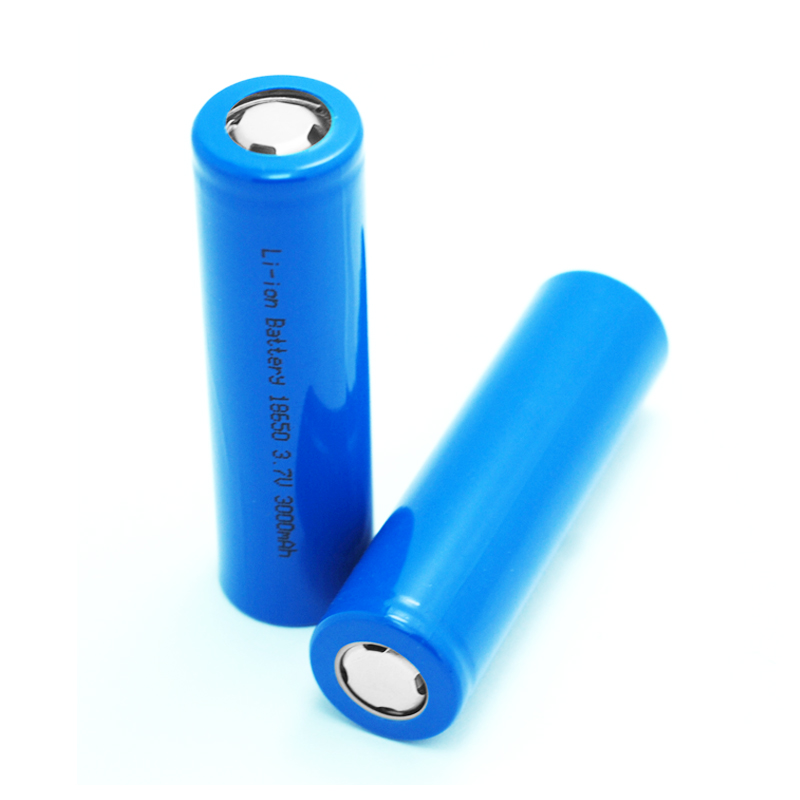
🔋 How Do I Match 18650 Batteries in a Battery Pack?
🧠 Abstract
Matching 18650 cells is not about making voltages “look close.” In real battery packs, especially with 3.7V 18650 lithium ion batteries, poor matching is the fastest way to create imbalance, accelerated aging, and early pack failure. Capacity, internal resistance, voltage response under load, and aging history all matter—and they matter differently depending on whether cells are connected in series or parallel. This page explains how engineers actually match rechargeable 18650 batteries, not how it’s simplified online.
🧩 Why Cell Matching Matters More Than You Think
🔧 Battery packs don’t fail evenly. One weak 18650 batter dictates the usable capacity of the entire string.
In series:
-
The lowest-capacity cell hits cutoff first
-
Over-discharge risk concentrates on a single cell
-
BMS balancing can only compensate so much
In parallel:
-
Cells with lower internal resistance carry more current
-
Thermal stress becomes uneven
-
Aging accelerates asymmetrically
Conclusion: Poor matching turns a lithium ion 18650 pack into a single-point failure system.
🔍 What “Matching” Actually Means (Engineer Definition)
Matching is not just voltage alignment at rest.
✅ Proper matching includes:
-
Capacity (Ah)
-
DC internal resistance (mΩ)
-
Open-circuit voltage
-
Voltage sag under load
-
Production batch and aging history
If any of these drift too far apart, the pack degrades unevenly.
⚡ Capacity Matching: The First Filter
🔋 For a 3.7V 18650 battery pack, capacity mismatch is the most visible failure trigger.
Best practice:
-
Keep capacity variation within ±2–3%
-
Measure at the same discharge rate (typically 0.5C)
-
Avoid mixing rated capacities (e.g., 3000mAh with 3500mAh)
Engineering reality:
Capacity mismatch shows up as premature cutoff, not instant failure—but the damage accumulates every cycle.
🔥 Internal Resistance Matching: The Silent Killer
📉 IR mismatch causes hidden stress.
-
Lower IR cells supply more current
-
Higher IR cells heat faster
-
Parallel groups drift over time
Typical targets:
-
IR deviation ≤ 10% within a group
-
Measured at the same temperature and SOC
-
Use DC IR, not AC-only readings
This matters more than nominal voltage once the pack is loaded.
🌡️ Voltage Matching: Necessary, Not Sufficient
🔌 Voltage matching is the entry ticket, not the finish line.
Before assembly:
-
Cells should be within ±20–30 mV
-
Match at mid-SOC (≈3.6–3.7V), not full charge
-
Avoid topping off mismatched cells to “force” alignment
A lithium ion 18650 cell can look matched at rest and diverge under load within seconds.
🧪 Load Testing: Where Real Differences Appear
🧪 Engineers trust load curves more than labels.
Recommended:
-
Short discharge pulse at expected pack current
-
Compare voltage drop and recovery
-
Reject cells with abnormal sag or slow rebound
This step filters out “technically OK” but practically unstable rechargeable 18650 batteries.
🏭 Production Batch and Aging Consistency
📦 Mixing cells from different sources is asking for trouble.
Avoid:
-
Different manufacturers
-
Different production dates
-
Mixed cycle counts
-
Salvaged + new cells in one pack
Even identical lithium ion 18650 models age differently after a few hundred cycles.
🧰 Matching Strategy by Pack Topology
🔗 Series Packs
-
Prioritize capacity and voltage alignment
-
Tight cutoff thresholds
-
Balance regularly
🔗 Parallel Packs
-
Prioritize internal resistance
-
Thermal monitoring matters more
-
Mechanical symmetry helps
🔗 Series-Parallel Packs
-
Match cells into parallel groups first
-
Then match groups, not individual cells
🧠 Engineer’s Cell Selection Advice
🔧 Choose cells that:
-
Come from the same production lot
-
Have documented test data
-
Are designed for your current profile
-
Are not “highest capacity” by default
Direct advice:
A slightly lower-capacity rechargeable 18650 battery with tight tolerances outperforms a high-capacity mismatched pack over time.
❌ Common Misconceptions
🚫 “Same voltage means matched”
🚫 “The BMS will fix imbalance”
🚫 “Parallel cells self-balance perfectly”
🚫 “Capacity is more important than resistance”
🚫 “Used cells can be re-matched safely”
Cell matching reduces stress; it does not eliminate chemistry limits.
❓ Frequently Asked Questions (FAQ)
🔹 How closely should 18650 batteries be matched?
Ideally within ±2–3% capacity and ≤10% internal resistance for pack use.
🔹 Can I mix old and new 18650 batteries?
No. Aging differences cause current imbalance and shorten pack life.
🔹 Is voltage matching alone enough?
No. Voltage matching without IR and capacity alignment is incomplete.
🔹 Do I need special equipment to match lithium ion 18650 cells?
Basic chargers aren’t enough. A proper tester with IR measurement is recommended.
🔹 Can a BMS compensate for poor matching?
Only partially. A BMS manages symptoms, not root causes.
📢 Call to Action (CTA)
🔋 Building or sourcing a reliable 18650 battery pack?
We provide matched 3.7V 18650 batteries, pack-ready lithium ion 18650 cells, and engineering support to ensure consistency, safety, and long service life.
👉 Contact us to discuss cell matching and pack design.
Related Articles
18650 Vape Battery – High-Drain Rechargeable Power Cells for Vape Devices
Are Samsung 18650 Batteries a Reliable Choice for Long-Term Performance?
Is the Samsung 35E 18650 3500mAh 8A Battery Right for Your Application?