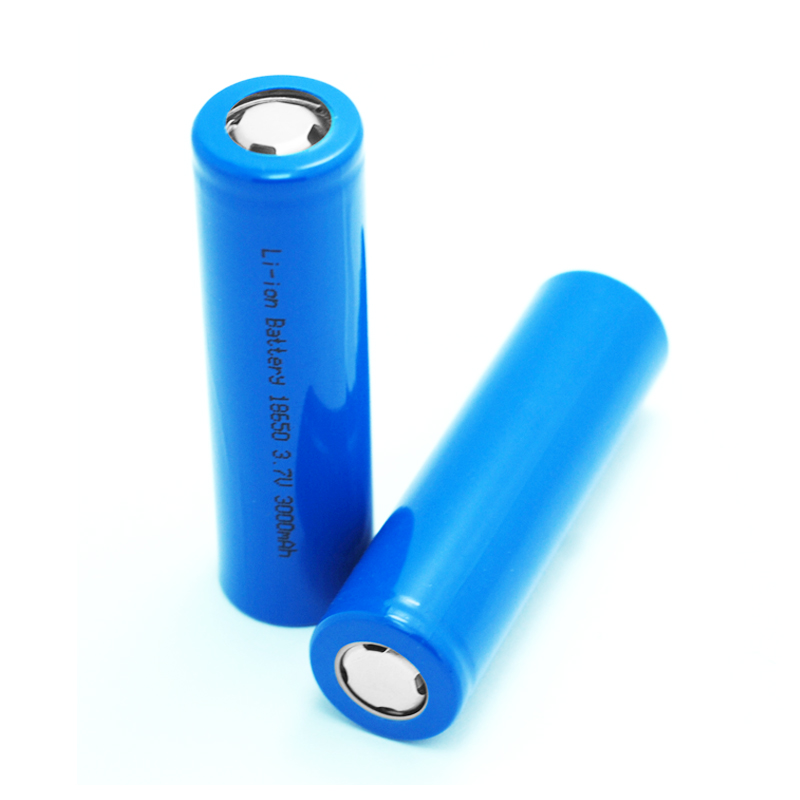
🔋 What Specifications Matter Most When Selecting an 18650 Battery?
🧠 Abstract
Choosing the best 18650 battery is rarely about chasing the highest mAh printed on a datasheet. In real-world pack battery 18650 applications, performance is dictated by a small set of electrical and thermal specifications that determine cycle life, safety margins, and usable energy. This page breaks down the parameters engineers actually evaluate when specifying a 18650 lithium ion battery 3.7 V, separating marketing noise from field-proven criteria.
⚙️ Nominal Voltage and Chemistry Compatibility
🔌 Almost every 18650 lithium ion battery operates at a nominal 3.6–3.7 V, but chemistry still matters.
Key points:
-
INR / NMC: balanced energy and power
-
NCA: higher energy density, tighter thermal window
-
ICR: higher capacity, lower discharge tolerance
Direct conclusion:
If thermal management is limited, avoid high-energy chemistries even if the capacity looks attractive.
🔋 Capacity (mAh): Usable Energy vs Label Claims
📈 Capacity defines runtime, but usable capacity is what matters in a pack.
Engineers look at:
-
Capacity measured at realistic C-rates (0.5C–1C)
-
Voltage curve stability under load
-
Capacity fade after 300–500 cycles
A “3500 mAh” cell that collapses under load delivers less usable energy than a stable 3000 mAh cell in many pack designs.
⚡ Continuous and Peak Discharge Ratings
🔥 Discharge capability determines whether the cell survives real currents.
Critical specs:
-
Continuous discharge current (A)
-
Pulse discharge tolerance
-
Temperature rise at rated load
For pack battery 18650 designs, continuous rating matters more than pulse numbers. Marketing often inflates pulse ratings; engineers ignore them.
📉 Internal Resistance (IR): The Performance Multiplier
📊 IR governs heat, voltage sag, and current sharing.
Why it matters:
-
Lower IR = less heat at the same current
-
Parallel packs depend on tight IR matching
-
IR increases predictably with aging
Rule of thumb:
A lower-capacity cell with lower IR often outperforms a “high-capacity” alternative in demanding systems.
🌡️ Thermal Behavior and Safety Margins
🌡️ A cell’s thermal profile defines its safety envelope.
Evaluate:
-
Temperature rise at continuous load
-
Thermal runaway onset thresholds
-
Manufacturer thermal test data
The best 18650 battery is the one that stays inside safe temperature limits without aggressive cooling.
🔄 Cycle Life and Degradation Curve
🔁 Cycle life is not a single number.
Engineers examine:
-
Capacity retention at 80% SOH
-
Degradation slope, not just endpoint
-
Performance consistency across cycles
Cells with slower early-life degradation are preferred, even if their rated cycle count looks lower on paper.
🧪 Consistency and Manufacturing Quality
🏭 Pack reliability depends on cell uniformity.
Important factors:
-
Batch-to-batch consistency
-
Standard deviation of capacity and IR
-
Traceability and quality control systems
This is where reputable brands outperform no-name alternatives, even with similar headline specs.
🧰 Engineer’s Selection Advice
🧠 When specifying an 18650 pil or production pack, prioritize:
-
Electrical stability over headline capacity
-
Thermal behavior over maximum discharge
-
Consistency over one-off performance
Direct advice:
For most applications, a mid-capacity, low-IR 18650 lithium ion battery 3.7 V delivers the lowest total cost of ownership.
❌ Common Selection Mistakes
🚫 Choosing by mAh alone
🚫 Ignoring internal resistance
🚫 Trusting pulse current ratings
🚫 Mixing cells from different batches
🚫 Assuming all 18650s behave the same in packs
These mistakes don’t cause immediate failure—they quietly shorten system life.
❓ Frequently Asked Questions (FAQ)
🔹 What makes the best 18650 battery?
Balanced capacity, low internal resistance, stable thermal behavior, and consistent manufacturing quality.
🔹 Is higher capacity always better?
No. Higher capacity often comes with higher IR and lower discharge tolerance.
🔹 Why is internal resistance so important in packs?
IR determines heat generation, voltage sag, and current sharing between cells.
🔹 Are all 18650 lithium ion batteries 3.7 V the same?
No. Chemistry, construction, and quality control create large performance differences.
🔹 Can I mix different 18650 models in one pack?
Not recommended. Mismatch accelerates imbalance and degradation.
📢 Call to Action (CTA)
🔋 Selecting cells for a production battery pack?
We supply pack-ready 18650 batteries, matched and tested for consistency, and help engineers choose the right balance of capacity, power, and longevity.
👉 Contact us to discuss your 18650 pack requirements.
Related Articles
Are flat-top and button-top 18650 batteries interchangeable?
How do I match 18650 batteries in a battery pack?
18650 Battery Protected vs Unprotected: Which One Should You Use?
What specifications matter most when selecting an 18650 battery?