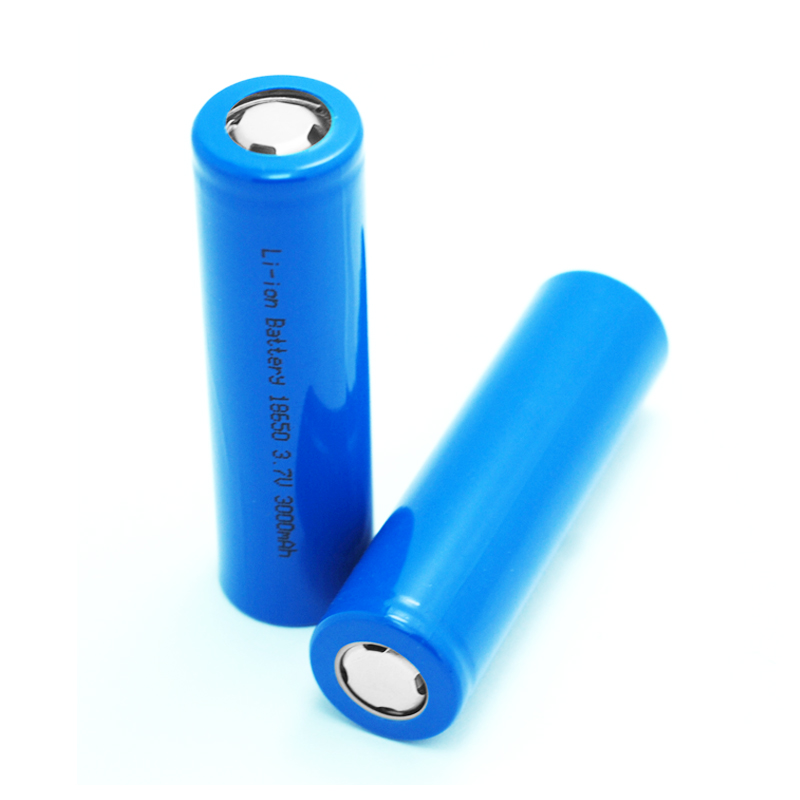
🔋 What Is a 18650 Battery?
🧠 Abstract
An 18650 battery is a standardized cylindrical lithium-ion cell used as the building block for everything from consumer electronics to industrial battery packs. While the format appears simple, real-world performance depends on chemistry, internal resistance, protection strategy, and how the cell is charged and integrated. This page explains what an 18650 battery actually is, clarifies 18650 battery specs, and highlights the engineering details that determine whether a cell performs reliably or fails early.
📏 What “18650” Actually Means
📐 The term 18650 defines a physical format, not a performance level.
-
18 = ~18 mm diameter
-
65 = ~65 mm length
-
0 = cylindrical cell
These 18650 battery measurements set the mechanical envelope, but electrical behavior varies widely between models.
⚡ Core 18650 Battery Specifications
🔋 18650 battery specs differ by application, but typical ranges include:
-
Nominal voltage: 3.6–3.7 V
-
Fully charged voltage: 4.2 V
-
Capacity: 1800–3500 mAh
-
Continuous discharge: 5–30 A
-
Chemistry: INR, NMC, NCA, ICR
Direct conclusion:
Two cells with identical dimensions can behave completely differently under load.
🔄 How an 18650 Battery Works
🔌 Inside the cell:
-
Graphite anode
-
Lithium-metal-oxide cathode
-
Organic electrolyte
-
Separator film
-
Safety vent and current interrupt device
Lithium ions shuttle between electrodes during charge and discharge. This chemistry enables high energy density but requires controlled operation.
🔋 Charging an 18650 Battery Safely
⚠️ Charge 18650 battery cells using a CC-CV profile.
Standard practice:
-
Constant current phase to 4.2 V
-
Constant voltage taper to cutoff current
-
Typical charge rate: 0.5C–1C
Direct conclusion:
Improper charging is the fastest way to damage an 18650 cell—or create a safety hazard.
🛡️ What Is an 18650 Protected Battery?
🧠 A 18650 protected battery includes an added PCB at the cell’s base.
Protection typically covers:
-
Over-charge
-
Over-discharge
-
Over-current
-
Short-circuit
Protected cells are common in consumer devices. In engineered packs, protection is usually handled by the BMS instead.
🔥 Performance vs Safety Trade-Offs
🌡️ High-capacity cells:
-
Longer runtime
-
Higher internal resistance
-
Lower discharge tolerance
High-drain cells:
-
Lower capacity
-
Higher current capability
-
Better thermal behavior
There is no “best” 18650—only the correct one for the load profile.
🧰 Engineer’s Selection Advice
🧠 When specifying an 18650 battery:
-
Match capacity to real discharge current
-
Prioritize low internal resistance for packs
-
Decide early between protected and unprotected
-
Validate 18650 battery measurements against enclosure tolerances
Direct advice:
If you don’t know your load profile, you’re guessing—not selecting.
❌ Common Misconceptions
🚫 All 18650 batteries are interchangeable
🚫 Higher mAh means better performance
🚫 Protected batteries are always safer
🚫 Any charger can charge an 18650
🚫 Size defines electrical capability
These assumptions cause most early failures.
❓ Frequently Asked Questions (FAQ)
🔹 What devices use 18650 batteries?
Laptops, power tools, e-bikes, flashlights, medical devices, and battery packs.
🔹 Are all 18650 battery specs the same?
No. Capacity, discharge rate, and chemistry vary significantly.
🔹 Can I charge an 18650 battery with a standard charger?
Only if the charger is designed for lithium-ion CC-CV charging.
🔹 What’s the difference between protected and unprotected 18650 batteries?
Protected cells include a safety PCB; unprotected rely on external control systems.
🔹 How long does an 18650 battery last?
Typically 300–800 cycles, depending on usage and charging conditions.
📢 Call to Action (CTA)
🔋 Looking for reliable 18650 batteries for your product or pack design?
We supply tested 18650 cells, including protected and pack-grade options, with full electrical and dimensional documentation.
👉 Contact us to discuss your application requirements.
Related Articles
Can you use any 18650 battery for vaping?
What Are the Dimensions of a 18650 Battery?
Is the Samsung 18650 Battery 35E Still a Reliable Choice Today?
What Makes a Good 18650 Battery Charger Safe, Accurate, and Worth Buying?