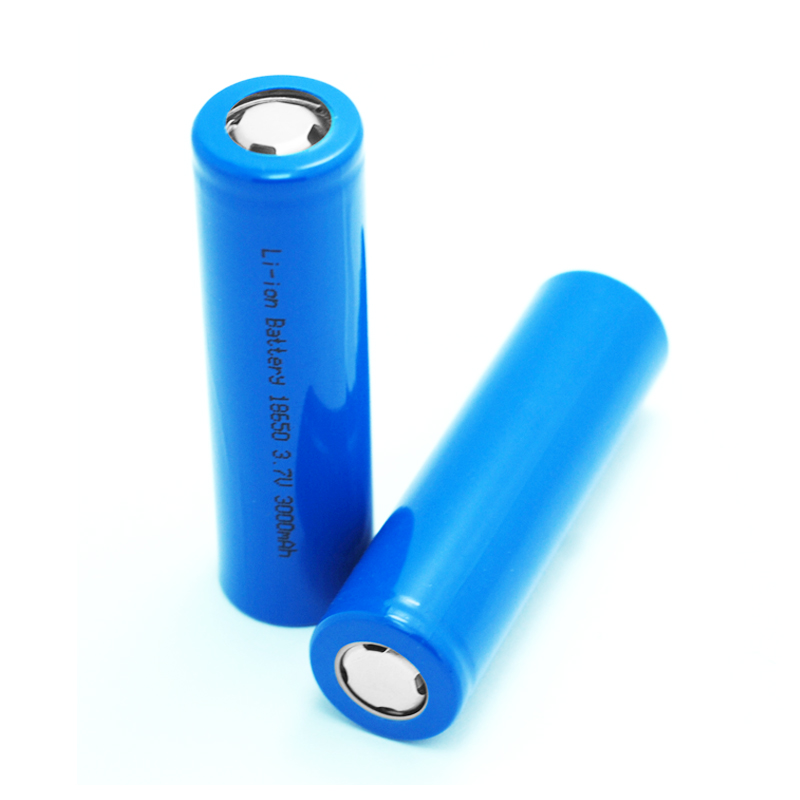
❓ Is a 3000mAh 35A 18650 Battery Realistic for DIY Battery Packs?
📌 Abstract
High current and high capacity rarely coexist without compromise. Builders searching for a 18650 battery 3000mah 35a often plan a DIY 18650 battery pack without fully understanding the electrical trade-offs. This page explains how a 18650 battery 3.7 V li ion actually behaves under load, why the term 18650 lipo battery is frequently misused, and how engineers select cells that survive real-world stress.
🔋 What Is a 18650 Battery 3.7 V Li-Ion?
A 18650 battery 3.7 V li ion is a cylindrical lithium-ion cell defined by:
-
18 mm diameter
-
65 mm length
-
Nominal voltage of ~3.6–3.7 V
Voltage is chemistry-dependent; capacity and discharge rating depend on electrode design.
Direct conclusion:
Voltage is standardized; performance is not.
⚙️ Can a 18650 Battery Deliver 3000mAh at 35A?
Short answer: rarely, and not continuously.
Engineering reality:
-
35A requires very low internal resistance
-
Low resistance reduces achievable capacity
-
Genuine 35A cells usually fall below 2800mAh
Cells advertised as 18650 battery 3000mah 35a should be verified with full discharge curves.
🔥 Why High Current Breaks Capacity Claims
At 35A discharge:
-
Voltage sag accelerates
-
Heat generation dominates losses
-
Cutoff voltage is reached earlier
This is why real-world output is often far below the rated mAh.
Industry rule:
Capacity ratings are measured at low current, not extreme load.
🔩 Is “18650 LiPo Battery” a Correct Term?
The phrase 18650 lipo battery is commonly used but technically inaccurate.
Clarification:
-
18650 cells are lithium-ion (Li-ion)
-
LiPo refers to pouch-style polymer cells
-
Electrical behavior differs significantly
Mislabeling causes improper charger and BMS selection.
🧪 Typical Specs for High-Drain 18650 Cells
| Parameter | Realistic Range |
|---|---|
| Capacity | 2000–2800mAh |
| Nominal Voltage | 3.6–3.7V |
| Continuous Discharge | 25–35A |
| Internal Resistance | Very low |
| Heat Output | High |
Engineering note:
Thermal design matters as much as electrical rating.
🧠 Engineer’s Guide: DIY 18650 Battery Pack Design
🔧 When You Need High Current
-
Choose cells with published test data
-
Derate current by at least 20%
-
Design airflow or heat sinking
🔋 When Runtime Matters More
-
Accept lower current ratings
-
Increase parallel cell count
-
Reduce peak load per cell
🔌 Pack-Level Considerations
-
Matched cells from the same batch
-
Proper nickel strip thickness
-
Reliable BMS with current headroom
Engineering rule:
Packs fail at the weakest cell, not the average one.
⚠️ Common Mistakes in DIY 18650 Battery Packs
❌ Believing all 3000mAh 35A claims
❌ Mixing cells with different internal resistance
❌ Ignoring thermal runaway risk
❌ Using LiPo chargers on Li-ion cells
❌ Under-specifying welds and conductors
Industry truth:
Most DIY failures start with unrealistic assumptions.
❓ FAQ – 18650 3000mAh 35A Batteries
Q1: Are true 3000mAh 35A 18650 cells available?
Very few, and only from top-tier manufacturers with verified data.
Q2: Can I use these cells in a DIY battery pack?
Yes, but only with proper current derating and thermal design.
Q3: Is a 18650 lipo battery safer?
No. It is a misnomer and often causes incorrect charger use.
Q4: What matters more—capacity or discharge rating?
That depends entirely on your load profile.
📞 CTA – Build Your 18650 Battery Pack the Right Way
Looking for:
-
Verified 18650 battery 3.7 V li ion cells
-
Honest discharge ratings
-
Support for DIY 18650 battery pack design
-
Engineering-level sourcing advice
👉 Contact us to select the right 18650 cells for your high-current application.
Related Articles
21700 vs 18650: Which Battery Format Is Better for Real Applications?
Are 18650 LiFePO4 Cells the Safest 3.2V Choice?
Is the Samsung 35E 18650 3500mAh 8A Battery Right for Your Application?
18650, 14500, or 16340: Which Battery Size Fits Best?