Can 18650 Batteries Be Customized for Voltage or Capacity?
🔋 Abstract
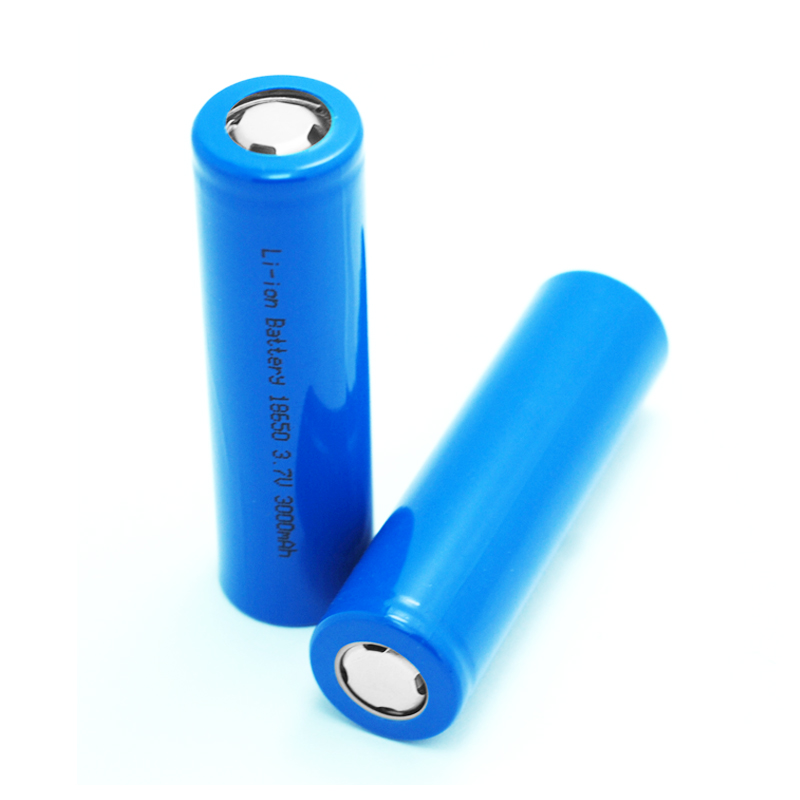
Customization is one of the most misunderstood topics in the lithium-ion industry. Buyers often ask whether an 18650 cell can be modified to achieve a higher voltage, a higher 18650 battery mAh capacity, or even claim they need the highest capacity 18650 battery for a specific project. The short answer: capacity can be engineered within limits; voltage cannot be arbitrarily changed at the cell level. This page explains what is realistically customizable, what is fixed by chemistry, and how engineers approach voltage and capacity decisions across the full 18650 battery voltage range.
⚡ Is the Voltage of an 18650 Battery Customizable?
The voltage of 18650 battery cells is defined by chemistry, not by customer preference.
Typical values:
-
Nominal voltage: 3.6 V / 3.7 V (NCM, NCA)
-
Full charge voltage: 4.2 V
-
Discharge cutoff: 2.5–3.0 V, depending on design
This defines the practical 18650 battery voltage range, and it is not adjustable without changing chemistry entirely.
Conclusion:
👉 You cannot “customize” a single 18650 cell to be 5 V, 6 V, or 12 V.
Voltage customization happens at the pack level, not the cell level.
🔌 How Voltage Customization Actually Works
If a project requires higher or lower voltage, engineers use:
-
Series connections (increase voltage)
-
Parallel connections (increase capacity)
-
DC-DC converters (regulated output)
For example:
-
3S pack → ~11.1 V nominal
-
4S pack → ~14.8 V nominal
The cell itself remains unchanged. This is a critical distinction often missed by non-technical buyers.
🔋 Can 18650 Battery Capacity Be Customized?
Capacity is partially customizable, but within strict physical and electrochemical limits.
Factors that influence 18650 battery mAh capacity:
-
Cathode chemistry formulation
-
Electrode coating thickness
-
Electrode density and porosity
-
Energy density vs cycle life trade-off
Manufacturers can tune these parameters, but every gain has a cost.
📈 What Defines the Highest Capacity 18650 Battery?
Currently, the highest capacity 18650 battery available commercially sits around 3500–3600 mAh using advanced NCA or NCM chemistries.
However:
-
Higher capacity usually means lower maximum discharge current
-
Cycle life may be reduced
-
Thermal margin becomes narrower
Direct conclusion:
👉 The highest mAh cell is not automatically the best cell.
🧪 Why Capacity Customization Has Limits
You cannot exceed:
-
Physical can volume
-
Safe lithium loading limits
-
Acceptable internal resistance
Beyond that, cells become unstable, short-lived, or unsafe. Claims of “4000 mAh 18650” are marketing fiction, not engineering reality.
🧠 Engineer’s Selection Advice (Real-World Perspective)
When choosing or “customizing” an 18650 solution, engineers should:
-
Define required system voltage, then design the series count
-
Select capacity based on load profile, not headline mAh
-
Balance energy density against cycle life and thermal behavior
-
Avoid designing around the absolute highest capacity option
-
Validate performance across the full 18650 battery voltage range, not just nominal
Good packs are engineered around constraints, not wishes.
⚠️ Common Misconceptions About 18650 Customization
-
“Higher voltage 18650 cells can be ordered” ❌
-
“Higher mAh always means longer runtime” ❌
-
“All 3.7 V cells behave the same” ❌
-
“Capacity can be increased without trade-offs” ❌
Lithium-ion design is compromise by nature.
❓ FAQ: 18650 Voltage & Capacity Customization
Q: Can an 18650 be made with a different nominal voltage?
A: Only by changing chemistry, which means it is no longer a standard 18650 Li-ion cell.
Q: Is the highest capacity 18650 suitable for power tools?
A: Usually no. High-capacity cells prioritize energy density, not high discharge rates.
Q: Can manufacturers customize capacity for OEM orders?
A: Within limits, yes—typically through electrode tuning and grading, not radical changes.
Q: Does higher capacity affect safety?
A: It reduces thermal margin and often increases sensitivity to abuse conditions.
📦 CTA: Need the Right 18650 Solution, Not Just a Big Number?
If you’re designing a battery pack and need help selecting cells based on real voltage requirements, usable capacity, and lifecycle expectations, our engineering team can support cell selection, pack architecture, and validation testing.
Related Articles
What BMS Is Required for an 18650 Battery Pack?
Is spot welding or soldering better for 18650 batteries?
What BMS Is Required for an 18650 Battery Pack?
How Many 18650 Cells Are Needed to Build a 12V Battery Pack?