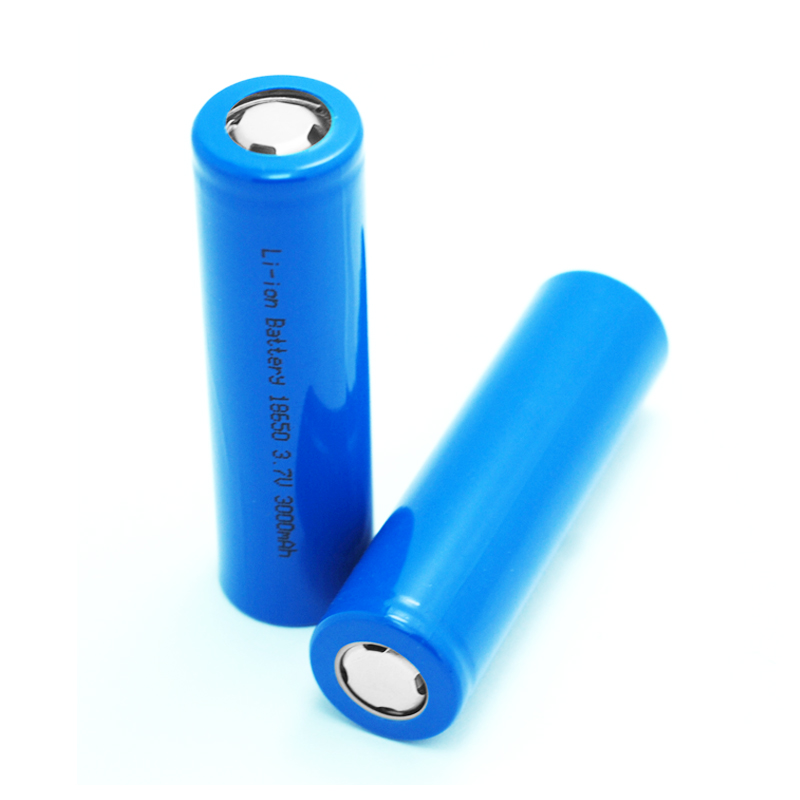
4S1P Battery 18650: How Does a 18650 4S1P Pack Work?
Abstract
A 4S1P battery 18650 configuration is one of the most common lithium-ion pack designs used in consumer electronics, industrial controls, and compact mobility systems. This page answers the real engineering questions behind 18650 4S1P, explains how a 4S1P 18650 battery pack behaves electrically, and clarifies what you actually get from an 18650 battery 2600mAh 4S1P setup. No marketing shortcuts—only application-driven explanations aligned with real-world pack design practice.
🔋 What Is a 4S1P Battery 18650 Configuration?
A 4S1P battery 18650 means:
-
4S (series): four 18650 cells connected in series
-
1P (parallel): only one cell per series position
This raises voltage, not capacity. Electrically:
-
Nominal voltage ≈ 14.8V (3.7V × 4)
-
Full charge voltage = 16.8V
-
Capacity equals a single cell’s capacity
Direct conclusion: 4S1P increases voltage, not runtime.
⚙️ How Does an 18650 4S1P Battery Pack Work?
In an 18650 4S1P pack:
-
Current flows through every cell equally
-
The weakest cell limits the entire pack
-
Balancing accuracy becomes critical
Because there is no parallel redundancy, cell matching is not optional. Voltage drift in one cell directly affects pack stability and BMS cutoff behavior.
🔌 Electrical Output of a 4S1P 18650 Battery Pack
Typical electrical characteristics:
-
Nominal voltage: 14.8V
-
Operating range: ~12.0V–16.8V
-
Continuous current = single-cell rating
For example, using a 10A-rated cell:
-
Pack max continuous current = 10A
-
Power output ≈ 148W nominal
This is why 4S1P packs are common in low-to-mid power systems, not high-current loads.
🔋 18650 Battery 2600mAh 4S1P: What Capacity Do You Really Get?
An 18650 battery 2600mAh 4S1P pack still delivers:
-
2600mAh total capacity
-
Not 10,400mAh
What changes is energy:
-
2.6Ah × 14.8V ≈ 38.5Wh
Misunderstanding this is one of the most common buyer errors in series pack selection.
🧠 Why Engineers Use 4S1P 18650 Packs
From an engineering standpoint, 4S1P 18650 battery packs offer:
-
Simple mechanical layout
-
Lower assembly cost
-
Easier voltage regulation for 12–15V systems
They are widely used in:
-
LED lighting systems
-
Routers and networking equipment
-
Small medical or monitoring devices
-
Embedded industrial controllers
The simplicity comes at the cost of zero current sharing margin.
🛠️ Engineer’s Selection Advice (Design First)
Choose a 4S1P battery 18650 if:
-
Load current stays within single-cell limits
-
Space constraints favor slim pack design
-
You can source tightly matched cells
Avoid 4S1P if:
-
Load current fluctuates sharply
-
Redundancy is required
-
Long runtime is more important than voltage
Blunt engineering rule: If current is your problem, 1P is your limitation.
⚠️ Common Mistakes with 18650 4S1P Packs
❌ Assuming capacity adds in series
→ It does not.
❌ Mixing cells from different batches
→ Accelerates imbalance and early BMS cutoff.
❌ Using low-quality BMS
→ 4S packs amplify voltage drift errors.
❌ Ignoring thermal coupling
→ Uneven heating worsens cell aging.
❓ FAQ: 4S1P Battery 18650
Q1: Can I replace a 4S2P pack with 4S1P?
Only if current demand and runtime requirements are lower.
Q2: Is a 4S1P battery pack safe?
Yes, when paired with a proper 4S BMS and matched cells.
Q3: Does 18650 4S1P require balancing?
Absolutely. Active or passive balancing is mandatory.
Q4: What happens if one cell fails?
The entire pack becomes unstable—there is no parallel backup.
🛒 CTA: Need a Reliable 4S1P 18650 Battery Pack?
If your system requires a 4S1P 18650 battery pack built with authentic cells, proper balancing, and verified load testing, our engineers can help you specify the right configuration—no oversizing, no guesswork.
👉 Contact us for a validated 4S1P solution matched to your real operating conditions.