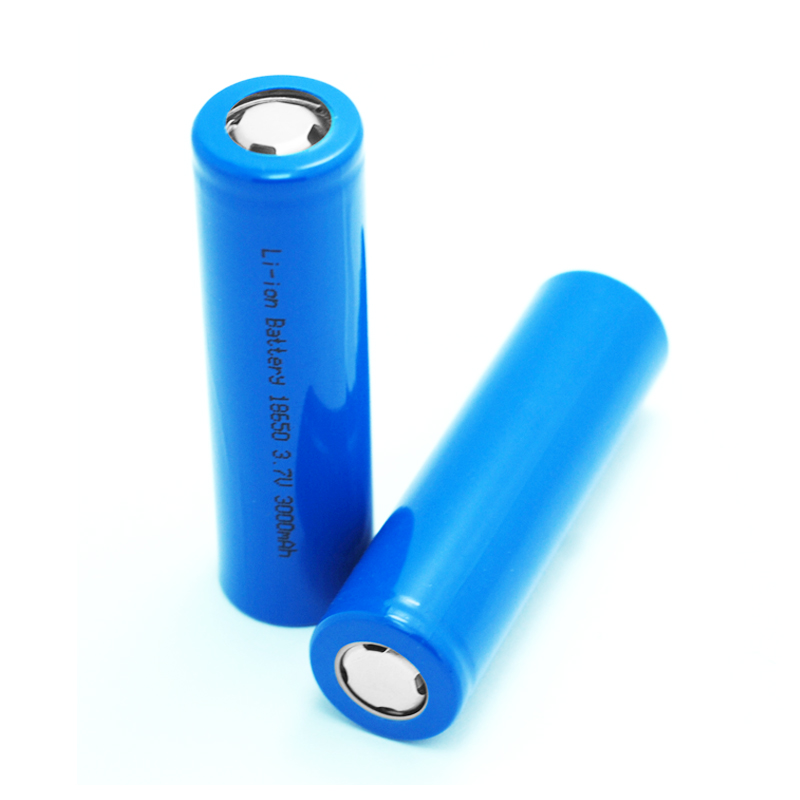
🔋 How Does Temperature Affect 18650 Battery Performance?
🧠 Summary
Temperature is one of the most decisive external variables affecting 18650 lithium batteries. It directly controls internal resistance, available capacity, discharge capability, aging rate, and safety margin. In short: cold limits power, heat shortens life, and both can trigger failure modes if ignored. Any serious design using a lithium 18650 rechargeable battery must treat temperature as a first-order parameter, not an afterthought.
🌡️ Operating Temperature Range: What the Datasheet Really Means
Most 18650 li-ion cells specify:
-
Discharge: −20 °C to +60 °C
-
Charge: 0 °C to +45 °C
📌 These are survivability limits, not optimal conditions.
The performance sweet spot for a battery for 18650 applications sits between 15 °C and 35 °C.
👉 Direct conclusion: Designing to the edge of the datasheet is designing for degradation.
❄️ Low Temperature: Why Cold Kills Power First
At low temperature, electrolyte viscosity increases and lithium-ion mobility drops.
🔧 Immediate effects:
-
Internal resistance spikes (often 2–3× at −10 °C)
-
Voltage sag under load increases sharply
-
Usable capacity collapses, even if nominal mAh is unchanged
-
High current draw risks lithium plating during charge
A cold 18650 lithium battery may show 80% SOC on paper and still brown-out your system.
🔥 High Temperature: Faster Kinetics, Faster Death
Heat improves short-term performance—but at a cost.
⚠️ Above ~40 °C:
-
SEI layer growth accelerates
-
Gas generation increases internal pressure
-
Cycle life degrades exponentially
-
Calendar aging dominates over cycle aging
At 60 °C, many lithium 18650 rechargeable batteries lose more capacity in months than they would in years at room temperature.
👉 Engineering rule: Heat buys watts today by stealing years tomorrow.
⚡ Temperature vs Internal Resistance vs Load Capability
Temperature and internal resistance are inseparable.
📉 As temperature drops:
-
IR increases → higher I²R losses
-
Voltage collapses earlier under load
-
BMS low-voltage cutoffs trigger prematurely
📈 As temperature rises:
-
IR decreases (temporarily)
-
Peak current improves
-
Thermal runaway margin shrinks
For high-load systems, temperature derating is not optional.
🔋 Capacity Is Temperature-Dependent (Even If mAh Doesn’t Change)
Capacity ratings are measured at 25 °C, low C-rate, lab conditions.
In the field:
-
At −10 °C: usable capacity may drop to 60–70%
-
At −20 °C: often <50%
-
At +45 °C: capacity looks normal, aging accelerates
This is why runtime complaints often trace back to thermal, not electrical, design.
🧪 Charging Temperature: Where Most Damage Happens
Charging outside the safe window causes irreversible damage.
🚫 Below 0 °C:
-
Lithium plating risk increases sharply
-
Capacity loss becomes permanent
-
Internal resistance rises long-term
🚫 Above 45 °C:
-
Accelerated electrolyte decomposition
-
Increased swelling and venting risk
Any serious battery for 18650 system needs temperature-aware charge control.
🛠️ Engineer’s Selection & Design Advice
From a system engineering perspective:
🔧 Practical rules:
-
Select cells rated for your worst-case thermal environment
-
Derate current at low temperatures
-
Avoid high-capacity cells in hot enclosures
-
Place temperature sensors near cell cores, not just on PCB
-
Design airflow or conduction paths before increasing cell count
👉 If you can’t control temperature, choose chemistry and IR margins that tolerate it.
❌ Common Misconceptions About Temperature and 18650 Batteries
🚫 “The battery works fine indoors, so it’ll be fine outside”
🚫 “Capacity loss in winter means bad cells”
🚫 “Heat only matters during charging”
🚫 “Thermal issues can be solved in firmware”
Most field failures blamed on “battery quality” are actually thermal design failures.
❓ Frequently Asked Questions (FAQ)
🔹 What is the ideal temperature for 18650 batteries?
Around 20–30 °C for best balance of performance and lifespan.
🔹 Can 18650 batteries be used below freezing?
Yes for discharge, but with reduced power and capacity. Charging below 0 °C is unsafe.
🔹 Does heat permanently damage 18650 batteries?
Yes. Elevated temperatures accelerate irreversible aging mechanisms.
🔹 Why do batteries die faster in hot climates?
Calendar aging and SEI growth accelerate exponentially with temperature.
🔹 Do all 18650 lithium batteries behave the same with temperature?
No. Chemistry, internal resistance, and design intent matter significantly.
📢 Call to Action (CTA)
🔋 Designing a battery system exposed to heat or cold?
We help engineers select temperature-appropriate 18650 lithium batteries and validate real-world performance beyond datasheets.
👉 Contact us to review your thermal and load profile.
Related Articles
What is the typical capacity of an 18650 battery?
What is the difference between high-drain and high-capacity 18650 batteries?
What is the internal resistance of an 18650 battery?