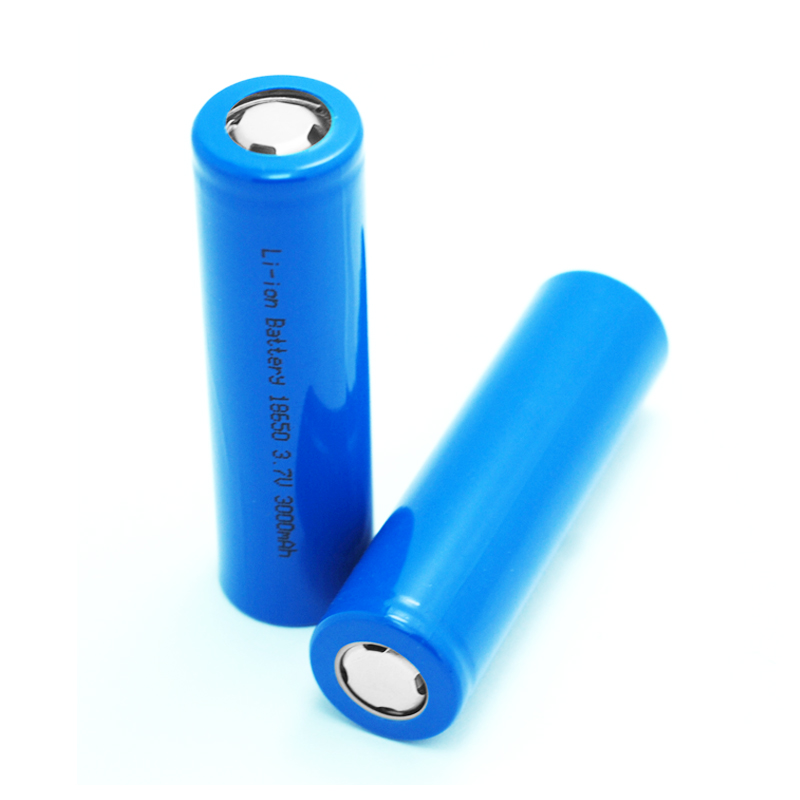
How Long to Charge 18650 Battery
🔋 Abstract
The question how long to charge 18650 battery does not have a single fixed answer. Charging time depends on 18650 charge voltage, selected 18650 battery charge current, cell capacity, charger algorithm, and the cell’s health. This guide explains how long charging actually takes under proper CC/CV charging, how to choose safe current levels, and how engineers evaluate charging behavior to balance speed, safety, and cycle life. If you want to understand how to charge 18650 batteries correctly—beyond generic charger labels—this page covers the real parameters that matter.
⚡ Standard 18650 Charging Basics (What Never Changes)
Regardless of brand or capacity, standard Li-ion 18650 cells follow the same core rules:
-
🔹 Nominal voltage: 3.6–3.7 V
-
🔹 Full charge voltage: 4.20 V ± 0.05 V
-
🔹 Charging method: CC/CV (constant current → constant voltage)
Direct conclusion: if a charger does not use CC/CV with a 4.2 V cutoff, it is not suitable for 18650 cells.
⏱️ How Long Charge 18650 Battery: Realistic Time Ranges
Charging time is controlled primarily by charge current, not the label on the charger.
Typical scenarios:
-
🔌 0.5 A charge current → 4.5–6 hours
-
🔌 1.0 A charge current → 3–4 hours
-
🔌 2.0 A charge current → 2–2.5 hours
These estimates assume a 2500–3000 mAh cell starting near 3.0 V. Aging cells take longer due to increased internal resistance.
🔋 18650 Charge Voltage: Why 4.2 V Matters
The 18650 charge voltage limit is non-negotiable.
-
📈 Charging beyond 4.2 V increases capacity temporarily
-
🔥 It also accelerates lithium plating and thermal risk
-
📉 Cycle life drops sharply above 4.25 V
Some industrial chargers stop at 4.1 V intentionally to extend lifespan. Engineers accept reduced capacity in exchange for durability.
🔌 18650 Battery Charge Current Explained
Choosing the correct 18650 battery charge current is a trade-off.
-
🔹 Standard charge: 0.5 C (e.g., 1.25 A for a 2500 mAh cell)
-
🔹 Fast charge: up to 1 C (only if datasheet allows)
-
🔹 Gentle charge: 0.2–0.3 C for longevity
Engineering reality: charging slower reduces heat, improves cycle life, and minimizes stress on aged cells.
🔧 How to Charge 18650 Batteries Safely
🛠️ Dedicated Chargers
-
🔋 Individual cell monitoring
-
🔌 Accurate CC/CV profiles
-
🌡️ Temperature protection
🔋 USB Modules & DIY Chargers
-
⚠️ Only acceptable with proper ICs (e.g., TP4056 with protection)
-
🚫 Never charge unprotected cells blindly
📦 Battery Packs
-
🧠 BMS must manage balancing and cutoff
-
🔄 Charging time increases with series configurations
🌡️ Temperature and Its Hidden Impact
Charging at improper temperatures alters how long charge 18650 battery safely.
-
❄️ Below 0°C: lithium plating risk
-
🔥 Above 45°C: electrolyte degradation
Most datasheets specify 0–45°C charging range. Outside this window, charging time should be extended—or avoided.
🧠 Engineer’s Charging Recommendations
From a battery engineer’s perspective:
-
📊 Size chargers based on actual cell capacity
-
🔍 Verify charger termination current (typically 0.05 C)
-
🧮 Avoid parallel charging without balancing
-
📉 Accept slower charging for high-value applications
Direct advice: if you don’t know the cell’s datasheet, charge at ≤0.5 A.
⚠️ Common Misconceptions
-
❌ “Faster charging is always better”
-
❌ “All 18650 batteries can handle 2A charging”
-
❌ “USB chargers automatically regulate safely”
-
❌ “Higher voltage means fuller charge”
These assumptions cause most premature cell failures.
❓ FAQ
❓ How long does it take to fully charge an 18650?
Typically 2–4 hours depending on current and capacity.
❓ Can I charge an 18650 overnight?
Only with a quality charger and undamaged cells.
❓ Is 4.1 V charging safer?
Yes. It significantly extends cycle life at the cost of runtime.
❓ Why does charging slow near the end?
The CV phase reduces current to prevent overcharge.
📢 CTA – Need the Right Charging Setup?
Whether you’re charging single cells or designing battery packs, understanding 18650 charge voltage and current is essential.
👉 Contact our battery engineering team for charger recommendations, safety reviews, and application-specific charging profiles.
Related Articles
Is a 3.2V 18650 LiFePO4 Battery the Right Choice?
What Is the Maximum Capacity of 18650 Battery?
Is a LiFePO4 18650 Battery Right for Your Battery Pack?
What Is the Best 18650 Battery for Olight Flashlight?
Is the Molicel P28A 18650 the Best 35A High-Drain Cell?
What are the best 18650 rechargeable batteries?