How Many 18650 Cells Are Needed to Build a 12V Battery Pack?
🔋 Abstract
A “12V” lithium battery is not actually 12 volts in the way lead-acid users expect. When designing a 12V 18650 battery pack, engineers think in terms of series cell count, operating voltage window, and load tolerance, not the printed label. This guide explains how many cells are required for a lithium 18650 battery 12V configuration, what changes in a 12V 18650 DIY build, and how to size a reliable 18650 12V battery pack for real-world use.
⚡ What “12V” Really Means for Lithium 18650 Packs
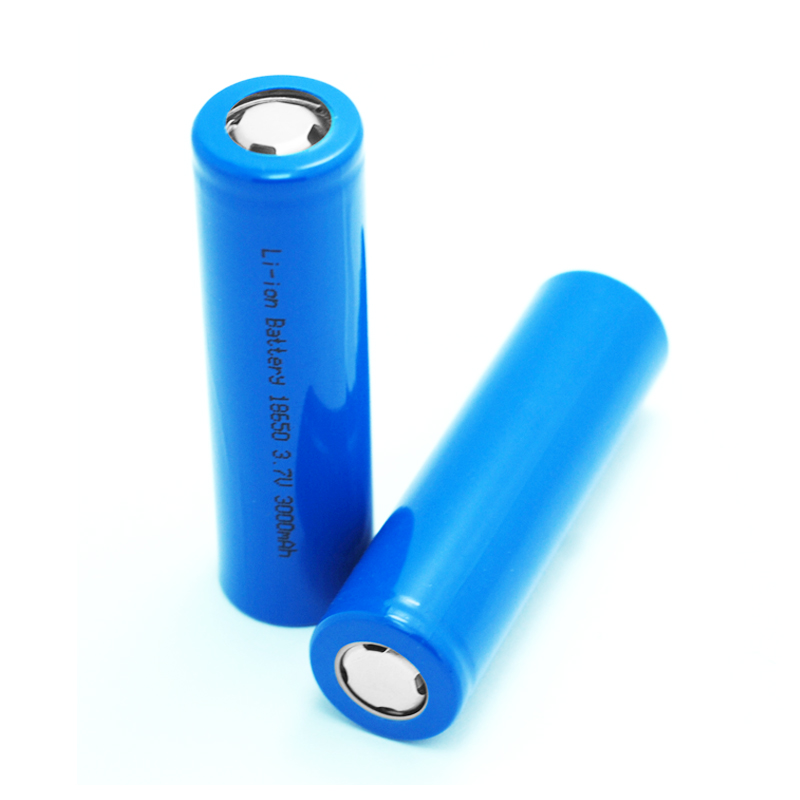
An individual 18650 lithium-ion cell has:
-
Nominal voltage: 3.6–3.7 V
-
Fully charged: 4.2 V
-
Typical cutoff: 2.8–3.0 V
There is no true 12 V lithium cell. Voltage is achieved by series connection.
Direct conclusion:
👉 All 12V lithium 18650 battery packs are multi-cell designs.
🔢 Series Count Required for a 12V 18650 Battery Pack
🔌 3S Configuration (3 Cells in Series)
-
Nominal voltage: 11.1 V
-
Full charge: 12.6 V
-
Discharge cutoff: ~9.0 V
This is the most common configuration marketed as a 12V 18650 battery pack.
Compatible with:
-
Electronics tolerant of 9–13 V
-
DC devices designed for lithium input
🔌 4S Configuration (4 Cells in Series)
-
Nominal voltage: 14.8 V
-
Full charge: 16.8 V
Used only when:
-
System expects higher voltage
-
DC-DC regulation is included
A 4S pack is not a drop-in replacement for a 12V lead-acid system.
🔋 Parallel Cells: Determining Capacity
Series sets voltage. Parallel sets capacity.
Example:
-
3S2P → 6 cells total
-
3S4P → 12 cells total
Parallel count determines:
-
Runtime
-
Maximum current capability
-
Thermal distribution
This applies to any 18650 12V battery pack, DIY or commercial.
🧪 Capacity Example (Real Numbers)
Using 3000 mAh cells:
-
3S1P → 3 Ah at ~11.1 V
-
3S4P → 12 Ah at ~11.1 V
Energy remains consistent when converted to Wh.
🧠 Engineer’s Selection Advice
From a pack design perspective:
-
Choose 3S for most 12V lithium replacements
-
Verify device voltage tolerance before committing
-
Increase parallel count for current-heavy loads
-
Always include a 3S BMS with correct current rating
-
Design for operating range, not nominal voltage
A stable 12V system is about control, not labels.
⚠️ Common Mistakes in 12V 18650 DIY Builds
-
Assuming 3S lithium matches 12V lead-acid exactly ❌
-
Ignoring full-charge voltage (12.6 V) ❌
-
Undersizing BMS current rating ❌
-
Mixing cells of different capacity or age ❌
-
Skipping balancing considerations ❌
Most DIY failures are design, not component, issues.
❓ FAQ: 12V 18650 Battery Packs
Q: Can I build a 12V battery pack with only 3 cells?
A: Yes. A 3S configuration is standard for lithium-based 12V systems.
Q: Is a 4S pack better than 3S?
A: Only if the device and power electronics are designed for higher voltage.
Q: How many 18650 cells do I need for a 12V 10Ah battery?
A: Typically 3S4P using ~2500 mAh cells.
Q: Do I need a BMS for a 12V 18650 battery pack?
A: Absolutely. A 3S BMS is mandatory for safety and longevity.
📦 CTA: Need Help Designing a 12V 18650 Battery Pack?
If you’re planning a 12V 18650 DIY project or sourcing a production-ready lithium 18650 battery 12V solution, our engineering team can help with cell selection, BMS matching, and pack validation.
Related Articles
What Failure Modes Should Be Considered in 18650 Pack Design?
What happens if 18650 batteries are short-circuited?
26650 vs 18650: Which Battery Offers Better Performance for Your Device?