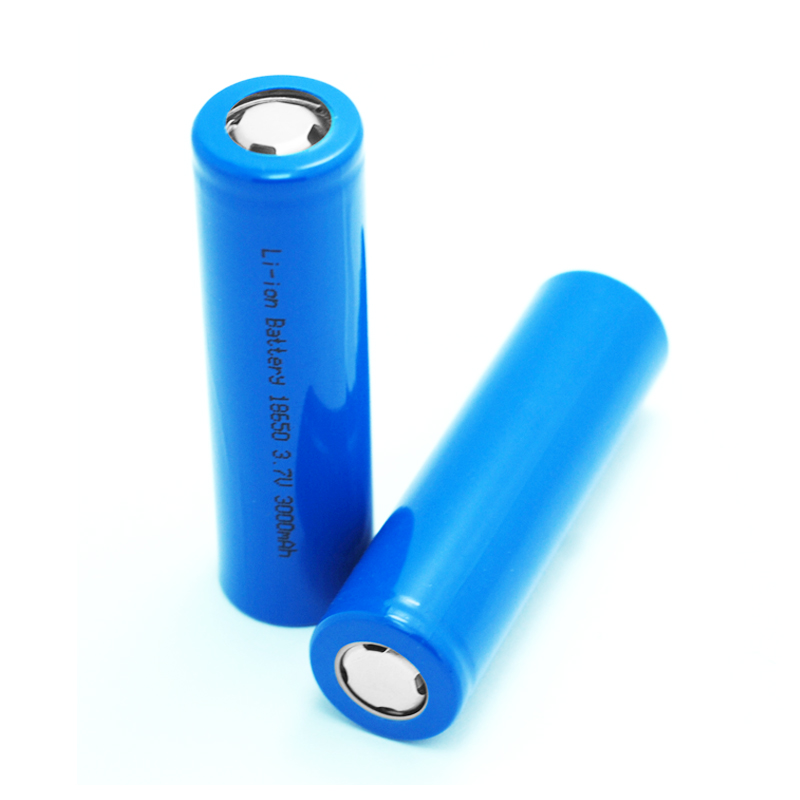
📦 How Should 18650 Batteries Be Stored Safely?
🧠 Summary
Safe storage of lithium rechargeable battery 18650 cells is about controlling voltage, temperature, and isolation, not just putting them on a shelf. Improper storage accelerates degradation, increases internal resistance, and raises safety risk when 18650 lithium ion cells are put back into service. Engineers treat storage as part of the battery lifecycle — not an afterthought.
⚡ Storage Starts With the Right State of Charge
Voltage defines chemical stress.
🔋 Recommended storage SOC:
-
30–50% state of charge
-
~3.6–3.9 V resting voltage
-
Never fully charged (4.2 V) for long-term storage
-
Never stored deeply discharged
👉 Direct conclusion: Storing at full charge ages cells faster than using them.
🌡️ Temperature Control Matters More Than People Think
Heat silently destroys lithium cells.
🌡️ Ideal conditions:
-
15–25 °C (59–77 °F)
-
Dry, well-ventilated environment
-
Stable temperature (avoid cycling)
📉 Effects of poor temperature control:
-
Faster SEI growth
-
Electrolyte degradation
-
Gas generation
-
Increased self-discharge
Cold is safer than hot — but charging cold cells is not.
🔒 Physical Isolation Prevents Accidents
Most storage incidents are electrical, not chemical.
⚠️ Required precautions:
-
Insulate terminals (caps or tape)
-
Use non-conductive containers
-
Separate loose 18650 cels individually
-
Avoid metal boxes without insulation
A shorted 18650 battery flat top can discharge violently in seconds.
🔌 Flat Top vs Button Top: Storage Implications
Mechanical design affects risk profile.
🔍 18650 battery flat top:
-
Exposed positive terminal
-
Higher short-circuit risk
-
Requires strict terminal insulation
🔍 Button top:
-
Slightly reduced short risk
-
Still requires isolation
-
Often longer — check fit in holders
Engineers treat flat tops as “live conductors” during storage.
📦 Short-Term vs Long-Term Storage Practices
Storage strategy depends on time horizon.
🗓️ Short-term (days to weeks):
-
40–60% SOC
-
Room temperature
-
No special cycling required
🗓️ Long-term (months to years):
-
30–40% SOC
-
<25 °C
-
Voltage check every 3–6 months
-
Recharge if below 3.2 V
Storage without monitoring is not storage — it’s neglect.
🛠️ Engineer’s Selection Advice: Designing for Storage Stability
Some 18650 lithium ion cells age better on the shelf than others.
🧠 Selection priorities:
-
Low self-discharge chemistry
-
Stable SEI formulation
-
Manufacturer shelf-life data
-
Conservative voltage ratings
-
Consistent batch quality
If long storage is expected, choose cells designed for it.
❌ Common Misconceptions About 18650 Storage
🚫 “Store fully charged so it’s ready”
🚫 “Empty batteries are safer”
🚫 “Plastic cases eliminate all risk”
🚫 “Cold storage means freezer”
🚫 “Unused cells don’t age”
Every one of these shortens lifespan or increases risk.
❓ Frequently Asked Questions (FAQ)
🔹 How should 18650 batteries be stored safely?
Store at 30–50% charge, in a cool, dry place, with terminals insulated and cells separated.
🔹 Can I store lithium rechargeable battery 18650 cells fully charged?
Not for long-term storage. High voltage accelerates degradation.
🔹 Is it safe to store loose 18650 lithium ion cells?
Yes, if terminals are insulated and cells are kept in non-conductive containers.
🔹 Do 18650 battery flat top cells need extra care?
Yes. Flat tops have exposed terminals and higher short-circuit risk.
🔹 How often should stored 18650 cells be checked?
Every 3–6 months for voltage drop or physical changes.
📢 Call to Action (CTA)
🔋 Need guidance on storing, shipping, or sourcing 18650 lithium ion cells?
We help engineers and buyers define safe storage protocols and select 18650 cells optimized for long-term reliability.
👉 Contact us for expert storage and lifecycle support.
Related Articles
What happens if an 18650 battery is over-discharged?
Do 18650 batteries need a protection circuit?
What are 18650 batteries used for?
Is it safe to use 18650 batteries in series or parallel?