❓ What Do 18650 Battery Specifications Really Tell You About Performance?
📌 Abstract
Understanding 18650 battery specifications is essential for choosing the right cell, yet many buyers focus on headline numbers without knowing what they mean in practice. This page explains how engineers interpret 18650 capacity, physical 18650 size battery constraints, and real 18650 battery capacity behavior under load—separating useful data from marketing noise.
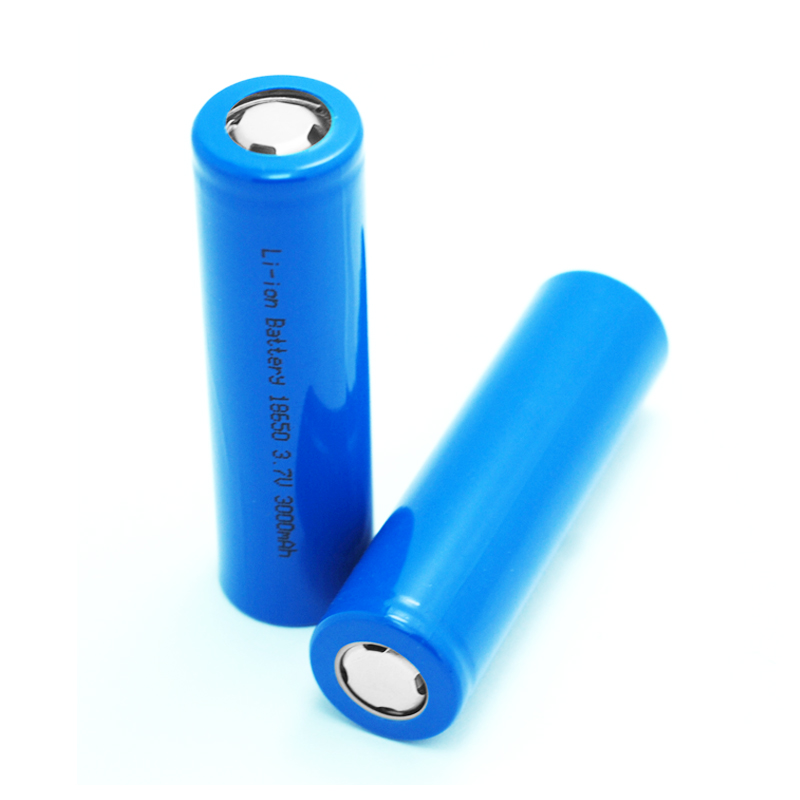
🔋 What Is the Standard 18650 Size Battery?
The term 18650 size battery refers to a standardized cylindrical format:
-
Diameter: 18 mm
-
Length: 65 mm
-
Nominal voltage: 3.6–3.7 V
This format standardization allows compatibility across:
-
Flashlights
-
Battery packs
-
Energy storage systems
Direct conclusion:
“18650” defines the size, not the performance.
⚙️ What Are the Core 18650 Battery Specifications?
Professional 18650 battery specifications focus on more than just capacity.
Key parameters include:
-
Nominal voltage
-
Rated capacity (mAh)
-
Continuous discharge rating (CDR)
-
Internal resistance
-
Cycle life
-
Operating temperature range
Ignoring any of these leads to misapplication.
🔬 How Is 18650 Battery Capacity Measured?
18650 battery capacity is measured under controlled laboratory conditions—typically low discharge rates and stable temperature.
Important context:
-
Rated capacity ≠ usable capacity at high load
-
Higher current reduces available mAh
-
Temperature strongly affects capacity
Engineering reality:
Capacity numbers are best-case scenarios, not guarantees.
🔥 Why 18650 Capacity Changes Under Load
As discharge current increases:
-
Voltage drops faster
-
Internal heating rises
-
Usable capacity decreases
A cell rated at 3500mAh may deliver significantly less in high-current applications.
This is why 18650 capacity must be matched to load profile, not chosen in isolation.
🧪 Typical 18650 Battery Capacity Ranges
| Application Type | Typical Capacity |
|---|---|
| High-drain tools | 2000–2600mAh |
| Balanced use | 2600–3000mAh |
| Energy-focused | 3000–3500mAh |
Direct conclusion:
There is always a trade-off between capacity and current capability.
🧠 Engineer’s Selection Guide: Interpreting Specifications Correctly
🔋 Energy Storage & Runtime-Focused Systems
-
Prioritize high capacity
-
Moderate discharge rates
-
Stable thermal environment
🔦 High-Output or High-Drain Devices
-
Lower capacity acceptable
-
High CDR critical
-
Focus on voltage stability
🔌 OEM & Pack Design
-
Full datasheet review
-
Consistent batch sourcing
-
Conservative derating
Engineering rule:
Choose specifications based on how the battery will actually be used.
⚠️ Common Mistakes When Reading 18650 Specifications
❌ Assuming higher capacity is always better
❌ Ignoring discharge rating
❌ Overlooking physical length variations (protected cells)
❌ Trusting unrealistic capacity claims
❌ Mixing cells with different specifications
Industry truth:
Specification misunderstandings cause more failures than poor manufacturing.
❓ FAQ – 18650 Battery Specifications
Q1: What is the maximum 18650 battery capacity available?
Genuine cells typically top out around 3500mAh.
Q2: Are all 18650 size batteries interchangeable?
Physically yes, electrically no.
Q3: Does higher capacity mean longer life?
Not necessarily. Cycle life depends on load and charging behavior.
Q4: Why do some 18650 batteries list unrealistic capacities?
They are often rewrapped or counterfeit cells.
📞 CTA – Choose 18650 Batteries Based on Real Specifications
If you need:
-
Verified 18650 battery specifications
-
Application-matched capacity selection
-
Authentic, traceable cells
-
Engineering-level guidance
👉 Contact us to select the right 18650 battery for your application.
Related Articles
Can 18650 batteries be customized for voltage or capacity?
Are 18650 LiFePO4 Cells the Safest 3.2V Choice?
18650, 14500, or 16340: Which Battery Size Fits Best?