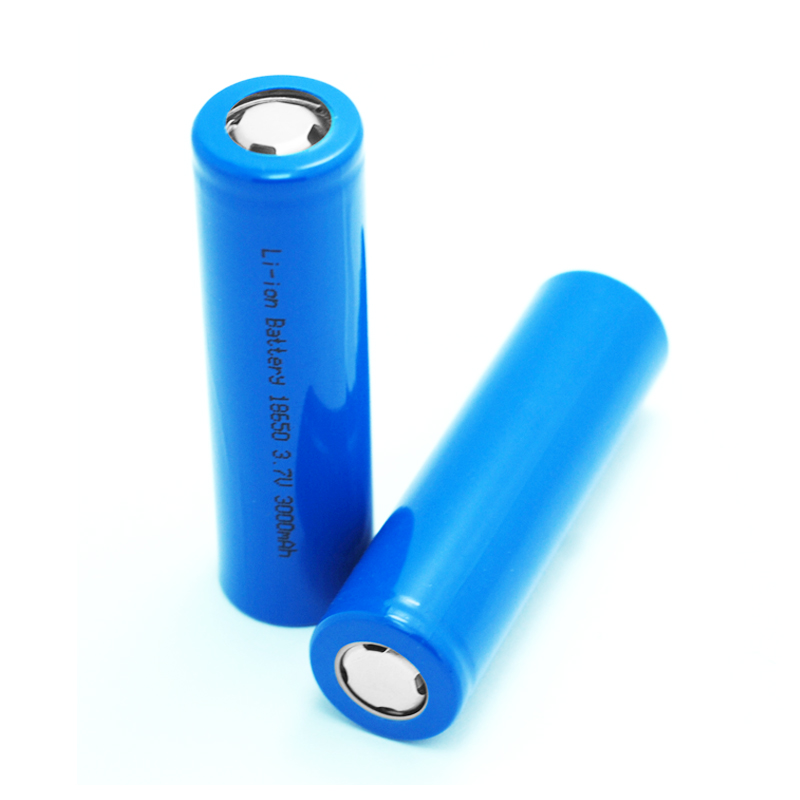
What Is an ICR 18650 Battery?
🔋 Abstract
When people ask what is an ICR 18650 battery, they are usually comparing lithium-ion chemistries rather than sizes. ICR refers to a cobalt-based lithium-ion rechargeable battery, known for high energy density but limited discharge capability. This page explains how an ICR 18650 lithium ion rechargeable battery works, what “3.7 V” really represents in real-world use, where ICR cells are appropriate, and where they should never be used. The explanations follow how battery engineers and pack designers actually evaluate ICR chemistry—not marketing language.
⚙️ What Does “ICR” Mean in an 18650 Battery?
🔧 ICR = Lithium Cobalt Oxide (LiCoO₂)
In battery naming conventions:
-
I = Lithium-ion
-
C = Cobalt-based cathode
-
R = Cylindrical cell
An ICR 18650 Li-ion battery uses lithium cobalt oxide as the cathode material. This chemistry prioritizes energy density, not current output or thermal robustness.
📌 Direct conclusion: ICR cells store more energy per gram, but tolerate less abuse.
🔋 ICR 18650 Battery 3.7 V: What the Voltage Actually Means
🔋 Nominal voltage: 3.6–3.7 V
🔋 Fully charged: 4.20 V
🔋 Typical cutoff: 2.75–3.0 V
The “3.7 V” rating of an ICR 18650 battery 3.7 V is a nominal average, not a constant output. Under load, voltage sag is more pronounced than in manganese- or nickel-based cells.
⚠️ Engineers account for this sag when designing packs using ICR chemistry.
🧪 Key Characteristics of ICR 18650 Li-Ion Batteries
🔋 Energy density
ICR cells commonly reach 220–260 Wh/kg, higher than IMR equivalents.
🔋 Discharge capability
Continuous discharge rates are typically 0.5C–1C.
High-drain use is not recommended.
🔋 Thermal stability
Cobalt chemistry is less thermally stable, making protection circuits mandatory.
📌 Direct conclusion: ICR batteries require stricter electrical and thermal controls.
🔍 ICR 18650 vs Other 18650 Chemistries
🔧 ICR vs IMR (LiMn₂O₄)
-
ICR: higher capacity, lower current
-
IMR: lower capacity, higher discharge, safer
🔧 ICR vs INR (NCA/NCM blends)
-
ICR: energy-focused
-
INR: balanced energy + power
🔧 ICR vs LiFePO₄
-
ICR: compact, high voltage
-
LFP: safer, longer cycle life
📌 If current exceeds 5–6 A, ICR is the wrong chemistry.
🛠️ Typical Applications of ICR 18650 Batteries
🔋 Low-drain electronics
-
Laptop battery packs
-
Power banks
-
Medical equipment
🔋 Energy storage
-
Backup systems
-
Solar buffer packs
🔋 OEM battery packs
-
Always paired with BMS/PCM
❌ Not suitable for power tools, e-bikes, or vaping devices.
🧠 Engineer’s Selection Advice (ICR Focus)
🔧 When engineers choose an ICR battery 18650, they check:
-
Required discharge current
-
Maximum operating temperature
-
Redundancy in protection circuits
-
Cell balancing tolerance
📌 Rule of thumb:
If your design prioritizes runtime over power, ICR is valid.
If safety margin is critical, choose INR or LFP instead.
⚠️ Common Misconceptions About ICR 18650 Batteries
❌ “All 18650 batteries are interchangeable”
❌ “Higher mAh means better for any device”
❌ “Protection circuits are optional”
❌ “ICR is fine for high-drain loads”
Direct conclusion: ICR failures are usually application mistakes, not cell defects.
🔌 Charging Requirements for ICR 18650 Li-Ion Batteries
🔋 Charging method: CC–CV
🔋 Max voltage: 4.20 ±0.05 V
🔋 Recommended charge rate: ≤0.5C
Overcharging cobalt-based cells accelerates thermal runaway risk.
⚠️ Never charge an ICR cell without voltage termination.
❓ FAQ
❓ Is an ICR 18650 battery rechargeable?
Yes. Every ICR 18650 lithium ion rechargeable battery is designed for hundreds of cycles when properly managed.
❓ Are ICR batteries safe?
They are safe only when protected by a BMS or PCM.
❓ Can I replace an IMR with an ICR 18650?
Only if discharge current stays well below ICR limits.
❓ Why are ICR cells less popular today?
Modern INR chemistries offer similar capacity with better safety margins.
🛒 CTA – Source Certified ICR 18650 Batteries
CHAWM is a professional wholesale supplier of 18650 lithium-ion batteries, including ICR 18650 Li-ion batteries with verified capacity, matched internal resistance, and full compliance documentation.
🔋 If you need stable, low-drain 18650 cells in bulk,
👉 Contact CHAWM to discuss your ICR battery requirements.
Related Articles
How Much Lithium is in a 18650 Battery?
What’s the Difference Between a 14500 and 18650 Battery?
Can I Use 18650 Instead of CR123?