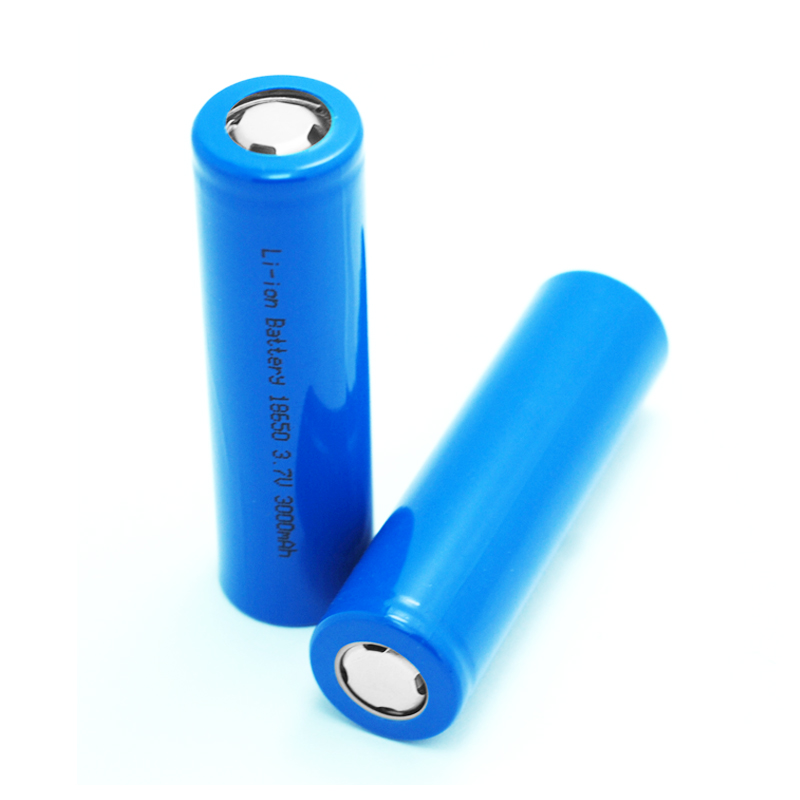
🔋 What Is the Typical Capacity of an 18650 Battery?
🧠 Summary
The typical capacity of an 18650 lithium-ion battery generally ranges from 1800mAh to 3600mAh, depending on cell chemistry, internal design, and intended use. While high-capacity battery rechargeable 18650 models focus on longer runtime, high-discharge versions prioritize power output. This guide explains capacity ranges, influencing factors, and how to choose the right 18650 batteries for your application.
📏 What Is an 18650 Lithium-Ion Battery?
An 18650 lithium-ion battery is a standardized cylindrical rechargeable cell measuring 18 mm in diameter and 65 mm in length.
🔍 Key characteristics:
-
Nominal voltage: ~3.6–3.7V
-
Rechargeable lithium-ion chemistry
-
Widely used across multiple industries
-
Requires proper battery management systems (BMS)
Despite identical dimensions, performance varies widely between different 18650 batteries.
🔋 Typical Capacity Range of 18650 Batteries
Most 18650 batteries fall within several well-defined capacity categories.
📊 Common capacity ranges:
-
1800–2200mAh: High-discharge or older-generation cells
-
2500–3000mAh: Balanced energy and power performance
-
3200–3600mAh: High-capacity, energy-focused cells
A higher mAh rating means longer runtime per charge, but not necessarily higher power output.
⚙️ What Determines the Capacity of a Battery Rechargeable 18650?
Several internal and external factors affect how much energy an 18650 cell can store.
🧪 Key influencing factors:
-
Lithium-ion chemistry (NMC, NCA, LCO, IMR)
-
Electrode material density and thickness
-
Internal resistance
-
Manufacturing quality and consistency
-
Design focus (energy vs power)
Manufacturers balance these variables to meet different application needs.
⚖️ Capacity vs Discharge Performance
Capacity is only one part of battery performance.
🔌 Important trade-offs:
-
High-capacity 18650 batteries → longer runtime, lower max current
-
High-discharge 18650 batteries → stronger power output, lower capacity
Choosing the wrong balance can reduce efficiency or compromise safety.
🌡️ Capacity, Safety, and Cycle Life
Higher capacity does not always mean longer lifespan.
🛡️ Considerations include:
-
Operating temperature range
-
Charging practices (such as avoiding 0–100% cycles)
-
Compatibility with BMS protection
-
Thermal management in battery packs
Proper usage helps preserve capacity over hundreds of cycles.
🏭 Typical Applications by Capacity Level
Different capacity levels suit different use cases.
📌 Examples:
-
1800–2200mAh: Power tools, robotics, drones
-
2500–3000mAh: Laptops, flashlights, consumer electronics
-
3200–3600mAh: Energy storage, backup power, portable devices
Matching capacity to application ensures optimal performance and reliability.
❓ Frequently Asked Questions (FAQ)
🔹 What is the average capacity of an 18650 battery?
Most modern 18650 lithium-ion batteries average around 2500–3000mAh.
🔹 Are 3600mAh 18650 batteries real?
Yes, but they are optimized for energy density and usually have lower discharge limits.
🔹 Does higher mAh mean better battery?
Not always. Higher mAh means longer runtime, but power output and safety must also match the application.
🔹 Can all devices use high-capacity 18650 batteries?
No. Devices must support the battery’s discharge rate and thermal characteristics.
🔹 How long do 18650 batteries last?
Typically 500–1000 charge cycles, depending on usage and charging habits.
Related Articles
What is the energy density of an 18650 battery?
How does temperature affect 18650 battery performance?
How long does it take to fully charge an 18650 battery?
Can I overcharge an 18650 battery?