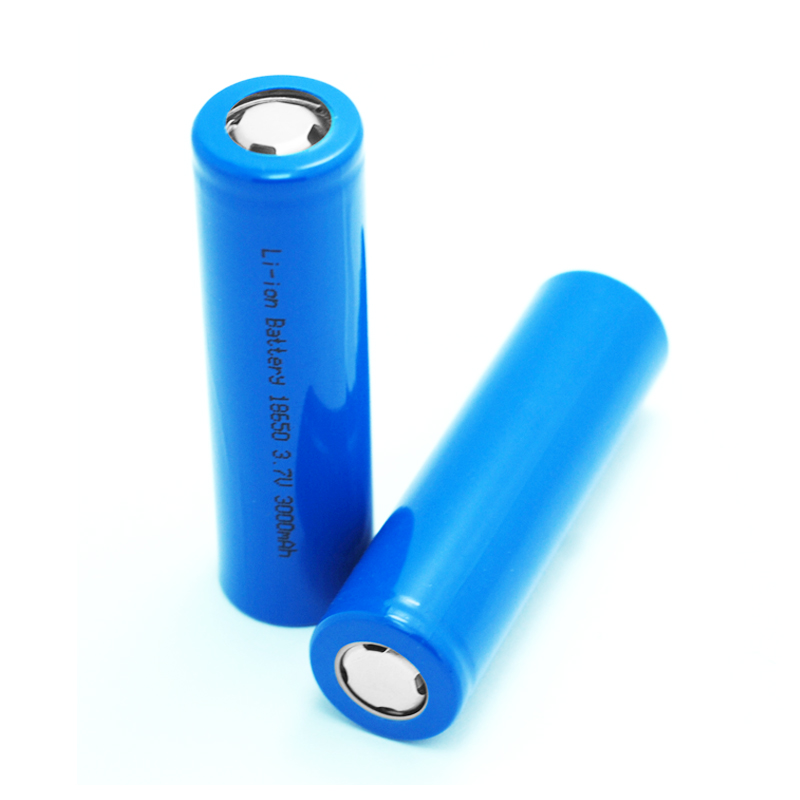
🔋 Why Are 18650 Batteries Still Popular Compared to 21700 Batteries?
🧠 Summary
On paper, the 21700 cell outperforms the 18650 in capacity and energy density. In practice, 18650 rechargeable lithium cells remain dominant across power tools, mobility packs, lighting, and industrial electronics. This is not inertia — it’s economics, thermal behavior, qualification history, and system-level compatibility. Engineers still specify lithium ion batteries 18650 because they work, scale, and fail predictably.
📏 Form Factor Stability Beats Raw Capacity
The industry rarely redesigns around cells unless the gain is decisive.
🔧 18650
-
Ø18 × 65 mm
-
Mature mechanical standards
-
Drop-in compatibility with legacy housings
🔧 21700
-
Ø21 × 70 mm
-
Larger thermal mass
-
Requires wider holders, tabs, busbars, enclosures
👉 Direct conclusion:
For existing products and battery 18650 pack platforms, switching to 21700 is a mechanical redesign, not an upgrade.
🔥 Thermal Behavior: Smaller Cells Fail More Gracefully
This is where lab data meets field reality.
🌡️ 18650 rechargeable lithium
-
Lower absolute heat generation per cell
-
Faster surface heat dissipation
-
Easier thermal zoning in dense packs
🌡️ 21700
-
Higher per-cell current capability
-
Larger thermal core
-
Harder to cool uniformly in compact layouts
Engineers managing multi-string packs often prefer more 18650 cells over fewer 21700s for thermal redundancy.
⚡ Electrical Architecture & Pack Design
Pack voltage doesn’t change. Current density does.
🔌 Using 3.7 V 18650 battery cells:
-
More parallel paths
-
Lower current per cell
-
Reduced stress on tabs and welds
🔌 Using 21700:
-
Fewer cells
-
Higher per-cell current
-
Stronger demands on nickel thickness and weld integrity
In vibration-prone or high-cycle environments, 18650 packs age more evenly.
🧪 Supply Chain & Qualification Reality
This is often ignored in consumer comparisons.
📦 Lithium ion batteries 18650
-
Decades of qualification data
-
Stable OEM sourcing (Samsung, LG, Panasonic, etc.)
-
Predictable binning and aging curves
📦 21700
-
Fewer long-term field datasets
-
Higher volatility in availability
-
Faster spec churn
For regulated industries, 18650 rechargeable lithium remains the safer procurement choice.
💰 Cost Per Wh: Still Competitive
While 21700 prices have dropped, the gap isn’t decisive.
💲 Hidden costs favor 18650:
-
Existing tooling
-
Certified housings
-
Proven BMS profiles
-
Established safety documentation
A cheaper cell that forces redesign is not cheaper.
🧠 Engineer’s Selection Advice (Straight Talk)
Choose 18650 when:
-
You’re scaling an existing battery 18650 pack
-
Thermal margins are tight
-
High cycle life matters more than peak capacity
-
Mechanical constraints dominate
-
Certification cost matters
Choose 21700 when:
-
You’re designing from scratch
-
Space is available
-
You need fewer cells and higher per-cell capacity
-
Thermal management is explicitly engineered
❌ Common Misconceptions
🚫 “21700 always replaces 18650”
🚫 “Bigger cells are easier to manage”
🚫 “Higher capacity means longer lifespan”
🚫 “Pack efficiency automatically improves”
🚫 “Legacy designs should be updated by default”
Reality: system-level efficiency beats cell-level specs.
❓ Frequently Asked Questions (FAQ)
🔹 Are 18650 batteries obsolete?
No. 18650 rechargeable lithium cells are still actively produced and widely specified.
🔹 Why do EVs prefer 21700 but tools use 18650?
EVs optimize for energy density. Tools prioritize thermal resilience and cycle life.
🔹 Is a 3.7 V 18650 battery weaker than 21700?
Voltage is the same. Capacity and current limits differ.
🔹 Are 18650 packs safer?
Not inherently — but their behavior is better understood, which improves safety design.
🔹 Will 18650 batteries be discontinued?
Highly unlikely. Industrial demand remains strong.
📢 Call to Action (CTA)
🔋 Designing or sourcing a battery pack?
We help OEMs and integrators choose between 18650 and 21700 cells based on real operating conditions, not spec sheets.
👉 Contact us for engineering-level battery selection and pack support.
Related Articles
Can 18650 batteries replace AA or AAA batteries?
How should 18650 batteries be stored safely?
Can an 18650 battery catch fire or explode?
What causes an 18650 battery to degrade?