❓ 18650 Li-Ion vs LiFePO4: Which Battery Fits Your Application?
📌 Abstract
Choosing between 18650 Li-ion vs LiFePO4 is not about which battery is “better,” but which chemistry aligns with your electrical, thermal, and lifecycle requirements. This page breaks down LiFePO4 vs 18650 from an engineering standpoint—covering voltage behavior, safety margins, discharge capability, cycle life, and real deployment scenarios. We also address common misconceptions, selection logic, FAQs, and sourcing guidance for both 18650 vs LiFePO4 battery types.
🔋 What Does “18650” Actually Mean?
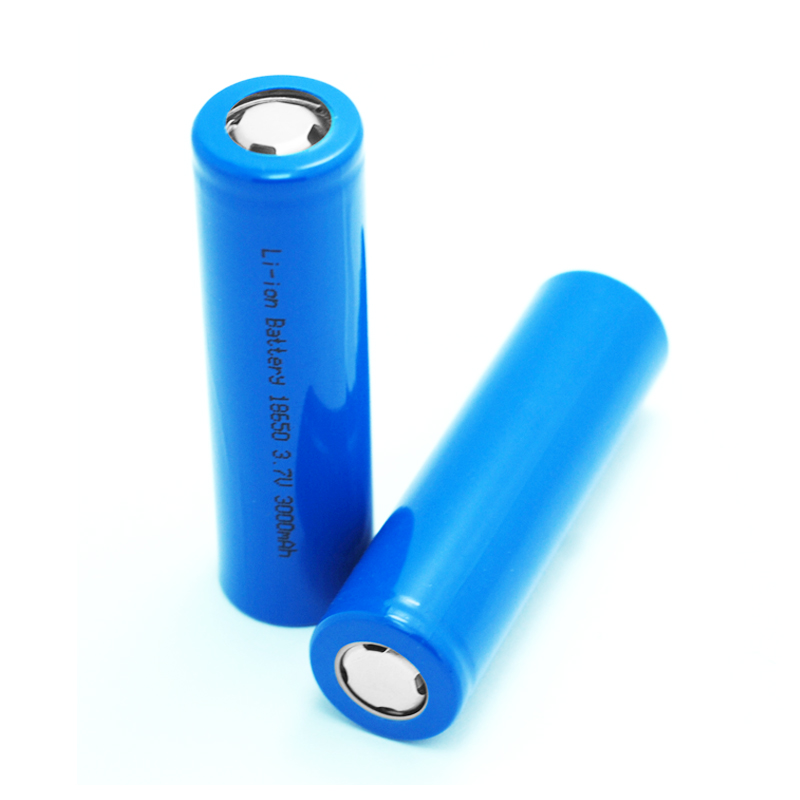
An 18650 is a form factor, not a chemistry. Most commonly, it refers to cylindrical Li-ion cells (NMC, NCA, INR), but LiFePO4 18650 cells also exist.
Key clarification:
-
18650 = 18 mm diameter × 65 mm length
-
Chemistry determines voltage, safety, and lifespan
-
Shape alone does not define performance
Direct conclusion:
Comparing Li-ion to LiFePO4 requires chemistry-first thinking, not size-first.
⚡ Core Chemistry Differences: Li-Ion vs LiFePO4
🔬 Li-Ion (NMC / INR)
-
Nominal voltage: 3.6–3.7V
-
Full charge: 4.2V
-
Energy density: High
-
Thermal stability: Moderate
-
Typical cycle life: 500–800 cycles
🔬 LiFePO4
-
Nominal voltage: 3.2V
-
Full charge: 3.65V
-
Energy density: Lower
-
Thermal stability: Excellent
-
Typical cycle life: 2000–5000 cycles
Direct conclusion:
Li-ion prioritizes compact energy; LiFePO4 prioritizes longevity and safety.
📊 18650 vs LiFePO4 Performance Comparison
🔹 Energy Density
-
Li-ion wins decisively (≈240–260 Wh/kg)
-
LiFePO4 averages ≈140–160 Wh/kg
🔹 Discharge Stability
-
LiFePO4 holds voltage flatter across discharge
-
Li-ion voltage drops more noticeably under load
🔹 High-Current Capability
-
Both can support high discharge
-
LiFePO4 tolerates thermal stress better
🔹 Cold Temperature Behavior
-
Li-ion performs better below 0°C
-
LiFePO4 loses capacity sharply in cold
🔥 Safety and Thermal Behavior
This is where LiFePO4 battery vs 18650 Li-ion diverges sharply.
LiFePO4 advantages:
-
Higher thermal runaway threshold (>250°C)
-
Oxygen-stable cathode structure
-
Reduced fire propagation risk
Li-ion considerations:
-
Requires stricter BMS control
-
More sensitive to overcharge and puncture
-
Higher energy release in failure scenarios
Engineer’s note:
In confined or unattended systems, LiFePO4 reduces risk—not eliminates it.
🔁 Cycle Life and Aging
-
Li-ion capacity fades faster under high DoD (depth of discharge)
-
LiFePO4 retains >80% capacity after thousands of cycles
-
Calendar aging favors LiFePO4 in stationary systems
Direct conclusion:
If replacement access is difficult, LiFePO4 pays for itself over time.
🔧 Engineer’s Selection Advice
Choose 18650 Li-ion when:
-
Space and weight are constrained
-
High energy density is required
-
Operating temperature varies widely
-
Device expects 4.2V charging profile
Choose LiFePO4 when:
-
Long cycle life is critical
-
Safety margin matters more than size
-
System voltage is designed around 3.2V
-
Battery operates continuously or unattended
Design tip:
Never drop LiFePO4 cells into a Li-ion charger without revalidating voltage limits.
⚠️ Common Misconceptions
❌ “LiFePO4 is just a safer Li-ion”
❌ “All 18650 batteries are 3.7V”
❌ “Higher cycle life means higher energy”
❌ “LiFePO4 doesn’t need a BMS”
❌ “Chemistry swap won’t affect system calibration”
❓ FAQ – LiFePO4 vs 18650
Q1: Can LiFePO4 replace Li-ion 18650 directly?
Not without adjusting charging voltage and cutoff thresholds.
Q2: Which is better for power tools?
Li-ion, due to higher voltage and energy density.
Q3: Which is better for solar or backup storage?
LiFePO4, due to long cycle life and thermal safety.
Q4: Do LiFePO4 18650 cells exist?
Yes, but capacity is significantly lower than Li-ion equivalents.
Q5: Which chemistry ages better unused?
LiFePO4 generally has superior calendar life.
📞 CTA – Get Application-Matched Battery Guidance
Choosing between 18650 Li-ion vs LiFePO4 affects safety, cost, and performance.
👉 Contact us for:
-
Chemistry selection support
-
Verified Li-ion and LiFePO4 cells
-
Pack design and BMS compatibility guidance
Build for your application, not assumptions.
Related Articles
How to Choose the Best 18650 Battery for Vaping Devices?
Why Choose Samsung 35E 18650 Battery for High-Capacity Applications?
Why Choose Samsung 25R 18650 Battery for High-Drain Applications?
Why Choose 18650 LG MJ1 for High-Capacity Lithium-Ion Packs?
Samsung 30Q 18650 Battery vs 25R: Which INR Cell Fits Your High-Drain Device Best?