❓ Protected vs Unprotected 18650 Batteries: Which Should You Use?
📌 Abstract
Choosing between protected vs unprotected 18650 batteries is not a branding decision—it is a system-level safety and compatibility choice. This guide explains how 18650 protected batteries differ electrically and mechanically from an unprotected 18650 battery, how to identify protection circuits, and when each type is appropriate. We also cover real-world failure modes, engineering selection logic, common mistakes, FAQs, and sourcing advice.
🔋 What Does “Protected” Mean in 18650 Batteries?
A protected 18650 battery includes a PCB protection circuit attached to the negative end of the cell, typically wrapped under the heat shrink.
The protection PCB usually provides:
-
Overcharge cutoff (≈4.25V)
-
Over-discharge cutoff (≈2.5V)
-
Overcurrent protection
-
Short-circuit protection
Direct conclusion:
Protection is external electronics, not a change in cell chemistry.
⚙️ What Is an Unprotected 18650 Battery?
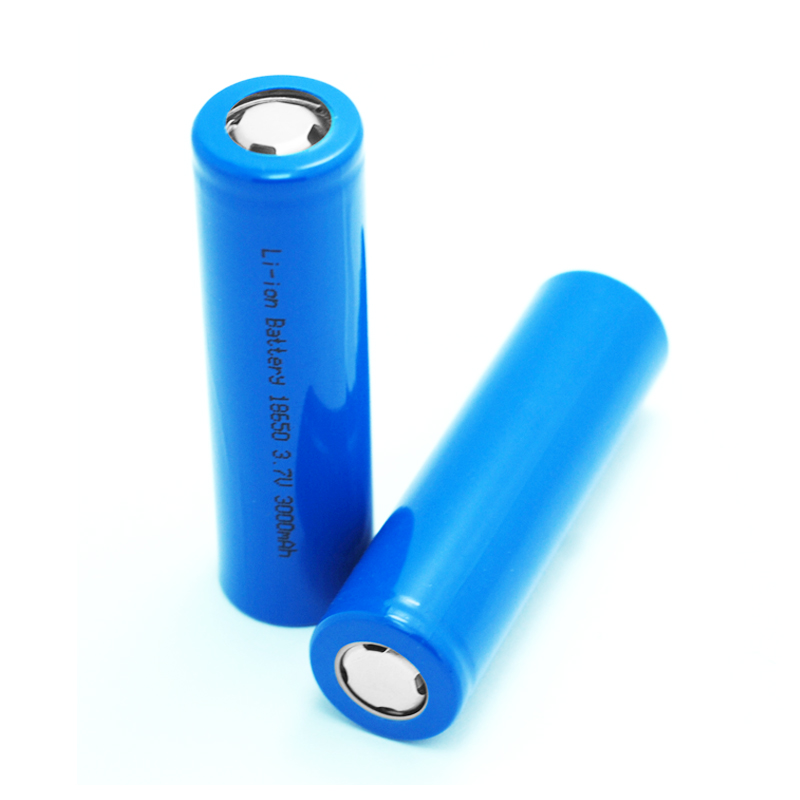
An unprotected 18650 battery is the bare lithium-ion cell without any attached PCB.
Characteristics:
-
Direct electrical access to the cell terminals
-
Shorter physical length
-
Higher allowable discharge current
-
Requires external protection (BMS or device-level control)
Engineer’s note:
Almost all OEM battery packs use unprotected cells plus a centralized BMS.
📏 Physical Differences: Size and Fit
One of the most overlooked differences in protected vs unprotected 18650 batteries is length.
Typical dimensions:
-
Unprotected 18650: ≈65.0 mm
-
Protected 18650: ≈68–70 mm
This affects:
-
Flashlights
-
Battery sleds
-
Vape mods
-
Tight-tolerance holders
Direct conclusion:
Many devices physically cannot accept protected cells.
🔍 How to Tell If an 18650 Is Protected
If you’re unsure how to tell if 18650 is protected, use these checks:
🔹 Length check – anything over ~67 mm is likely protected
🔹 Bottom cap – protected cells often show a raised PCB disc
🔹 Label gap – slight seam or ridge near the negative end
🔹 Voltage behavior – cell shuts off abruptly at low voltage
🔹 Specification sheet – protection explicitly stated
Practical tip:
If the cell “goes dead” suddenly and recovers after charging, it’s protected.
⚡ Electrical Behavior Under Load
Protected 18650 Batteries
-
Current limited by PCB (often 3–10A)
-
Voltage cutoff is abrupt
-
PCB adds internal resistance
Unprotected 18650 Battery
-
Full current capability of the cell
-
Gradual voltage decline
-
No automatic cutoff without external control
Direct conclusion:
Protection trades peak performance for safety margin.
🔥 Safety Implications
Protected cells reduce risk in:
-
Consumer handheld devices
-
Single-cell applications
-
User-replaceable batteries
Unprotected cells are safer only when:
-
Used with a properly designed BMS
-
Installed in regulated devices
-
Monitored for voltage and temperature
Engineer’s perspective:
An unprotected cell in an unmanaged system is a liability, not a component.
🔧 Engineer’s Selection Advice
Choose 18650 protected batteries if:
-
Device has no built-in protection
-
End user may misuse or over-discharge
-
Application is low to moderate current
-
Single-cell configuration is used
Choose unprotected 18650 batteries if:
-
Device includes a reliable BMS
-
High discharge current is required
-
Cells are used in packs (series/parallel)
-
Space constraints matter
Design rule:
Never stack protected cells in series without verifying PCB interaction.
⚠️ Common Misconceptions
❌ “Protected batteries are always safer”
❌ “Unprotected means dangerous by default”
❌ “Protection replaces a BMS”
❌ “All protected cells use the same PCB quality”
❌ “Protection does not affect performance”
❓ FAQ – Protected vs Unprotected 18650
Q1: Are protected 18650 batteries safer?
In unmanaged devices, yes. In engineered systems, the difference depends on the BMS.
Q2: Can protected 18650 batteries be used in vape mods?
Usually not—most mods require unprotected high-drain cells.
Q3: Do protected cells last longer?
Not necessarily. Cycle life depends more on depth of discharge and temperature.
Q4: Why do OEM battery packs use unprotected cells?
Centralized BMS control is more reliable and scalable.
Q5: Can I add protection to an unprotected cell?
Only via an external BMS or protection module—not by simple wiring.
📞 CTA – Get the Right 18650 for Your Application
Not sure whether protected vs unprotected 18650 batteries fit your design?
👉 Contact us for:
-
Verified 18650 protected batteries
-
High-drain unprotected 18650 battery options
-
Engineering guidance on protection strategy
-
Pack-level BMS integration support
Choose protection by design, not assumption.
Related Articles
How to Choose the Best 18650 Battery for Vaping Devices?
Why Choose Samsung 35E 18650 Battery for High-Capacity Applications?
Why Choose Samsung 25R 18650 Battery for High-Drain Applications?
Why Choose 18650 LG MJ1 for High-Capacity Lithium-Ion Packs?
Samsung 30Q 18650 Battery vs 25R: Which INR Cell Fits Your High-Drain Device Best?