❓ Is a LiFePO4 18650 Battery Right for Your Battery Pack?
📌 Abstract
A LiFePO4 18650 battery is often chosen for safety-critical and long-life applications, but it is frequently misunderstood. This page explains how LiFePO4 cells 18650 differ from standard lithium-ion cells, what to expect from a realistic 18650 LiFePO4 2000mAh rating, and how to design a reliable 18650 LiFePO4 battery pack. The discussion is grounded in real-world electrical behavior, datasheet interpretation, and engineering trade-offs rather than marketing claims.
🔋 What Exactly Is a LiFePO4 18650 Battery?
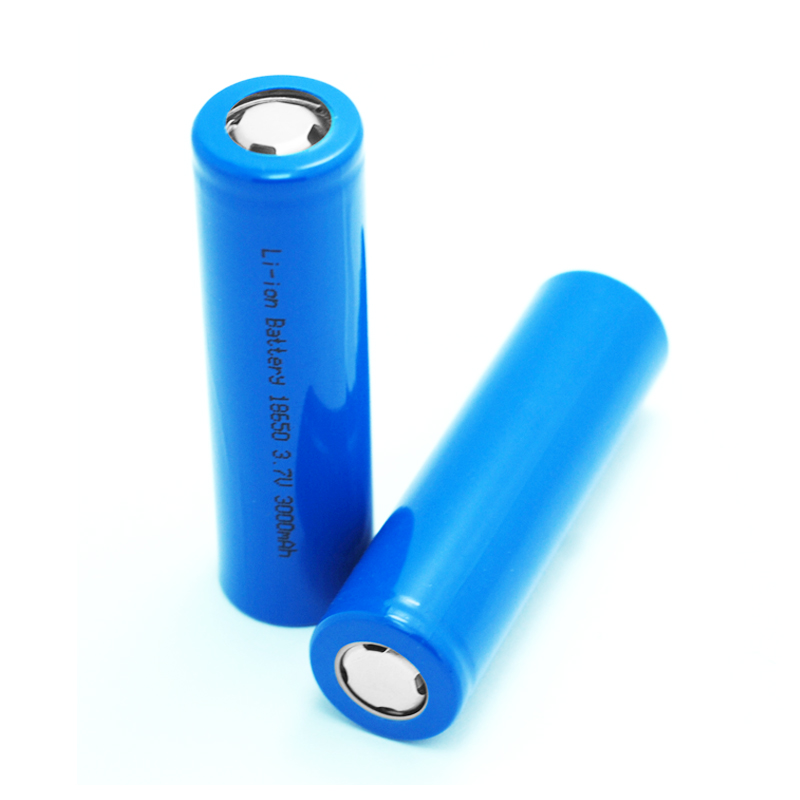
A LiFePO4 18650 battery refers to a cylindrical lithium iron phosphate cell with the standard 18 mm × 65 mm format.
Core attributes:
-
Nominal voltage: 3.2V
-
Fully charged voltage: 3.6–3.65V
-
Chemistry: Lithium Iron Phosphate (LiFePO4)
-
Form factor: 18650 cylindrical
Direct conclusion:
“18650” defines size only. Performance is dictated entirely by LiFePO4 chemistry.
⚡ How Do LiFePO4 Cells 18650 Behave Electrically?
Compared with conventional 3.7V lithium-ion cells, LiFePO4 cells 18650 show a distinctly different voltage profile.
Key behavior:
-
Very flat discharge curve between 3.3V and 3.1V
-
Minimal voltage sag under moderate load
-
Sharp voltage drop near end-of-discharge
This flat profile simplifies state-of-charge estimation in pack-level monitoring.
Engineering takeaway:
Voltage stability is excellent, but system cutoff thresholds must be precise.
📊 Is 18650 LiFePO4 2000mAh Realistic?
The label 18650 LiFePO4 2000mAh exists, but engineers should approach it carefully.
Typical realities:
-
Most LiFePO4 18650 cells range 1400–1800mAh
-
2000mAh ratings are often measured at low discharge currents
-
Capacity drops quickly at high C-rates
Direct conclusion:
Capacity numbers matter less than usable watt-hours under load.
🔁 Cycle Life: Where LiFePO4 Wins
One of the strongest reasons to choose a lifepo4 18650 battery is longevity.
Typical performance:
-
2000–5000 full cycles at 80% depth of discharge
-
Slower calendar aging than Li-ion
-
Better tolerance to partial state-of-charge storage
This makes LiFePO4 ideal for systems that cycle daily.
🔥 Safety and Thermal Stability
LiFePO4 chemistry is inherently more stable than cobalt-based lithium-ion.
Safety advantages include:
-
Higher thermal runaway threshold
-
Strong resistance to overcharge abuse
-
No oxygen release from cathode material
-
Reduced fire propagation risk in packs
Important clarification:
“Safer chemistry” does not eliminate the need for a BMS.
🔧 Designing an 18650 LiFePO4 Battery Pack
Building an 18650 LiFePO4 battery pack requires different assumptions than Li-ion packs.
Key design considerations:
-
Charger must be limited to 3.6–3.65V per cell
-
Series count differs due to lower nominal voltage
-
BMS must support LiFePO4-specific voltage windows
-
More cells may be required to reach target Wh
Engineering tip:
Never mix LiFePO4 and Li-ion cells in the same pack.
🧠 Engineer’s Selection Advice
Choose LiFePO4 cells 18650 when:
-
Safety is a top priority
-
The system is stationary or semi-stationary
-
Long cycle life reduces maintenance cost
-
Operating voltage is designed around 3.2V
Avoid LiFePO4 18650 when:
-
Maximum energy density is required
-
Cold-temperature performance is critical
-
Device expects 4.2V charging behavior
⚠️ Common Misconceptions
❌ “18650 LiFePO4 cells are drop-in Li-ion replacements”
❌ “Higher mAh always means longer runtime”
❌ “LiFePO4 packs don’t need balancing”
❌ “All 18650 LiFePO4 cells are the same quality”
❌ “Lower voltage equals lower power capability”
❓ FAQ – LiFePO4 18650 Batteries
Q1: Can I use a standard Li-ion charger?
No. LiFePO4 requires a lower termination voltage.
Q2: Are 18650 LiFePO4 batteries good for solar storage?
Yes, especially for low-voltage modular storage systems.
Q3: Why is energy density lower than Li-ion?
The chemistry prioritizes stability and longevity over compact energy storage.
Q4: Do LiFePO4 18650 cells perform well at high current?
Moderate current is fine, but they are not optimized for extreme discharge rates.
Q5: Is balancing required in a LiFePO4 pack?
Yes. Cell balancing is critical for long-term reliability.
📞 CTA – Build the Right LiFePO4 18650 Pack
Looking for verified LiFePO4 18650 batteries or help designing a compliant 18650 LiFePO4 battery pack?
👉 Contact us for:
-
Tested LiFePO4 cells 18650
-
Transparent capacity data
-
BMS and pack architecture support
-
Application-specific recommendations
Choose chemistry by design intent, not marketing numbers.
Related Articles
What Is High Drain 18650 Battery?
Why Are 18650 Batteries So Popular?
What Is a Protected 18650 Battery?
What Is the Difference Between Protected and Unprotected 18650 Batteries?
How to Discharge 18650 Battery?
Protected vs Unprotected 18650 Batteries: Which Should You Use?